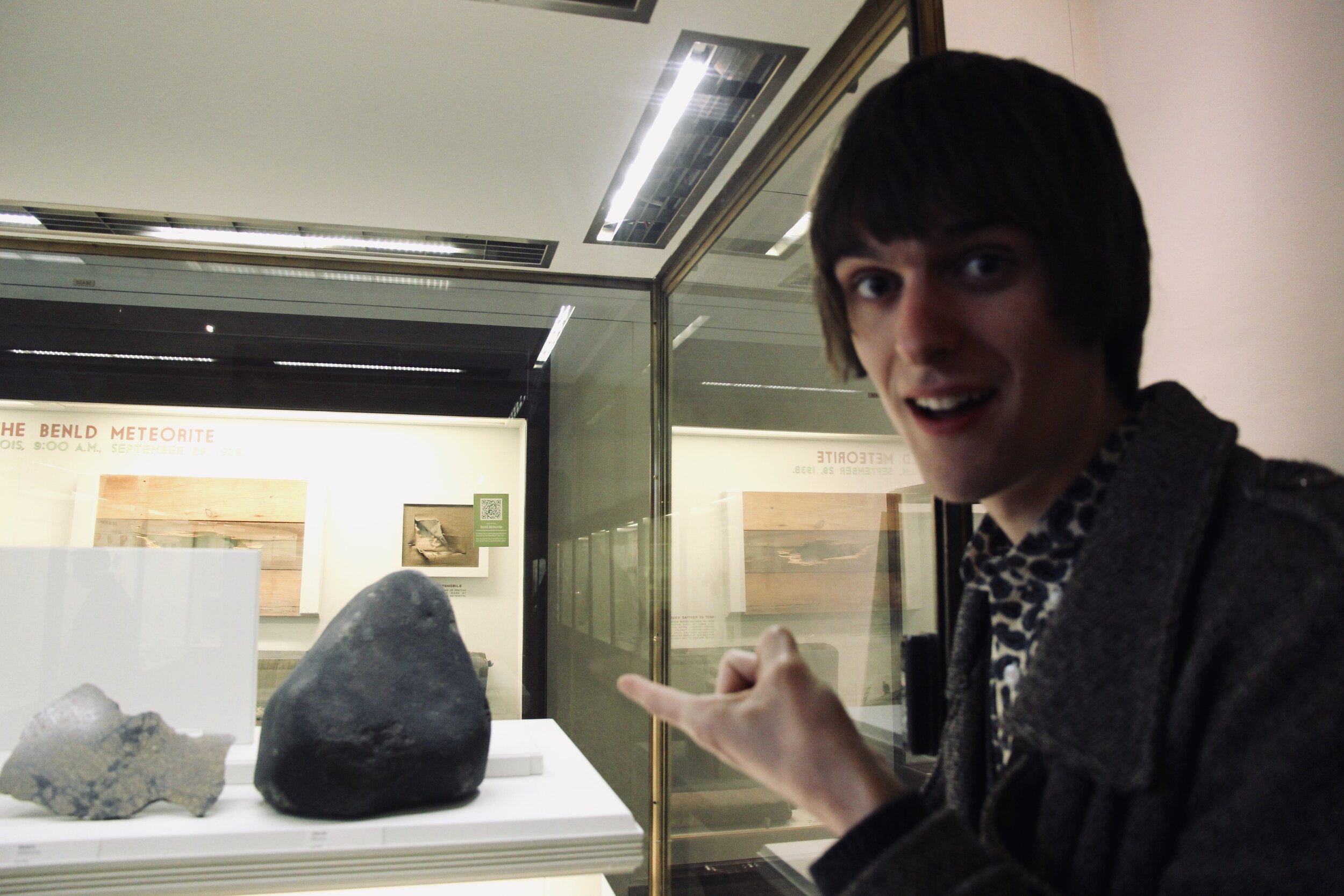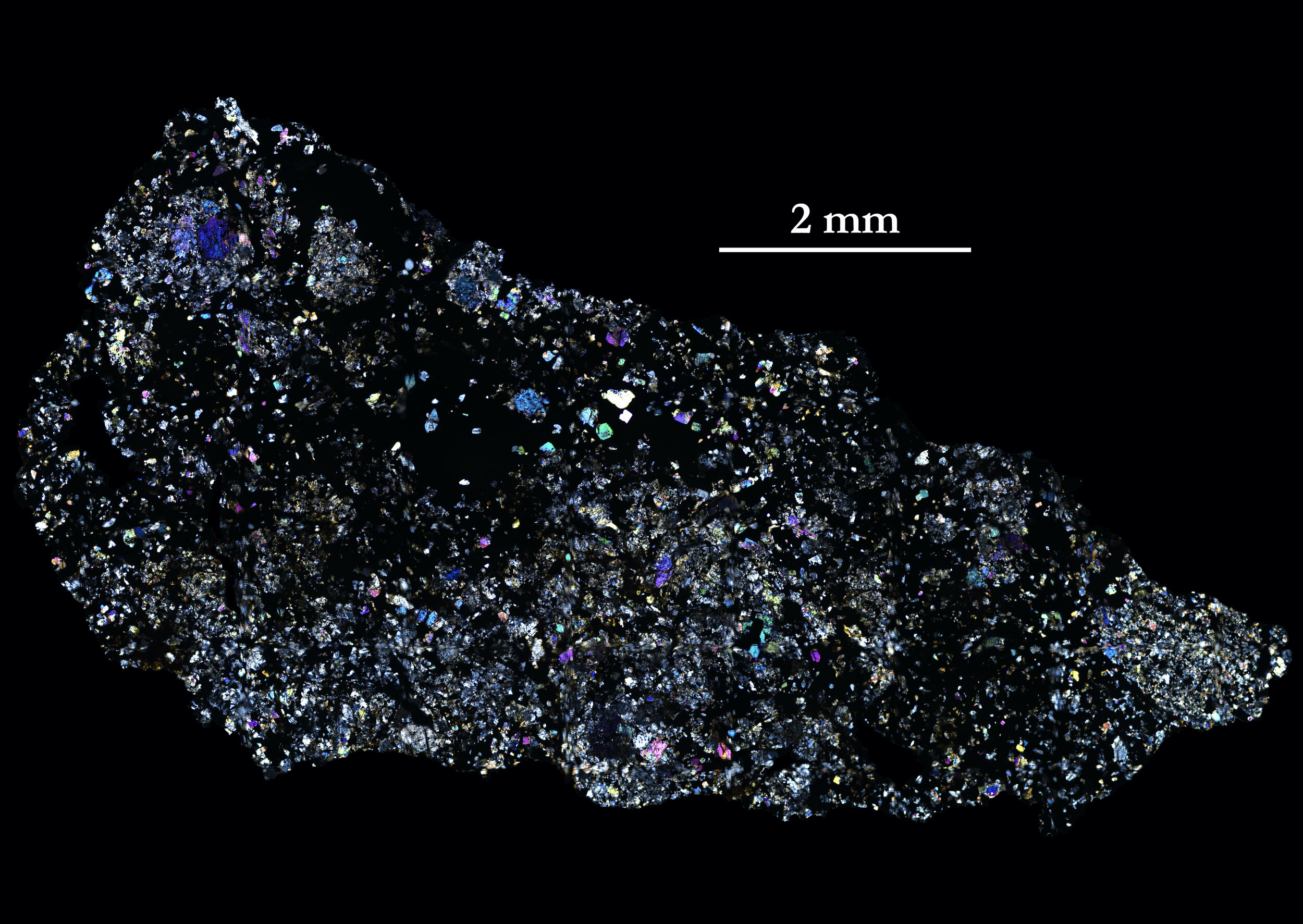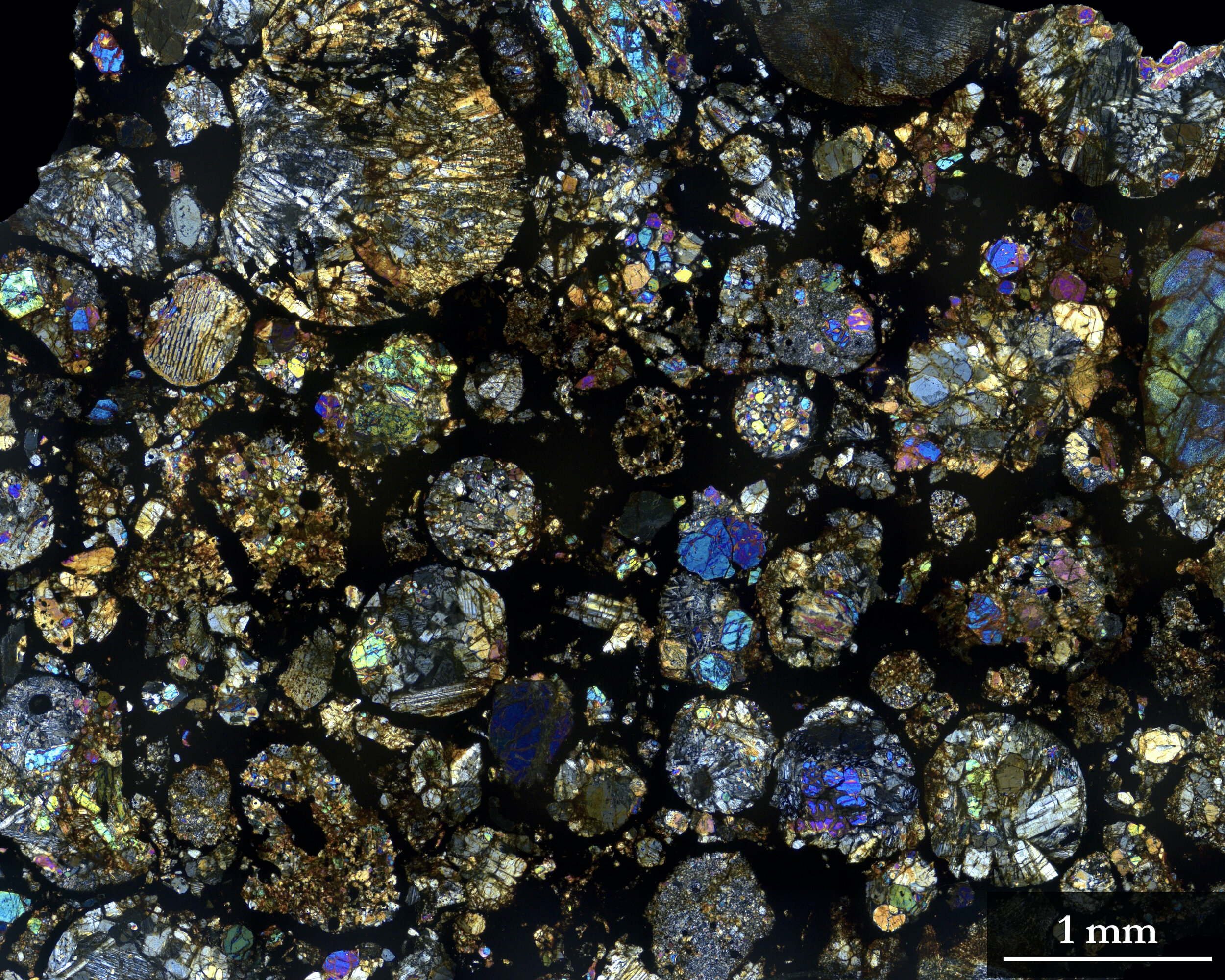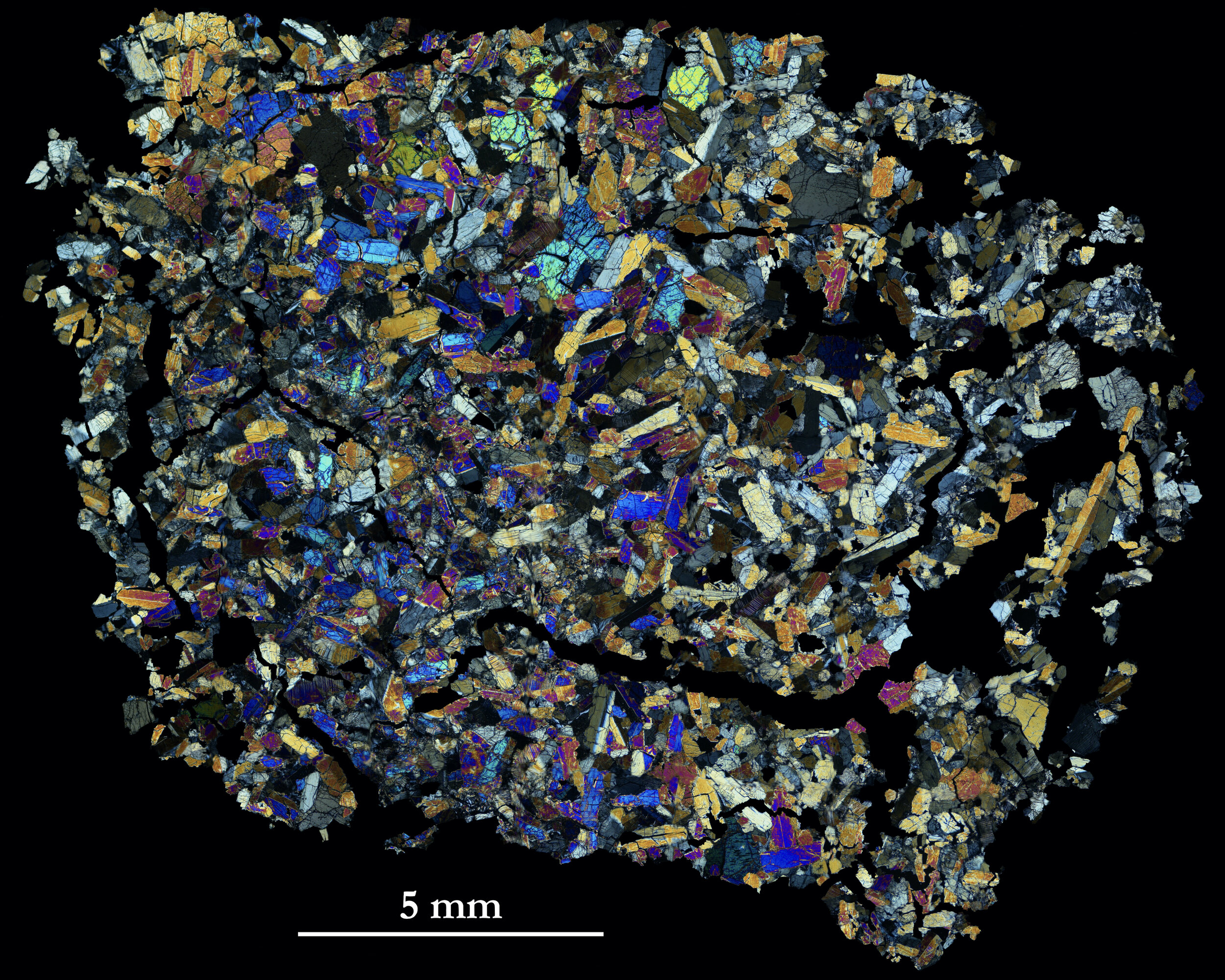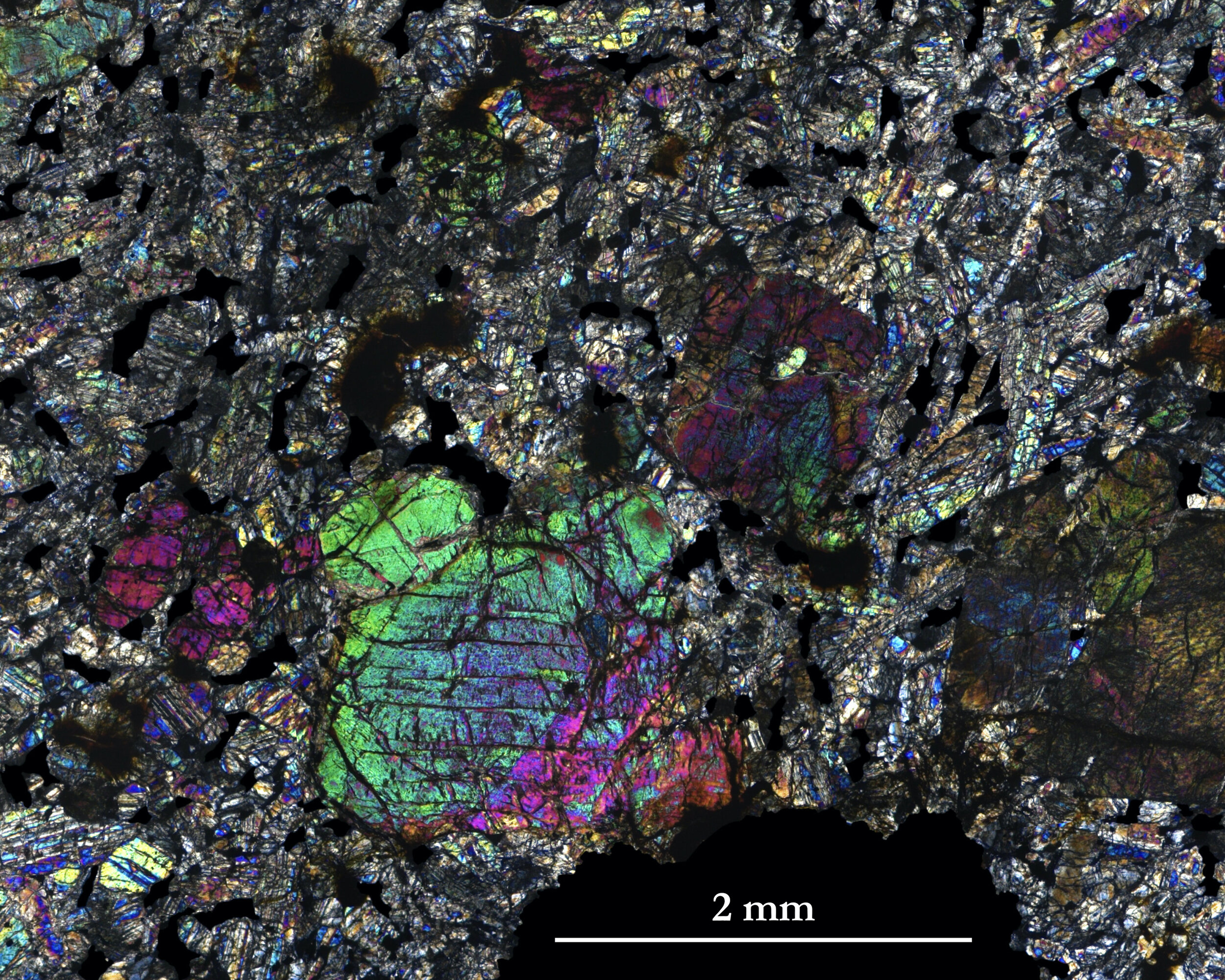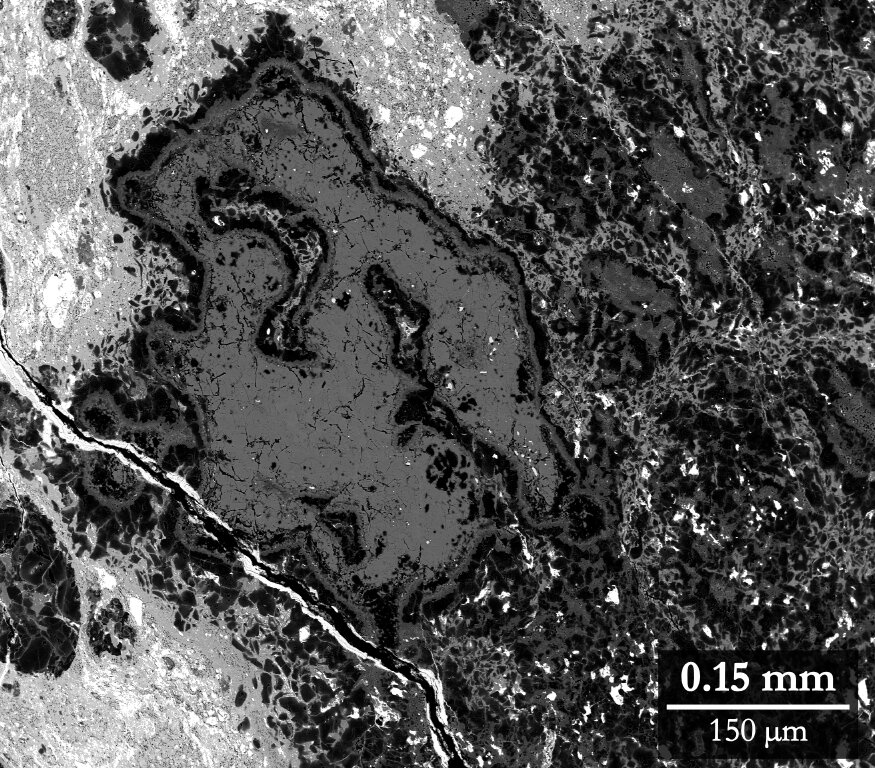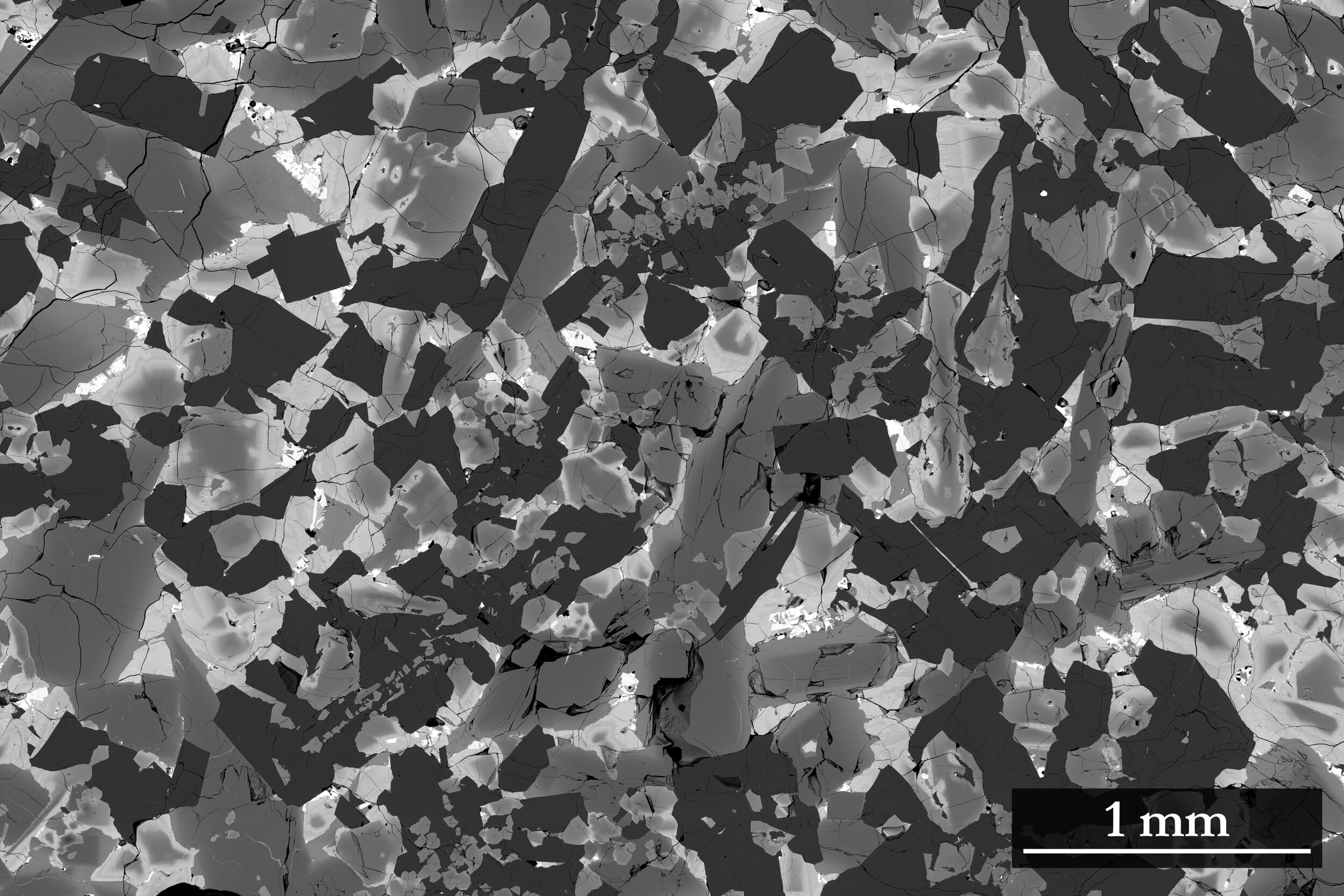
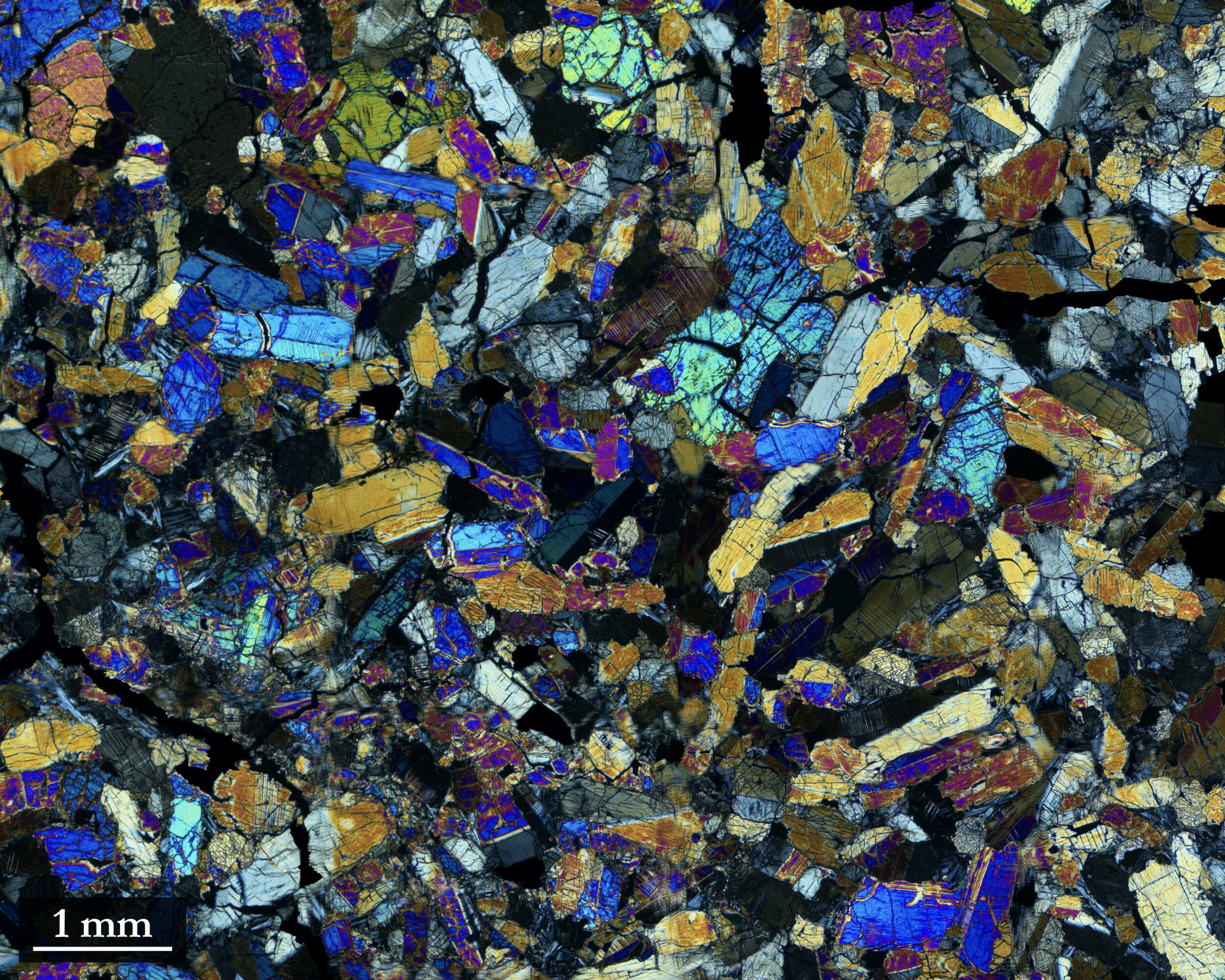
a collection of meteorite images I took
during my academic research and travels.
(Many of these meteorites also feature in my first book, Meteorite)
Please feel free to use them for educational purposes, phone/desktop wallpapers, etc. (and please credit me!), and do get in touch if you have any questions. High-resolution versions are available on request. (I always say yes.)
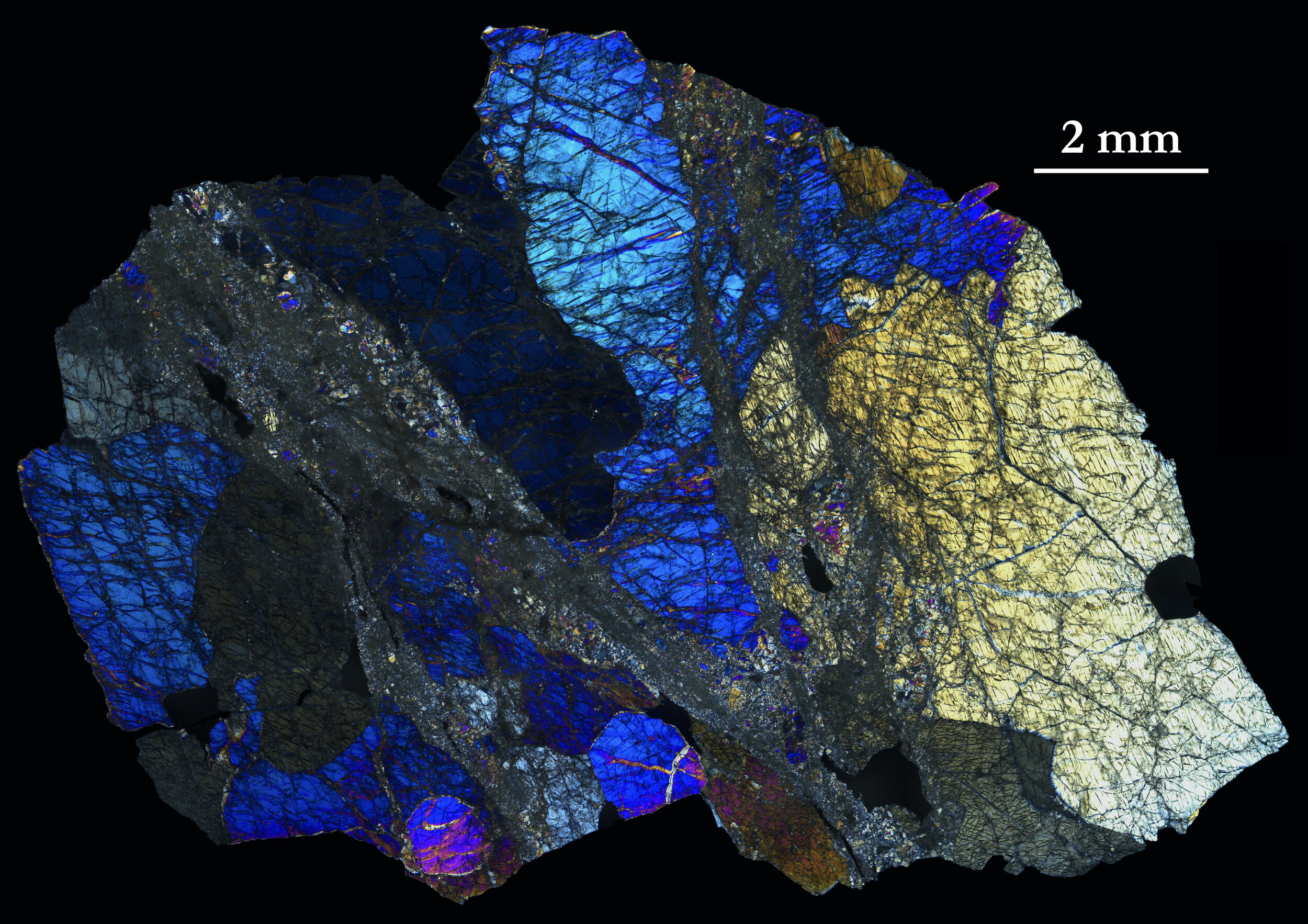
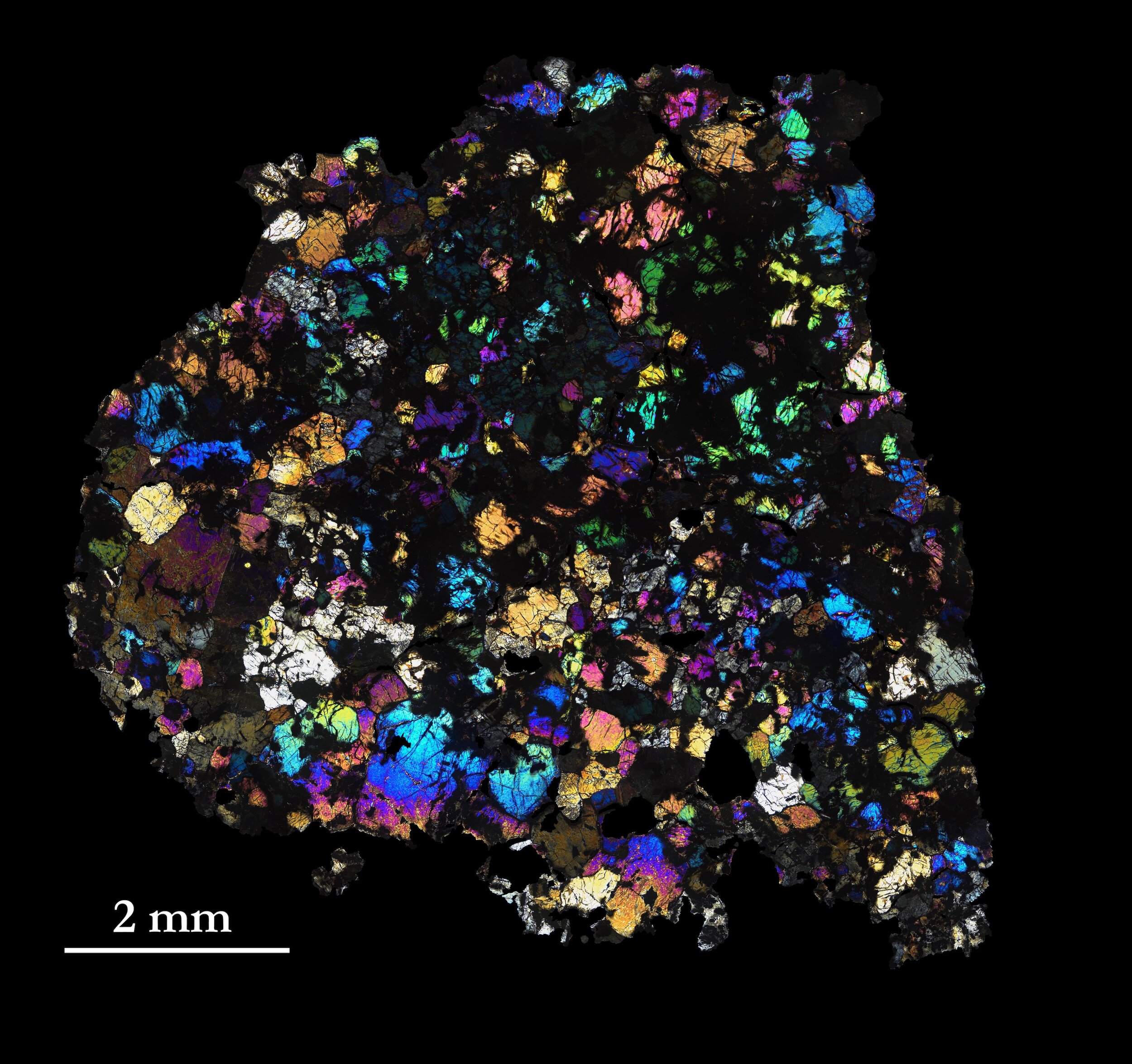
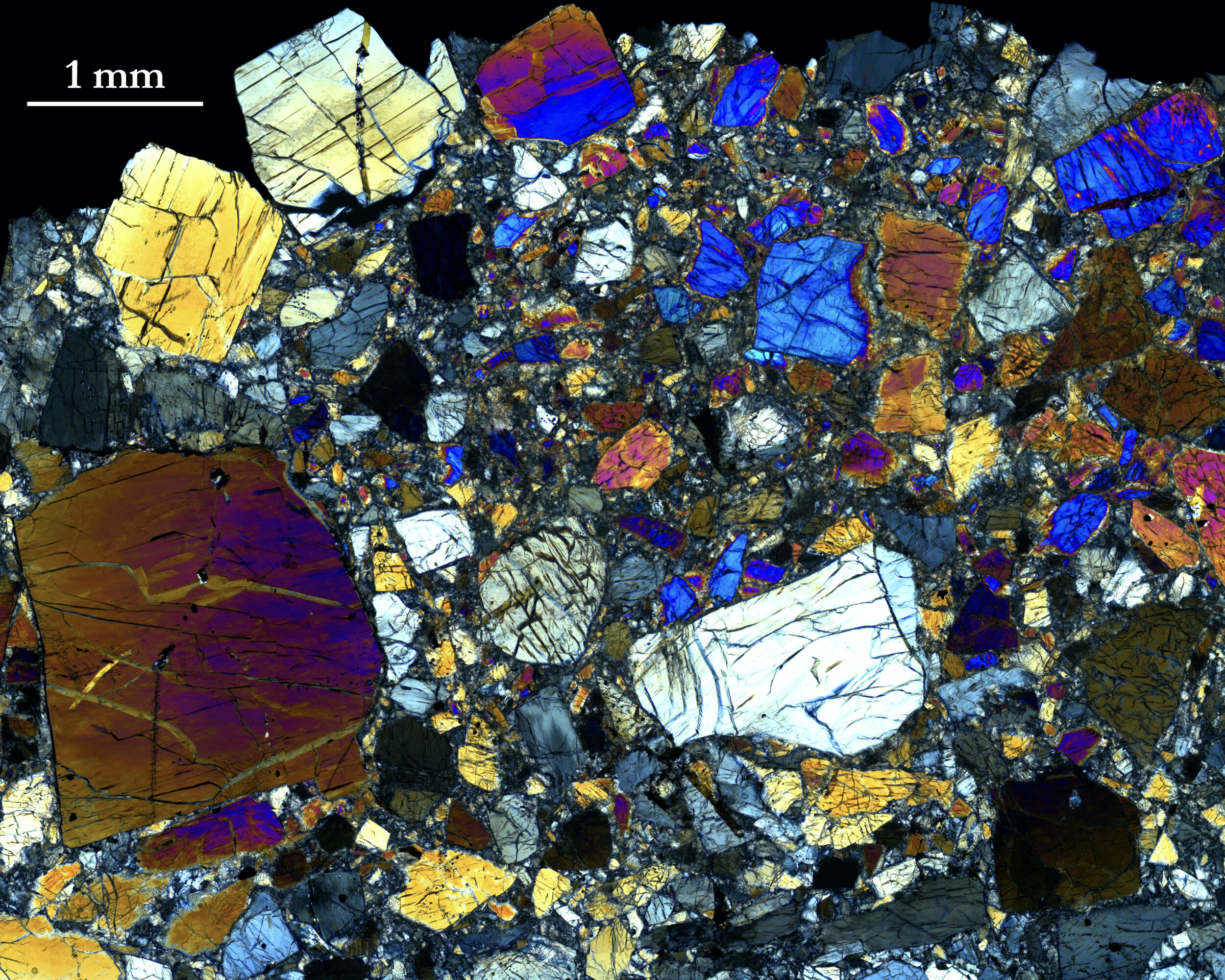
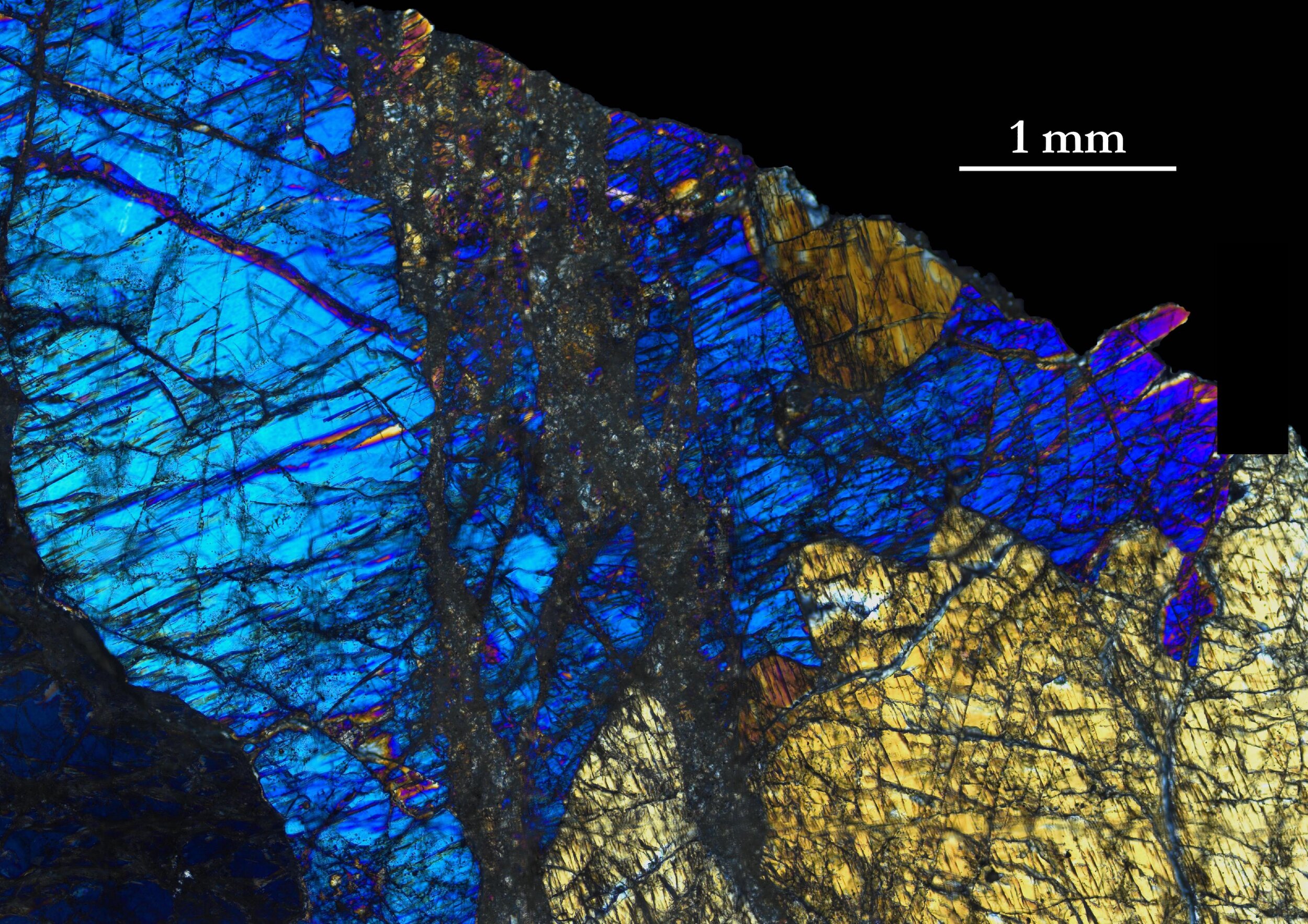
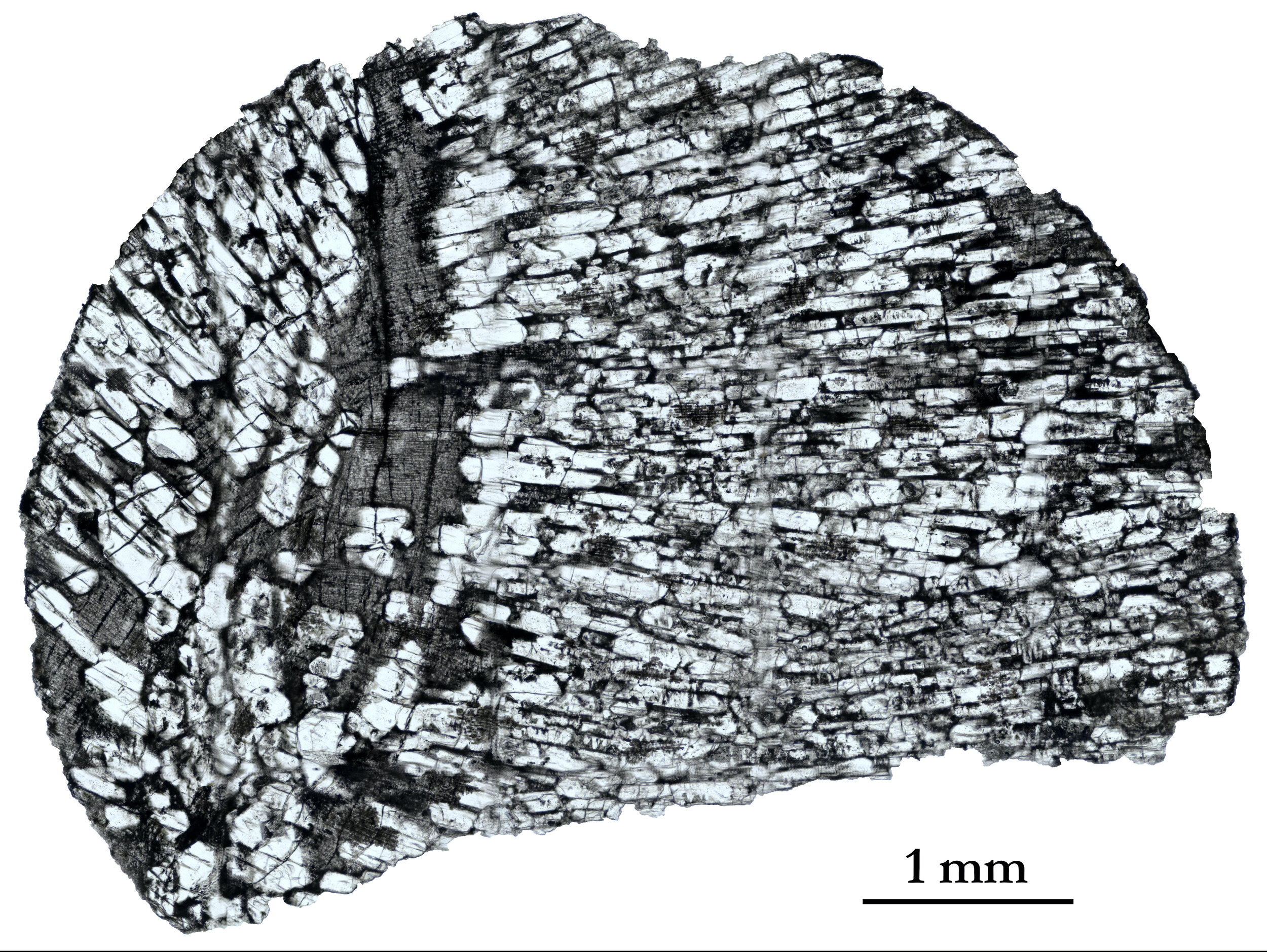
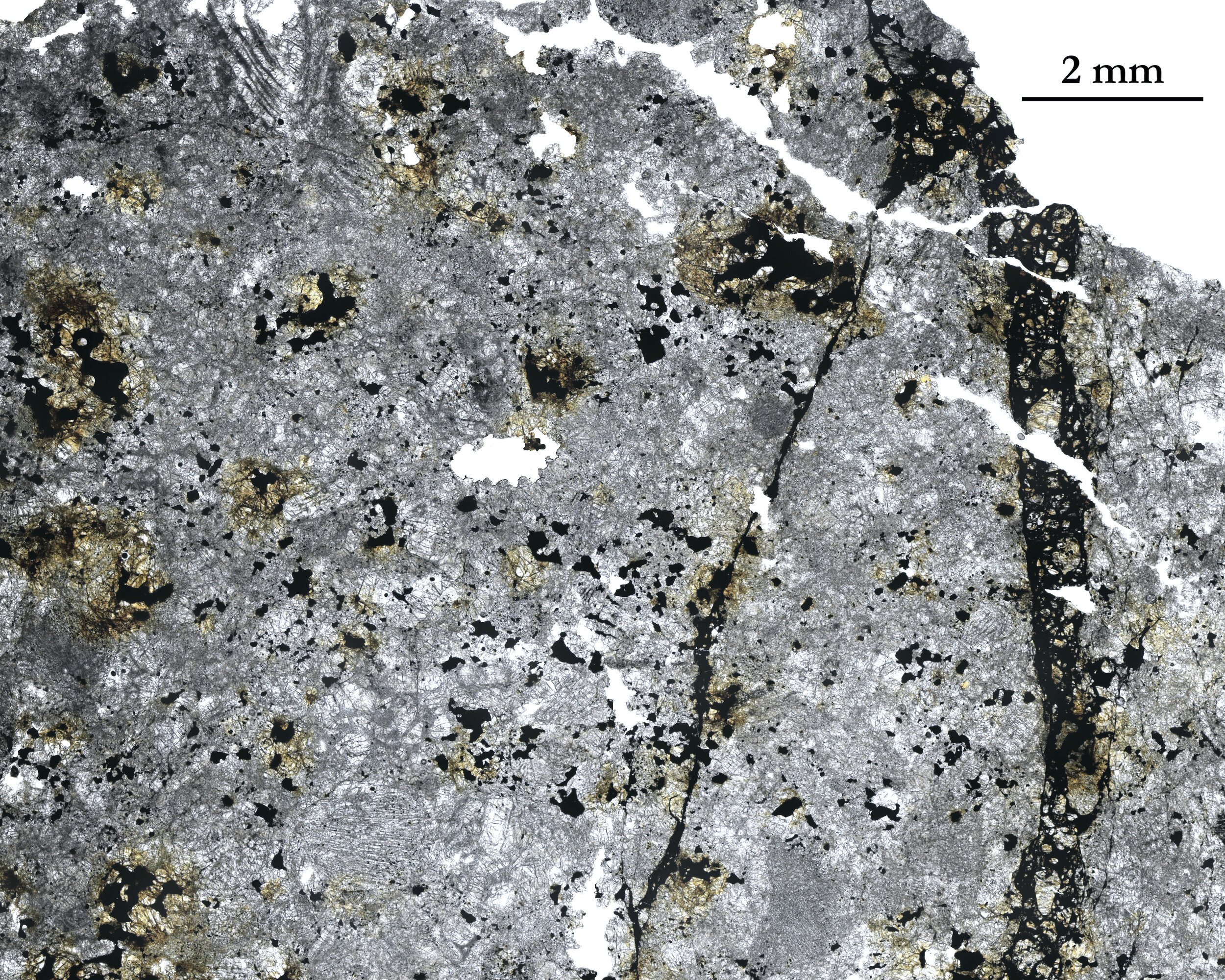
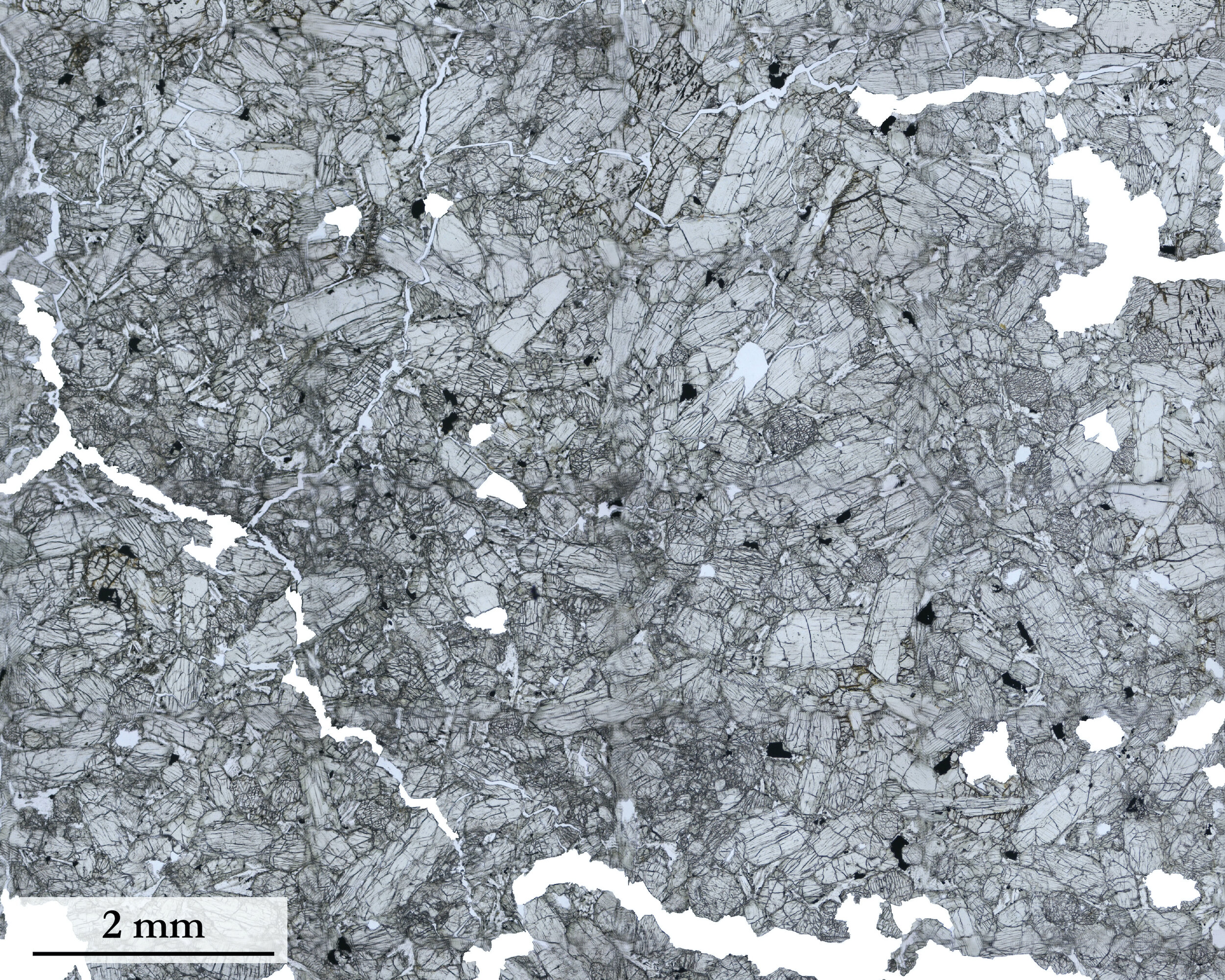
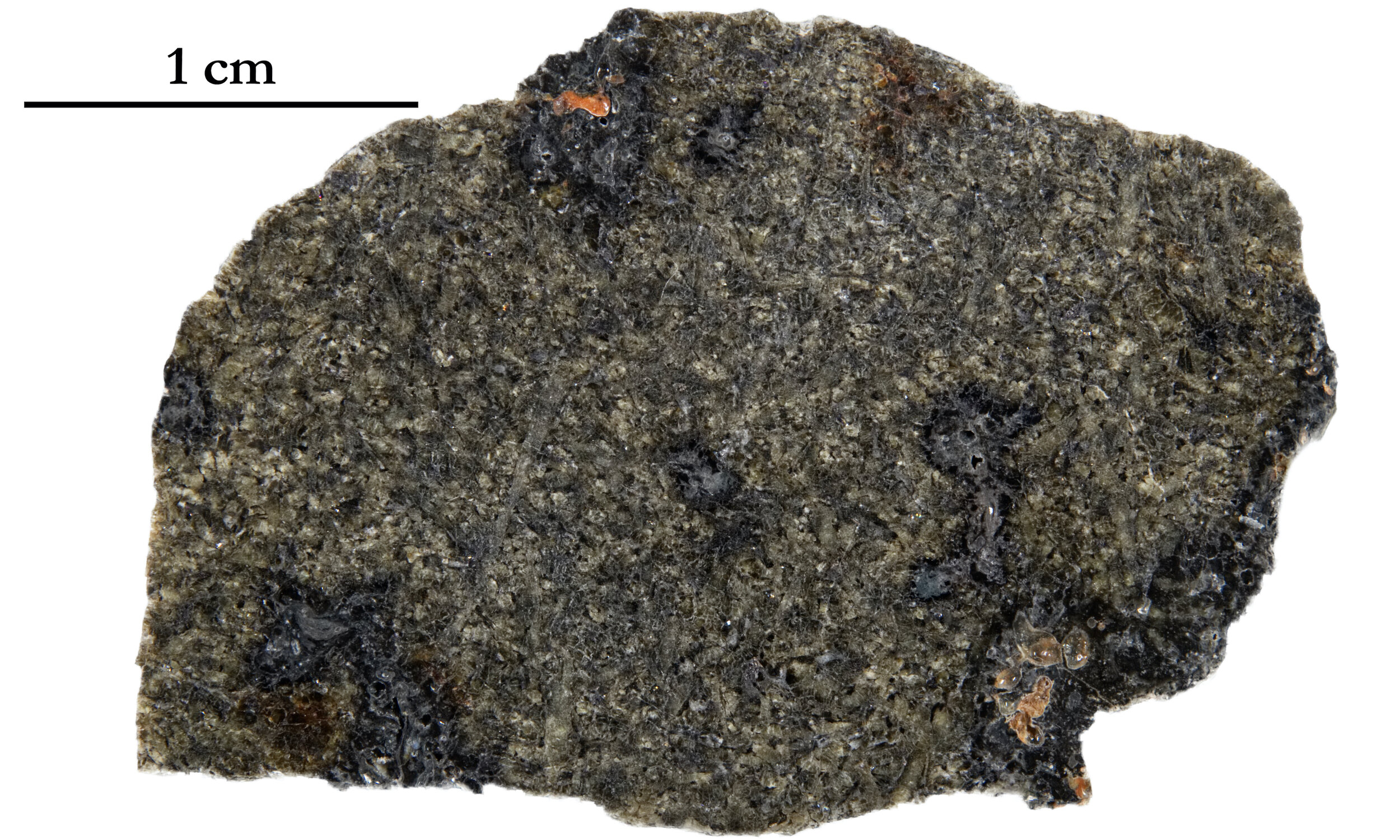
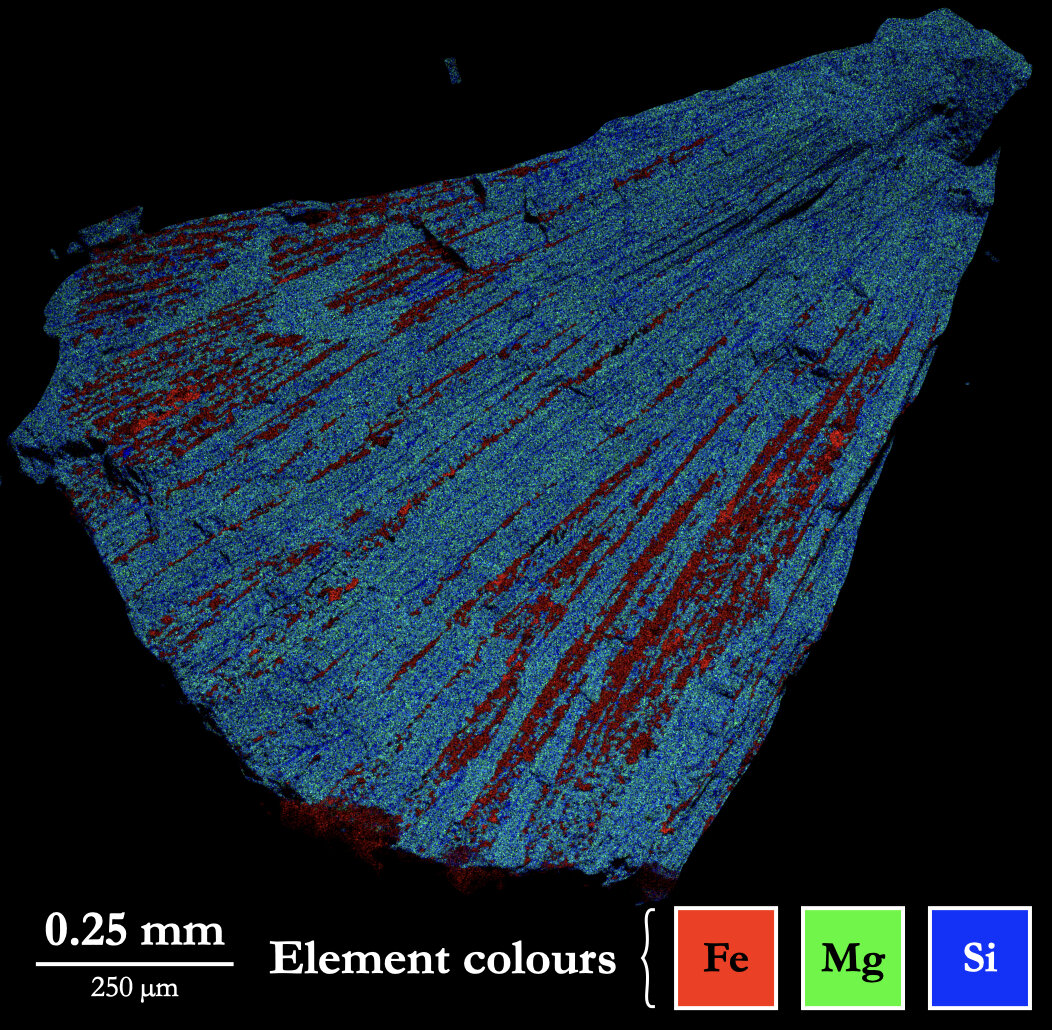
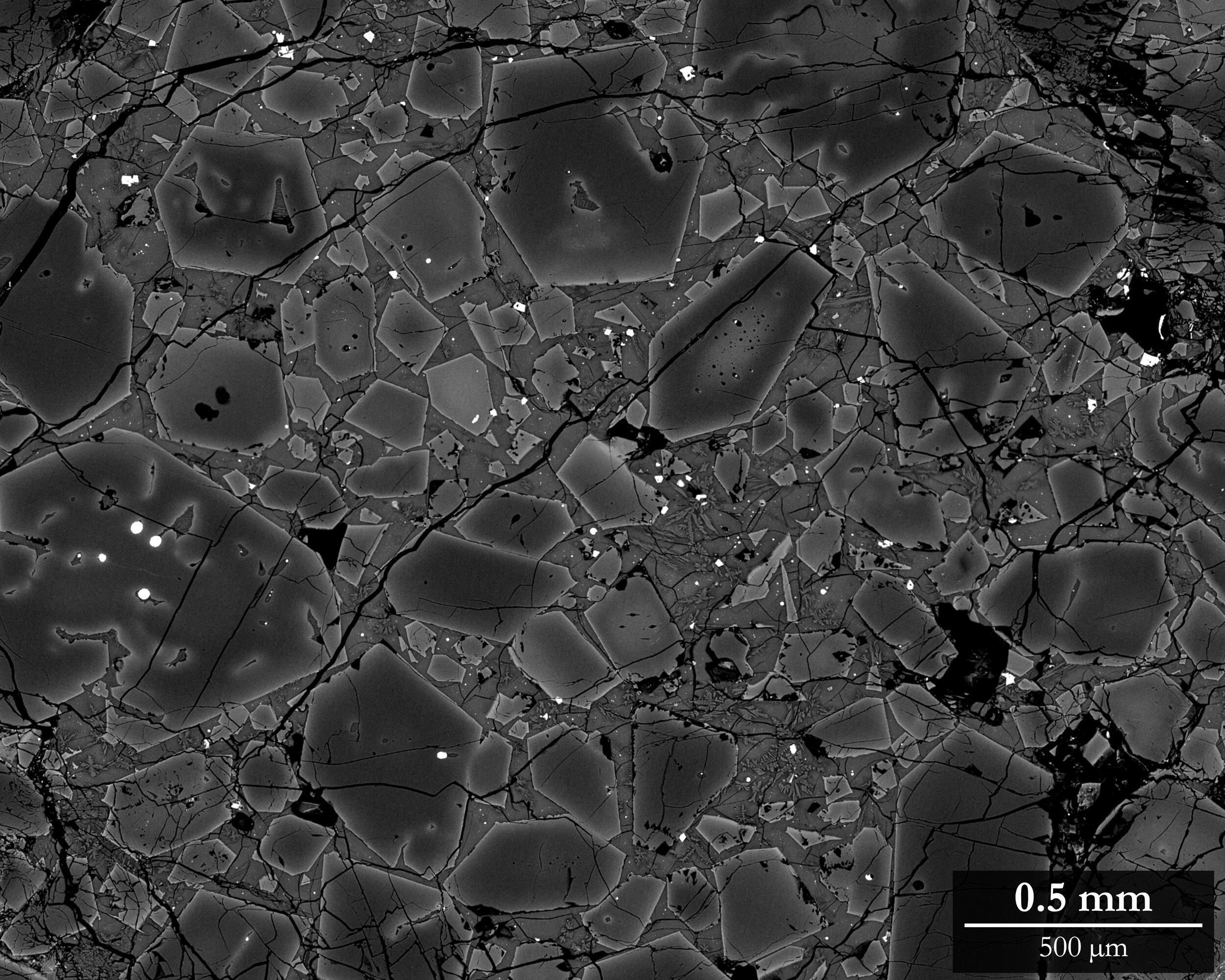
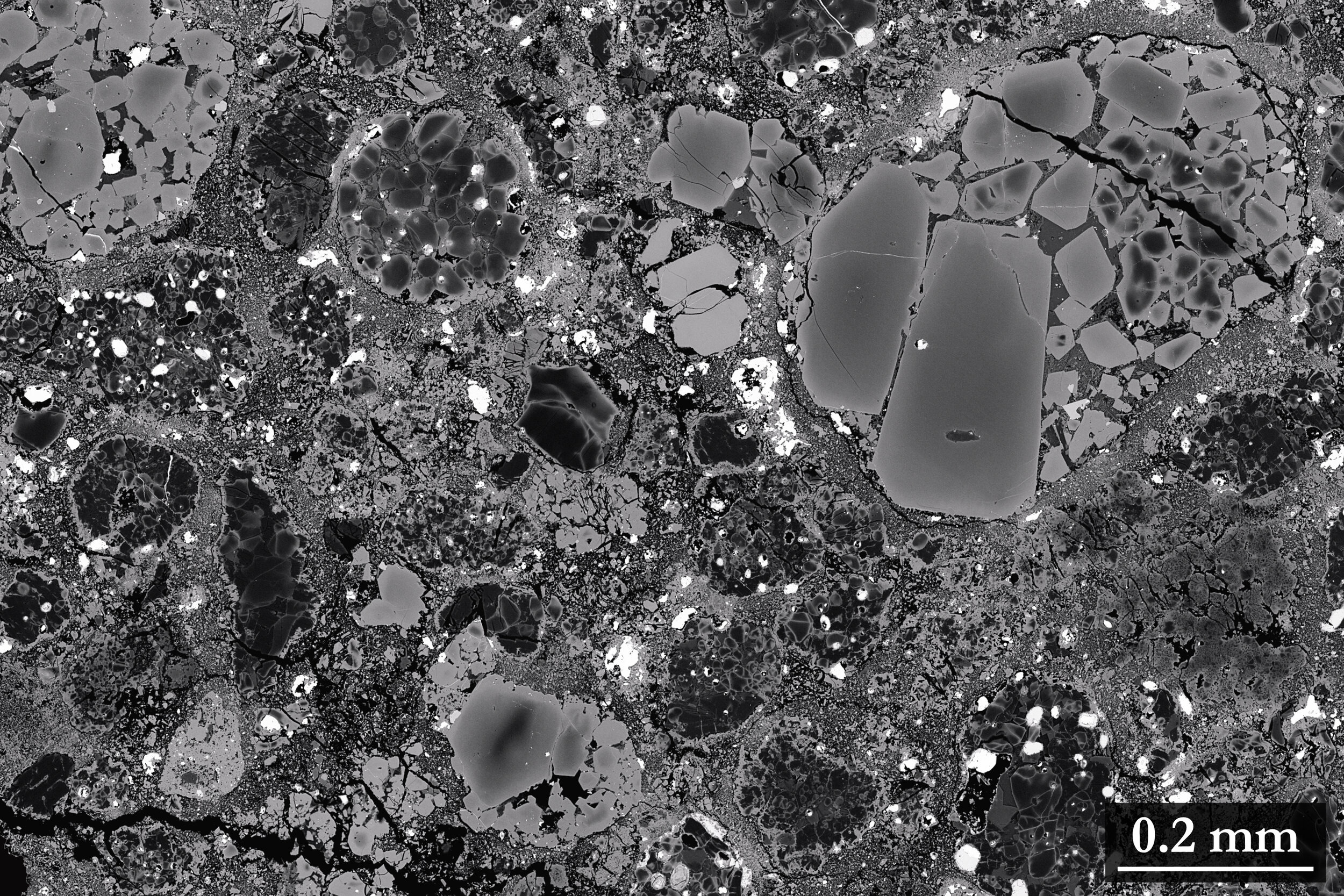
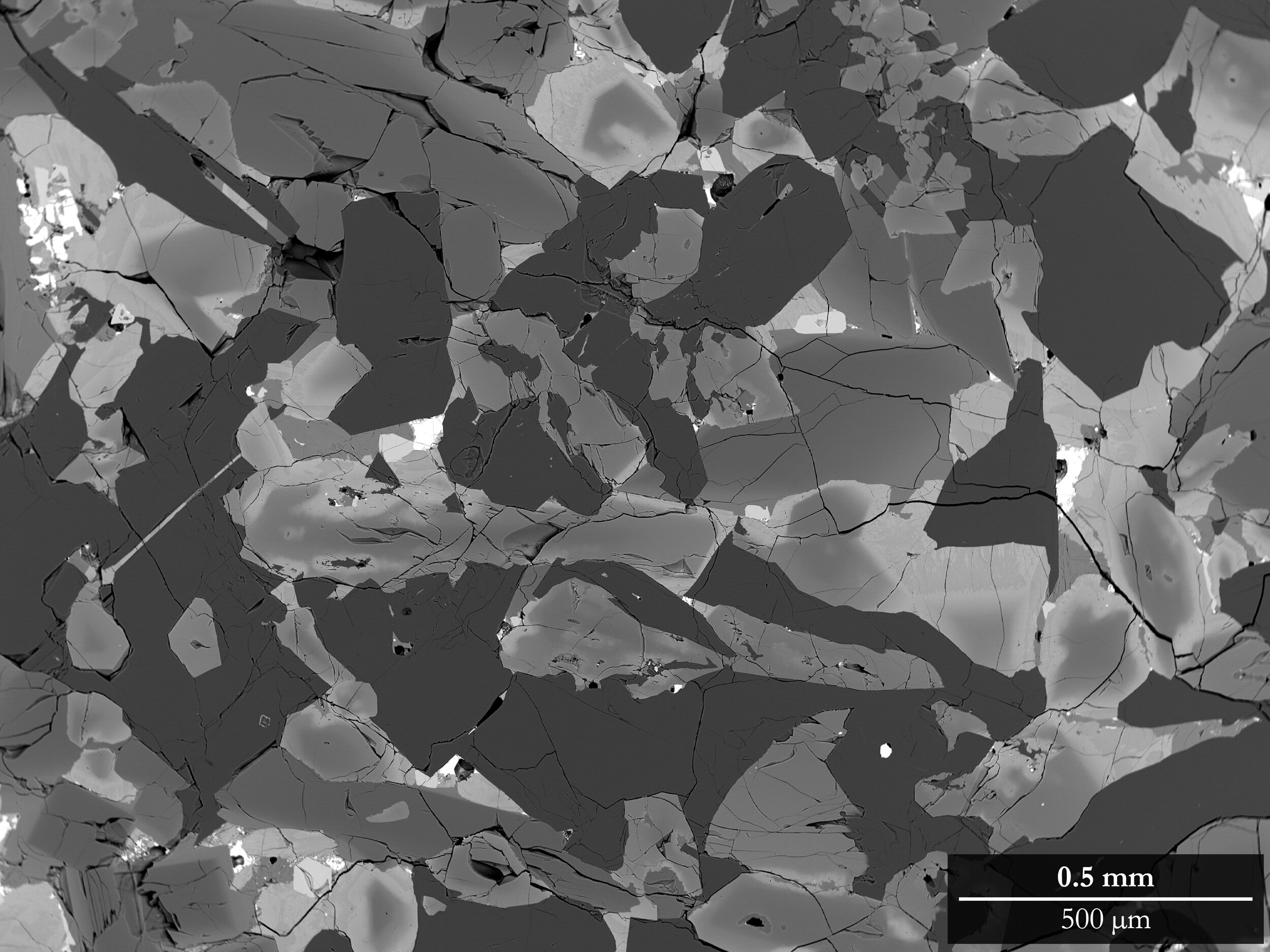
Diogenites are made almost entirely of a volcanic crystal called orthopyroxene. They originate from an asteroid that once melted entirely. As their parent asteroid cooled, large grains of orthopyroxene crystallised from the magma and sank to the base of the crust where they accumulated to form vast piles. They were later excavated by catastrophic impacts into the surface of the asteroid which is how they attained their ‘broken’ texture.
Diogenites, along with the howardites and eucrites, belong to the HED clan of meteorites, which are thought to originate from asteroid Vesta.
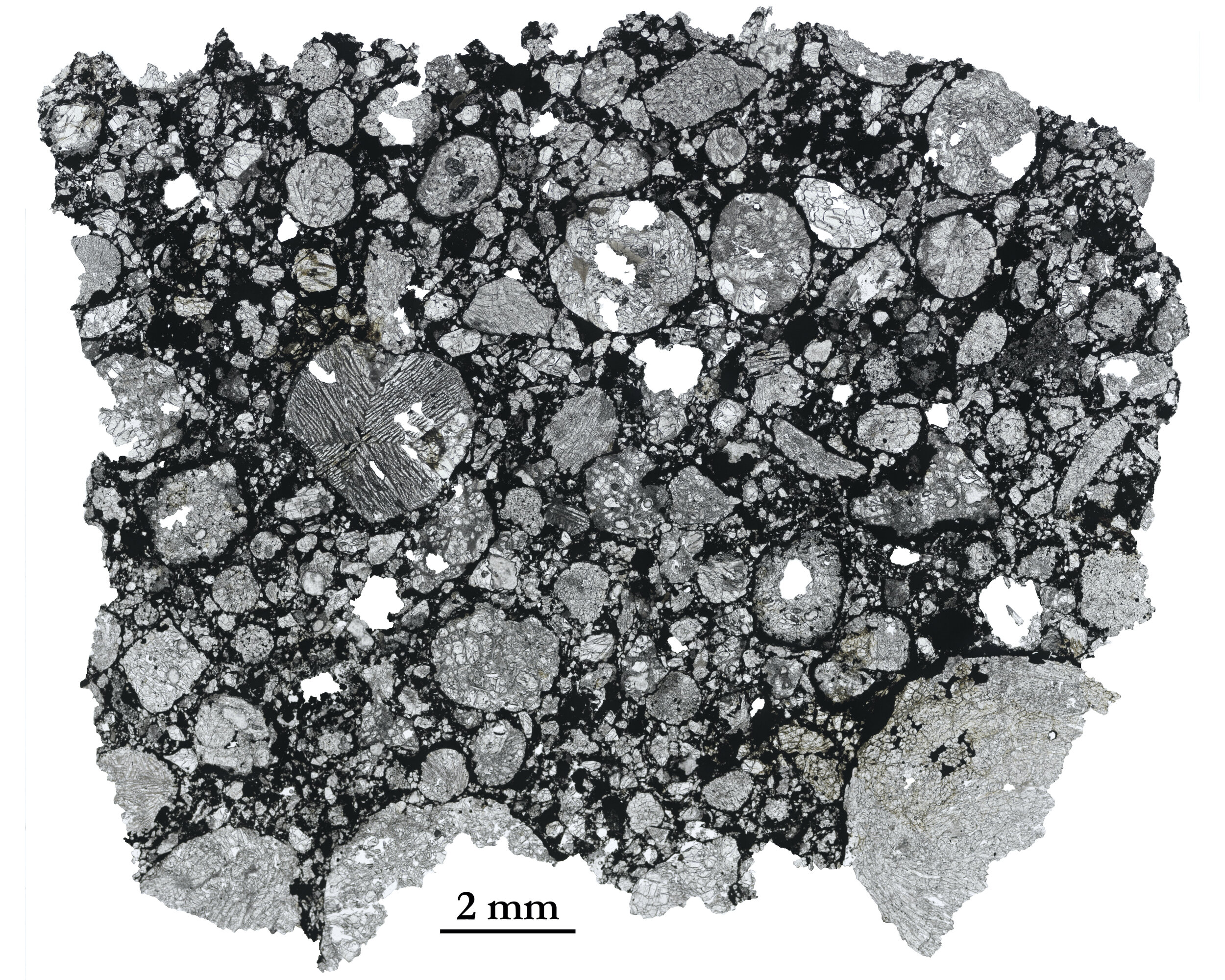
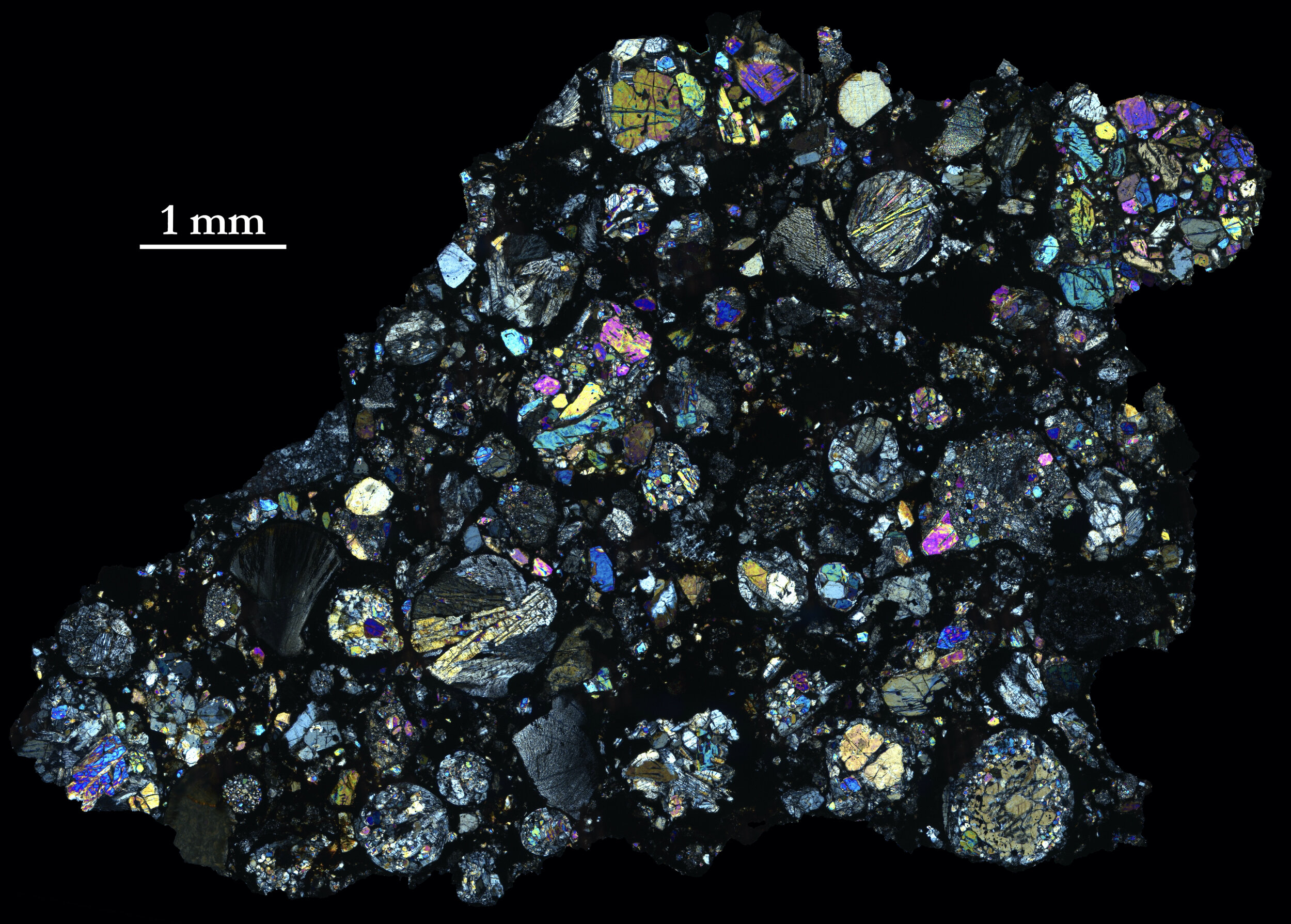
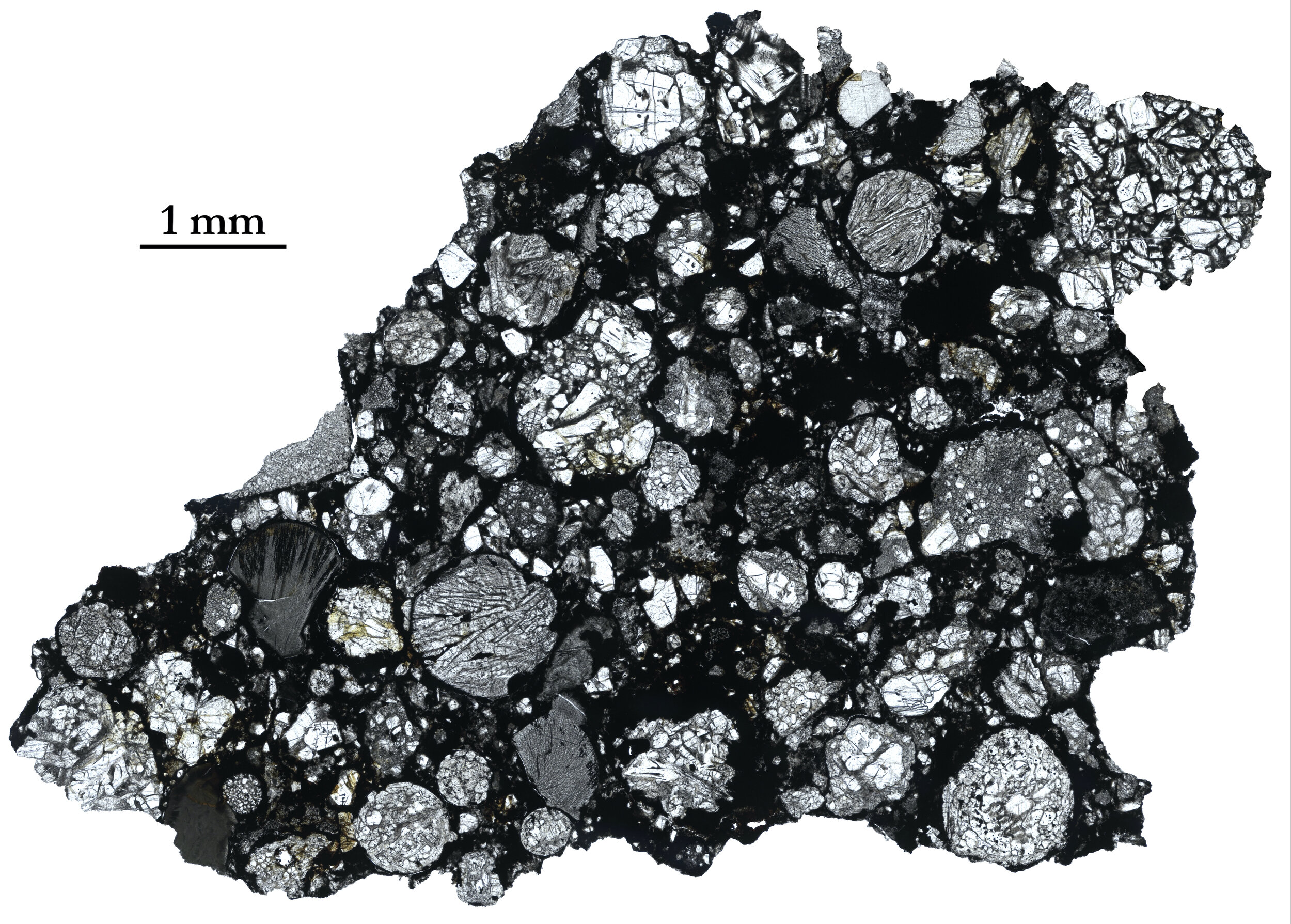
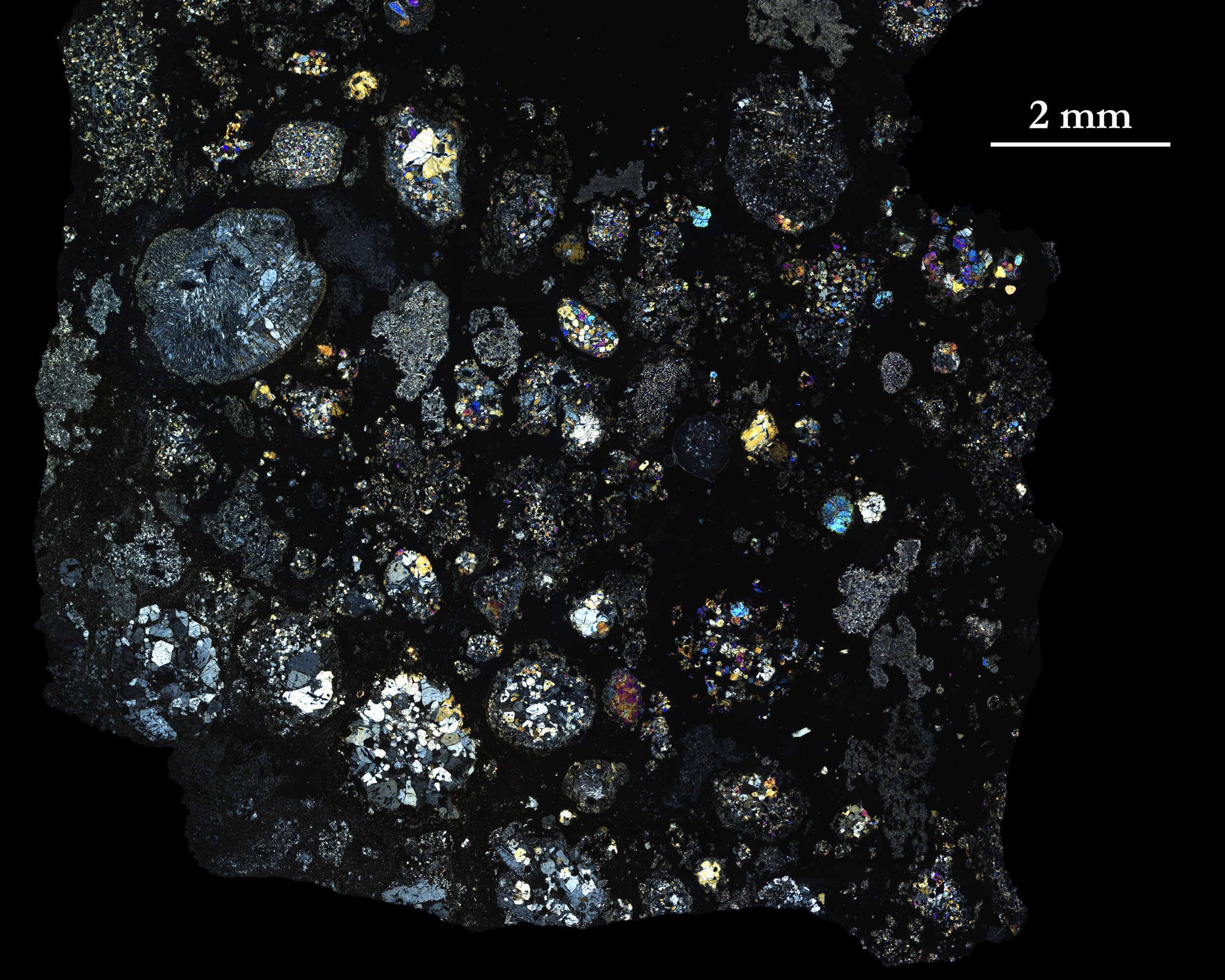
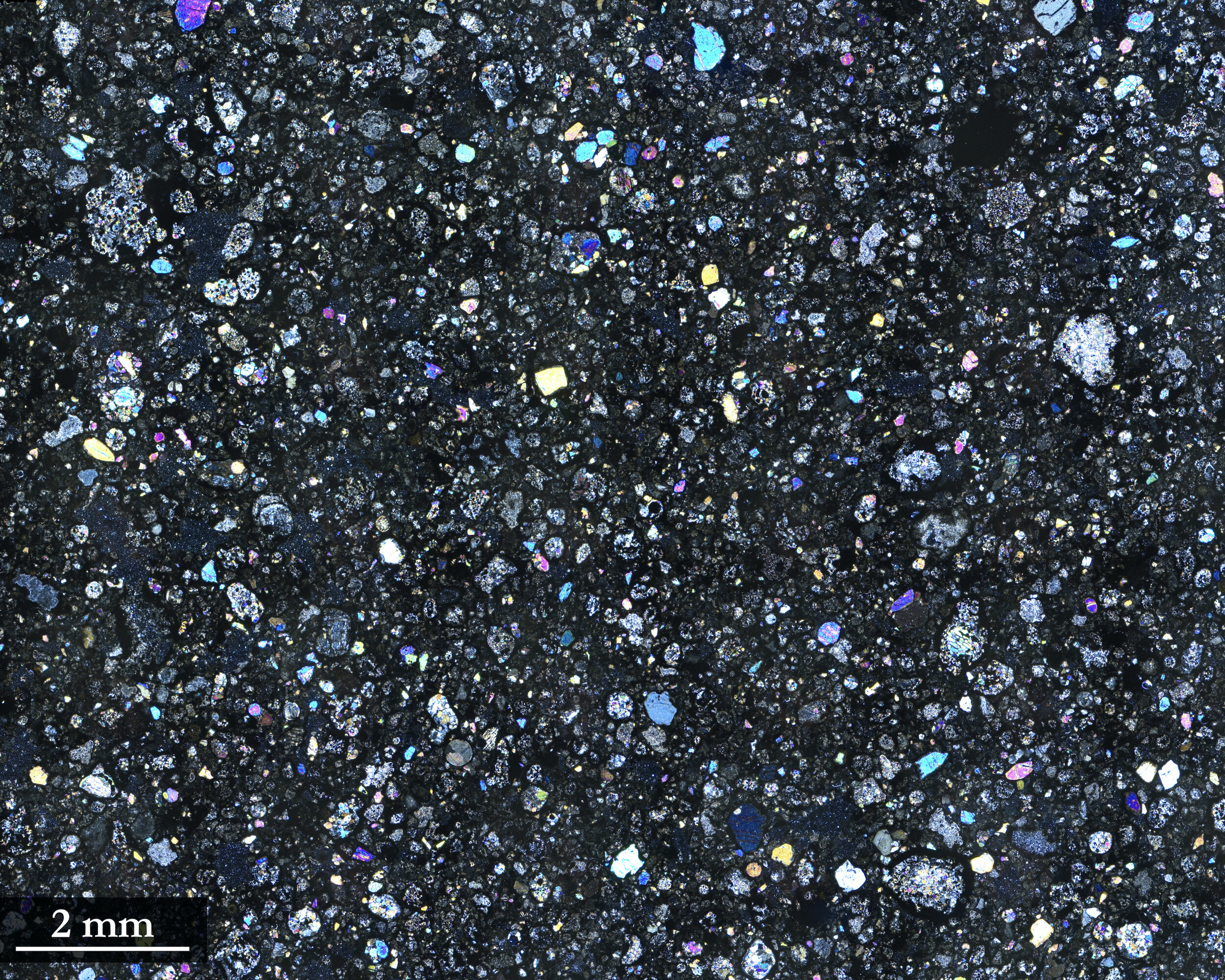
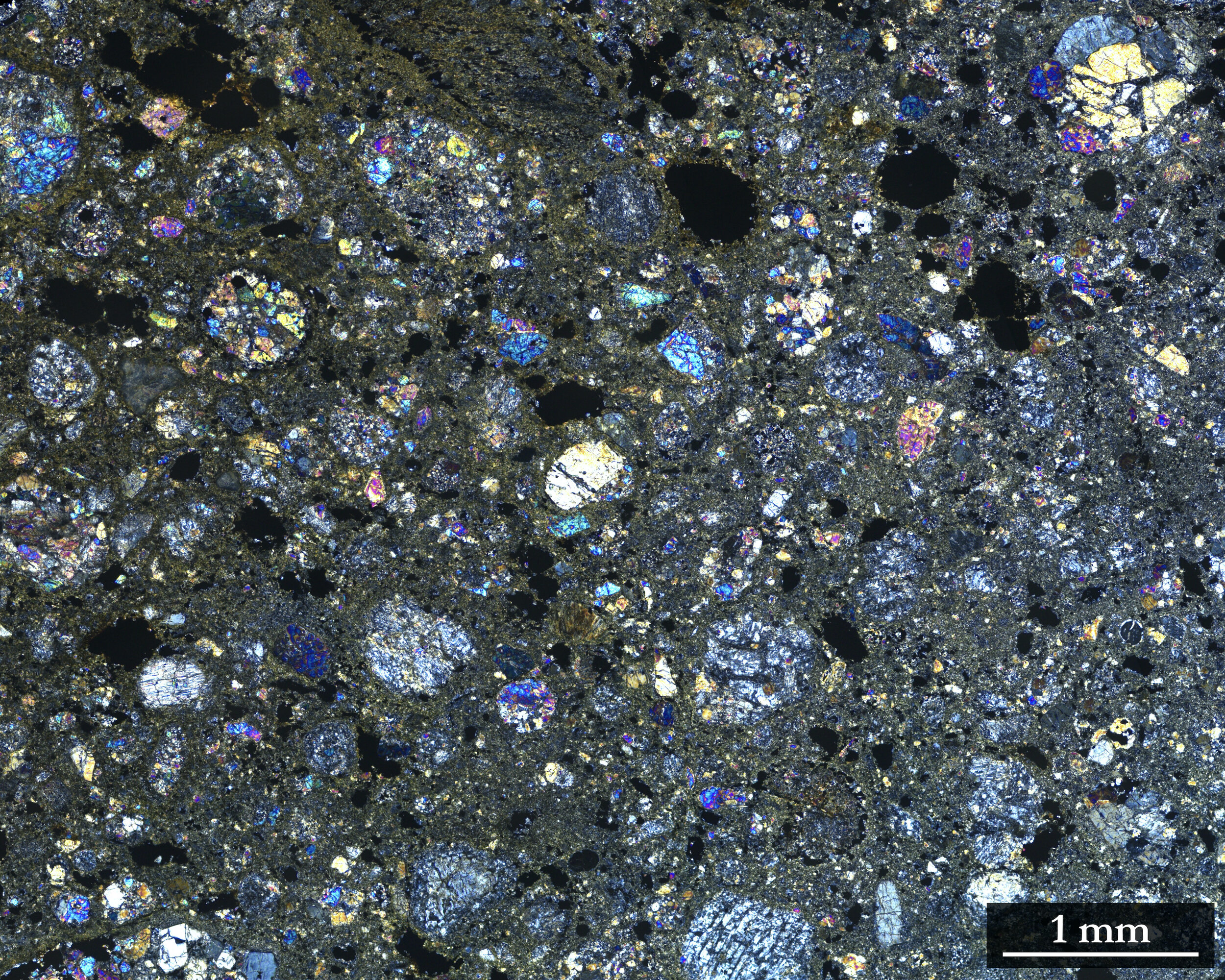
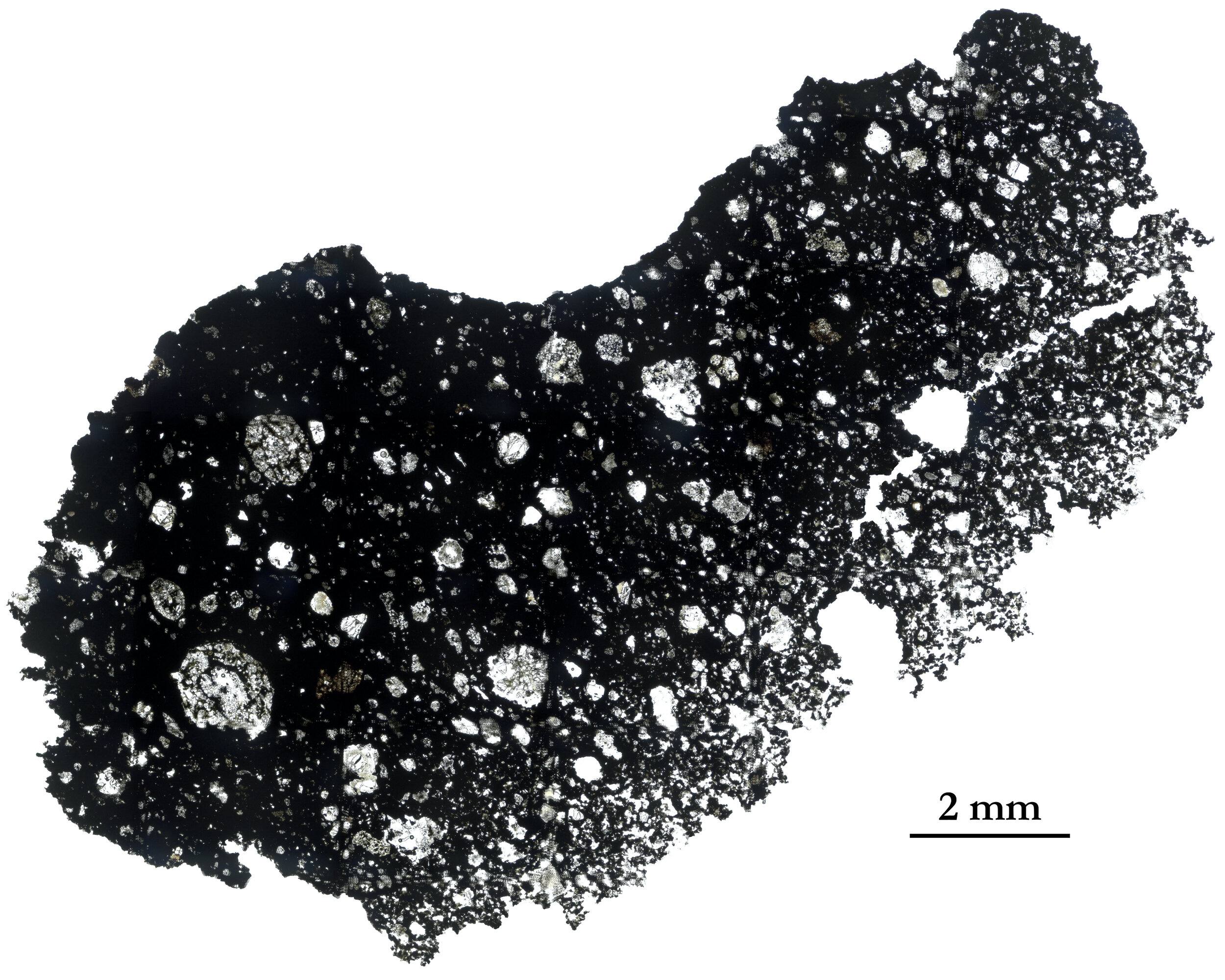
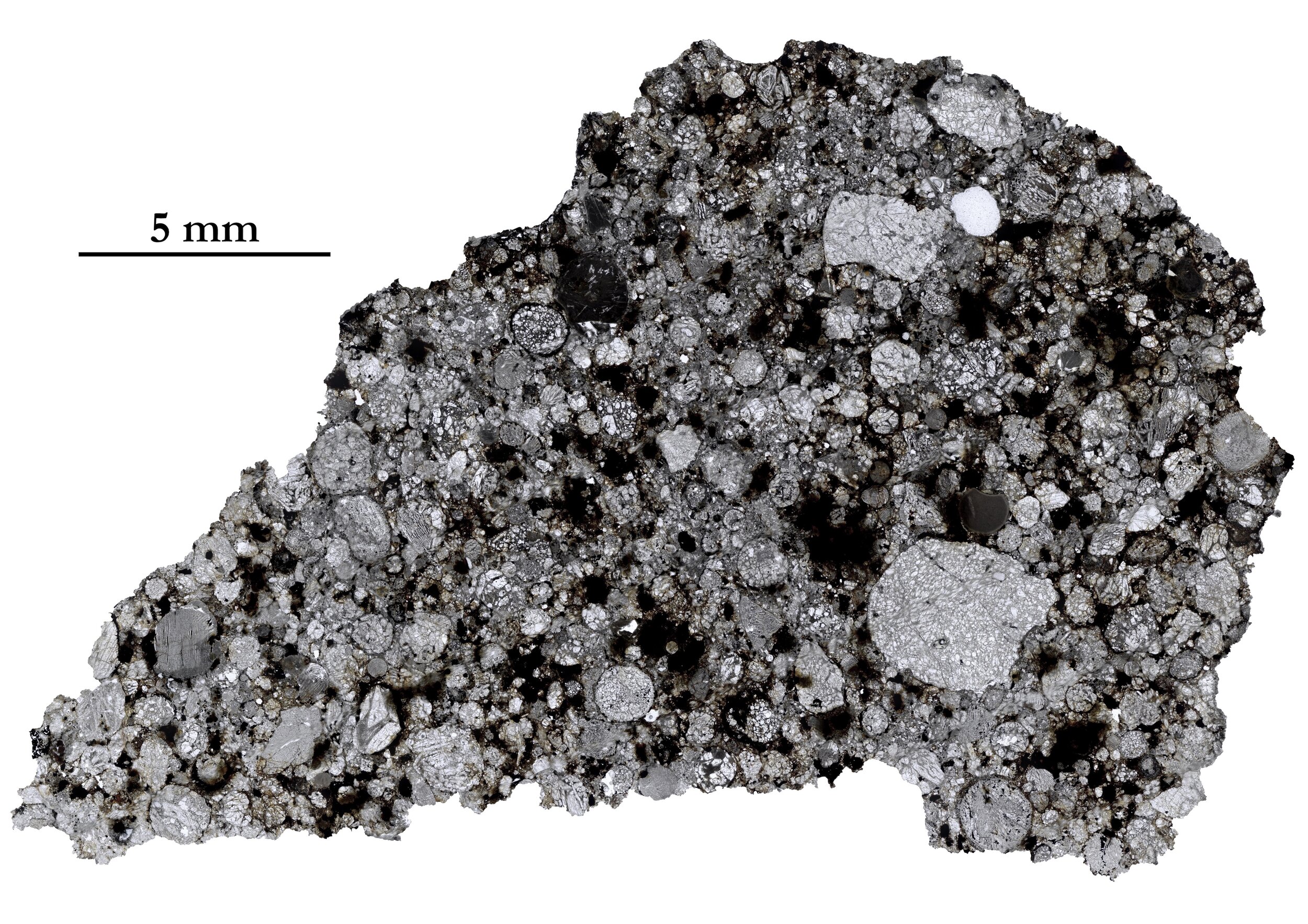
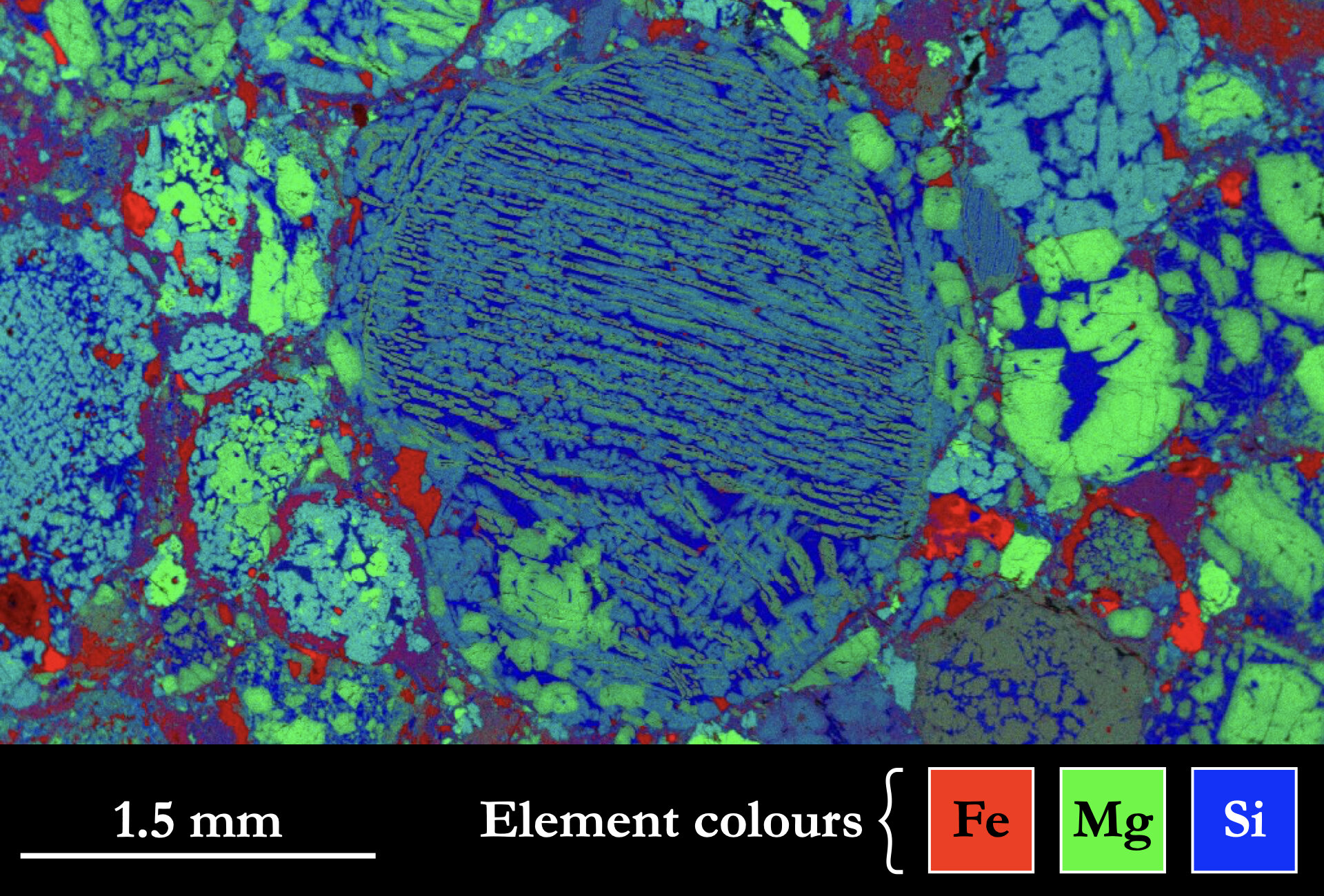
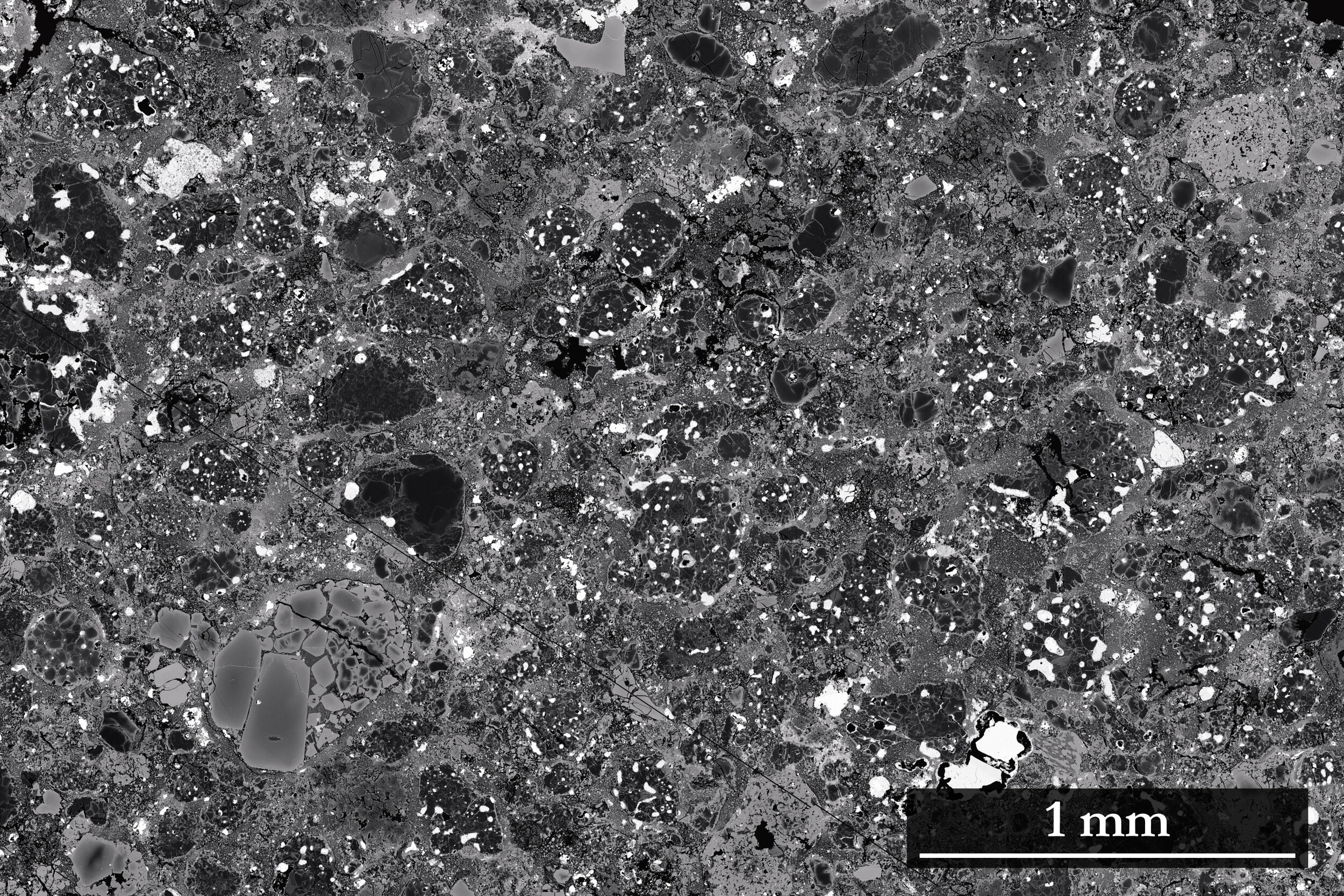
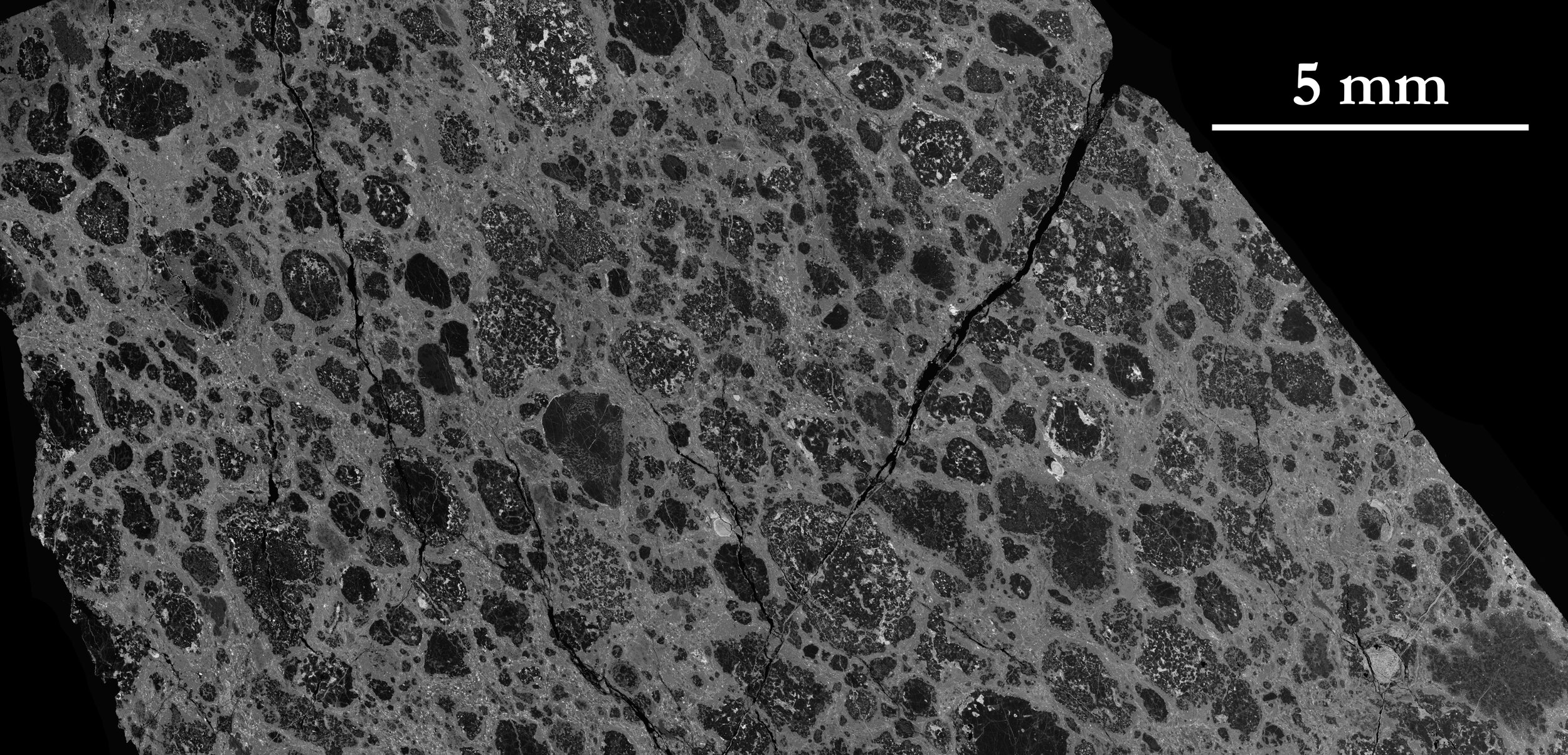
A thin section of the Bishunpur ordinary chondrite. It is made almost entirely of rounded spherical chondrules. Chondrules are a major constituent of asteroids, and by extension are a major building block of planets.
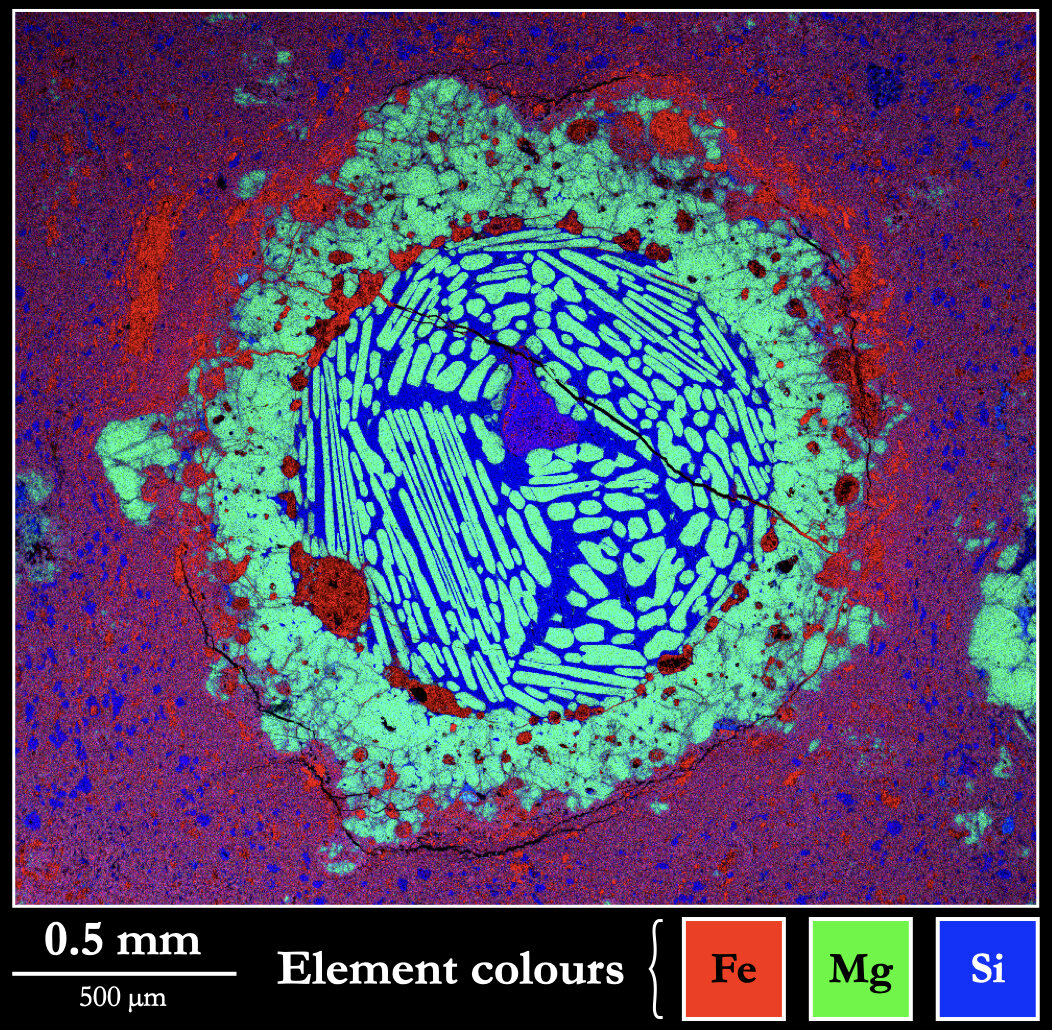
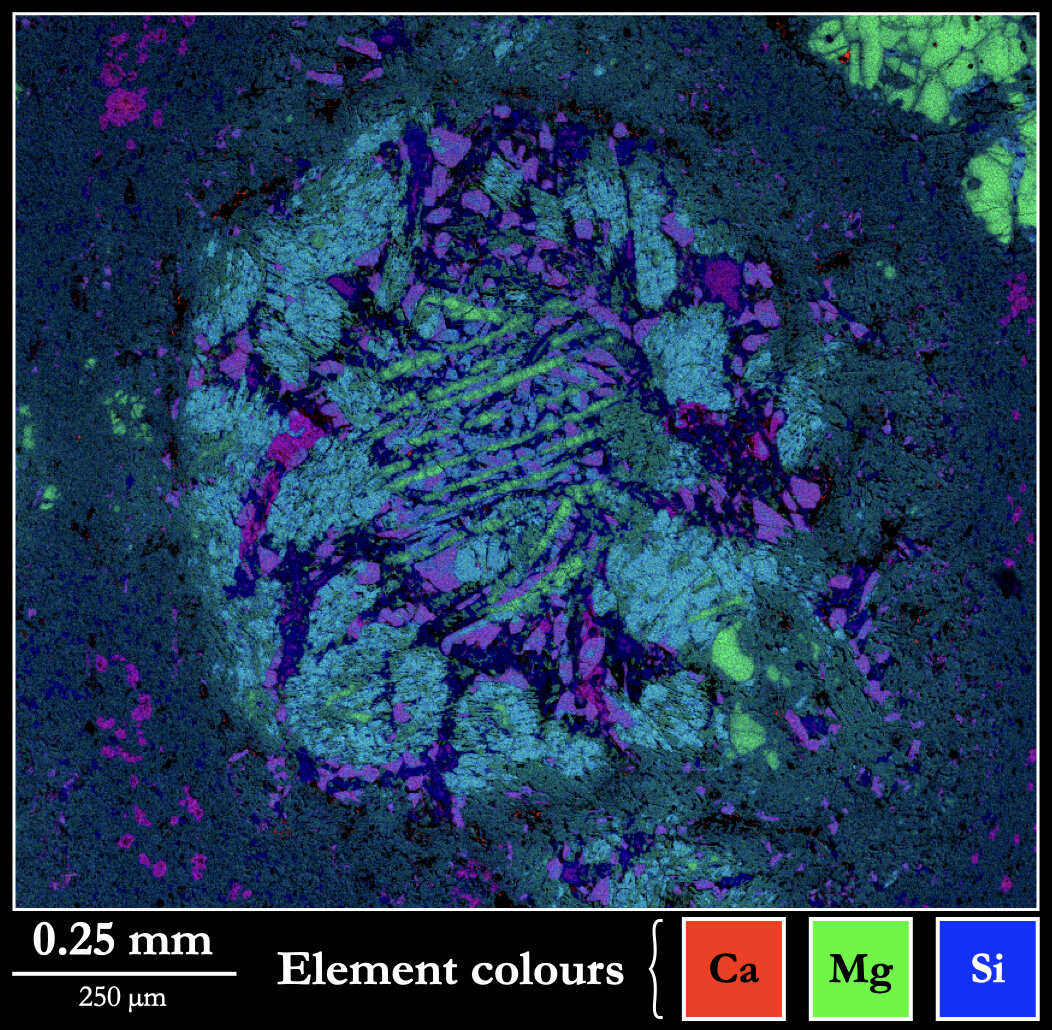
This is a gorgeous barred olivine chondrule from the Allende meteorite.
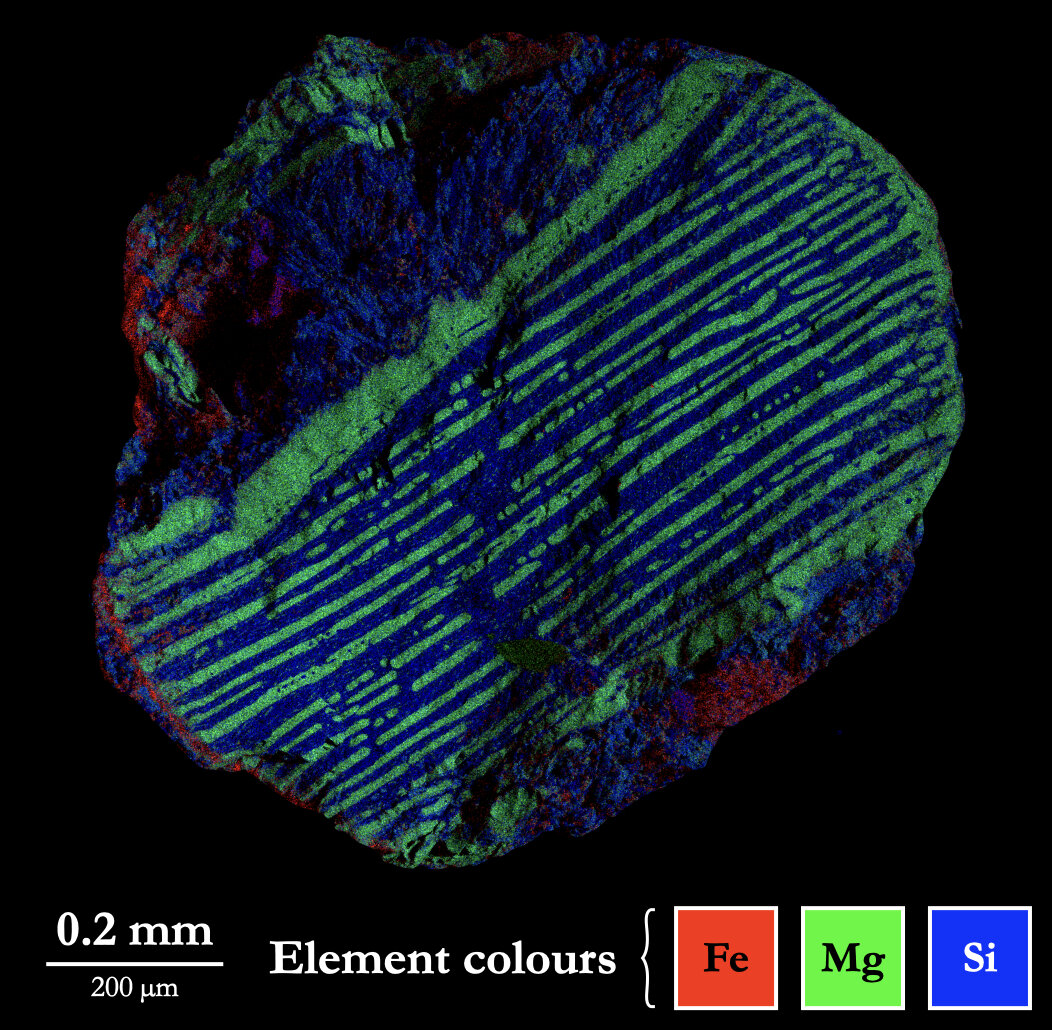
Chondrules are poppy seed-sized spheres that cooled and crystallised from once-molten droplets of molten rock. They are a major dusty building block of asteroids, comets, and planets. They are some of the oldest rocks in the Solar System, and exactly how they formed is a mystery.
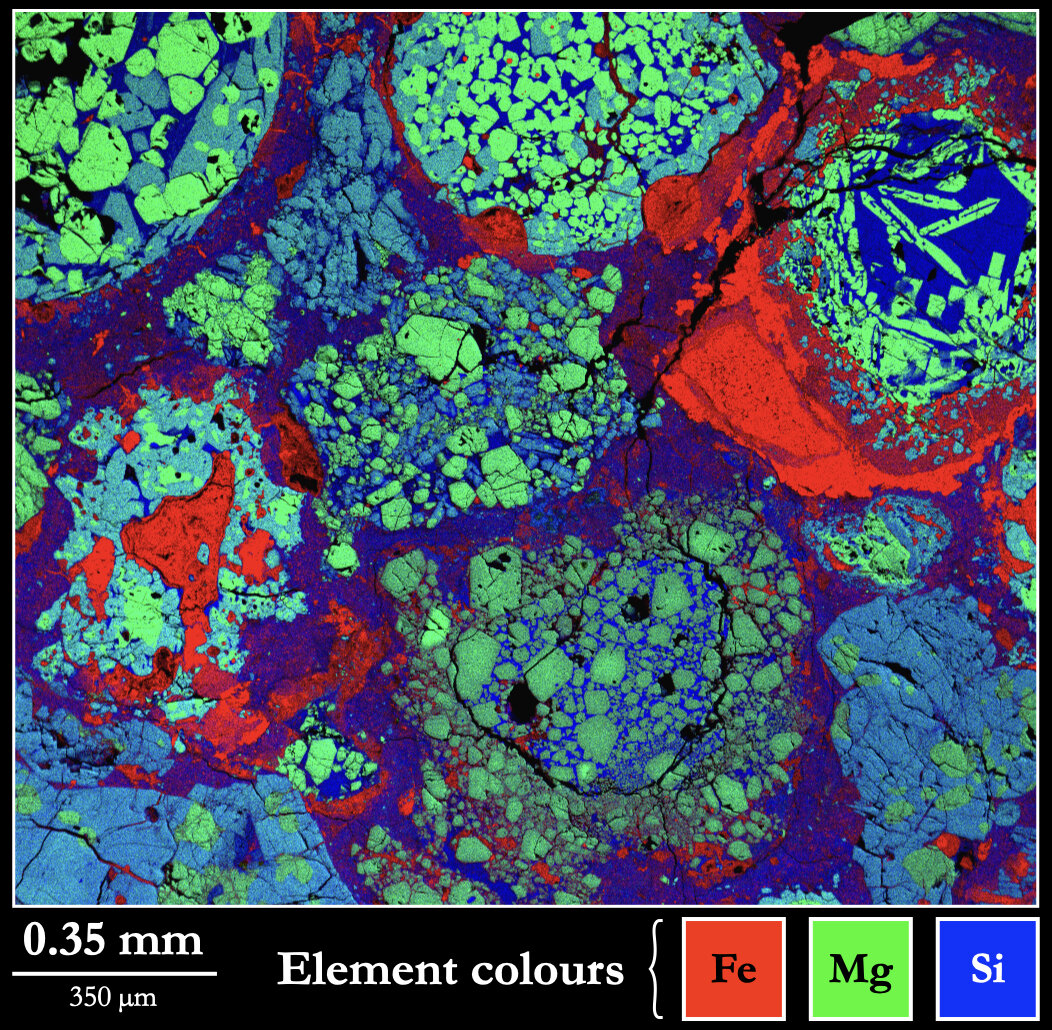
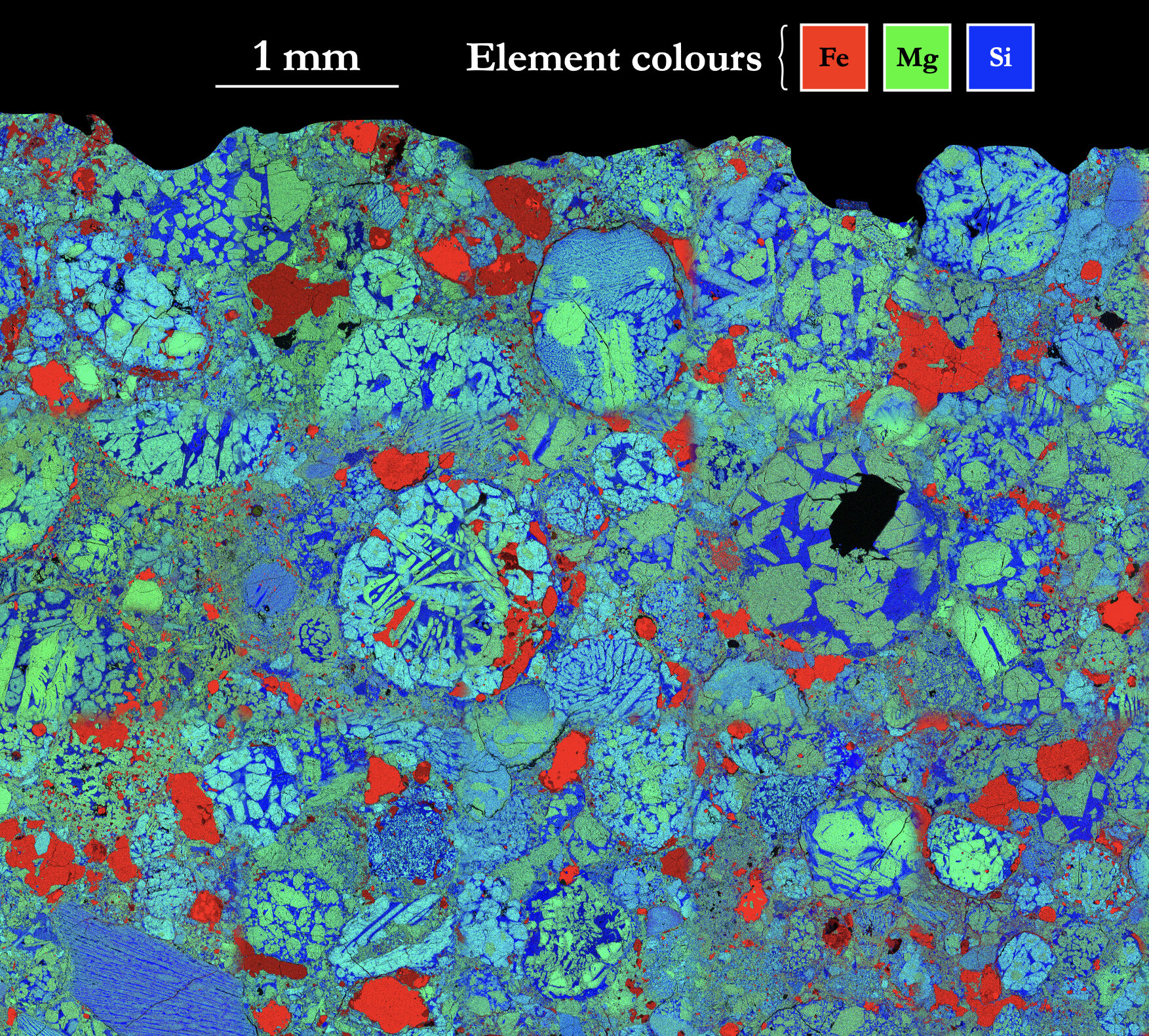
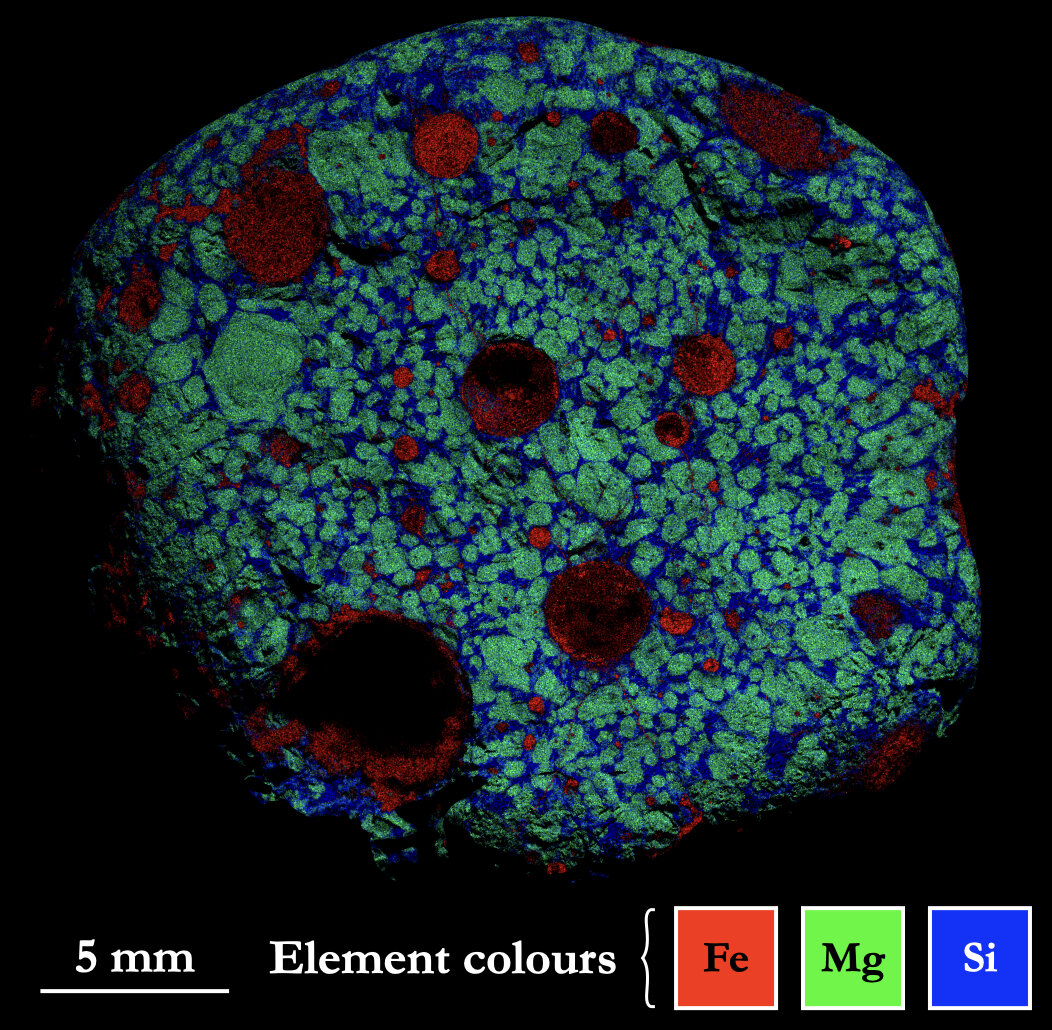
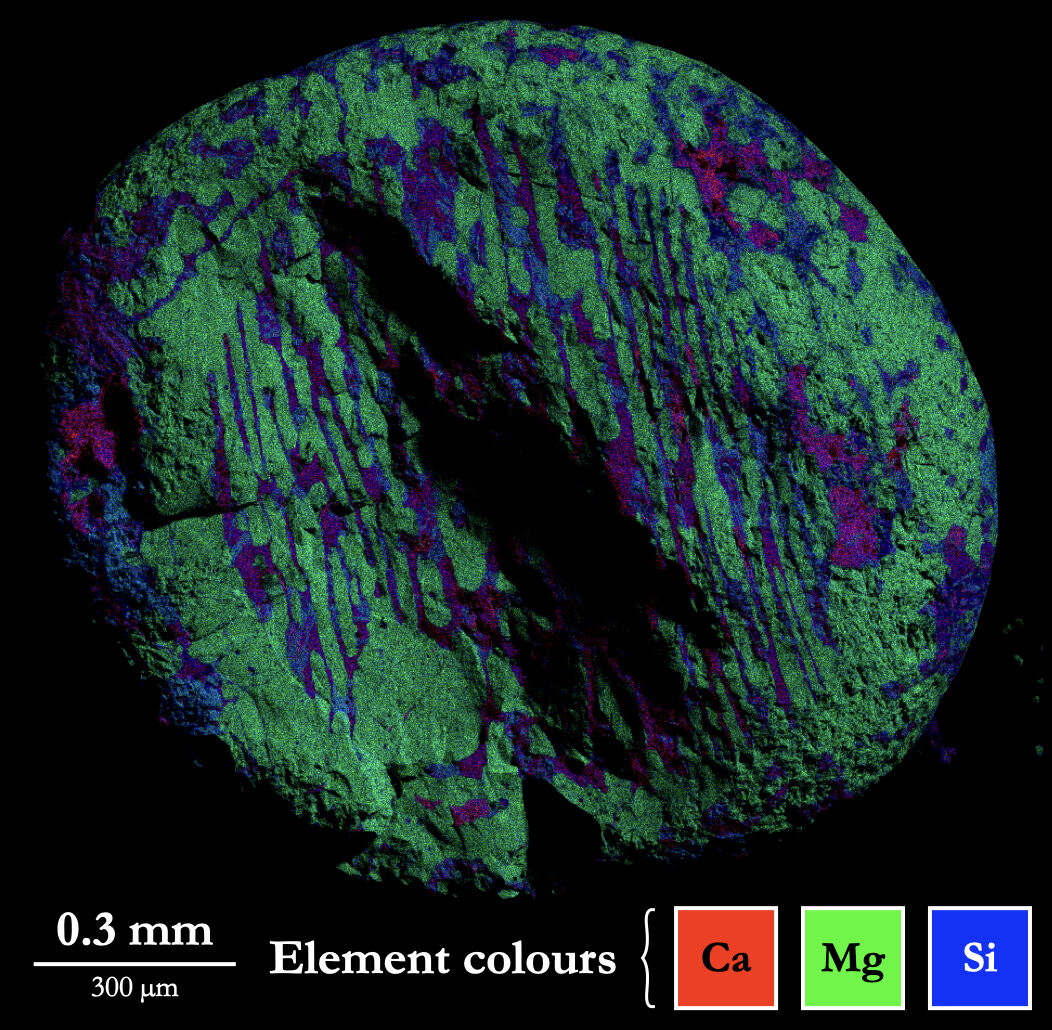
False-colour X-ray maps like this are acquired using a scanning electron microscope. When you hit a rock with a focused beam of electrons, it begins to ‘shine’ in X-rays. The wavelengths (‘colours’) of those X-rays allow you to identify the elements present. By doing this across the surface of a rock, the elemental composition can be unpicked.
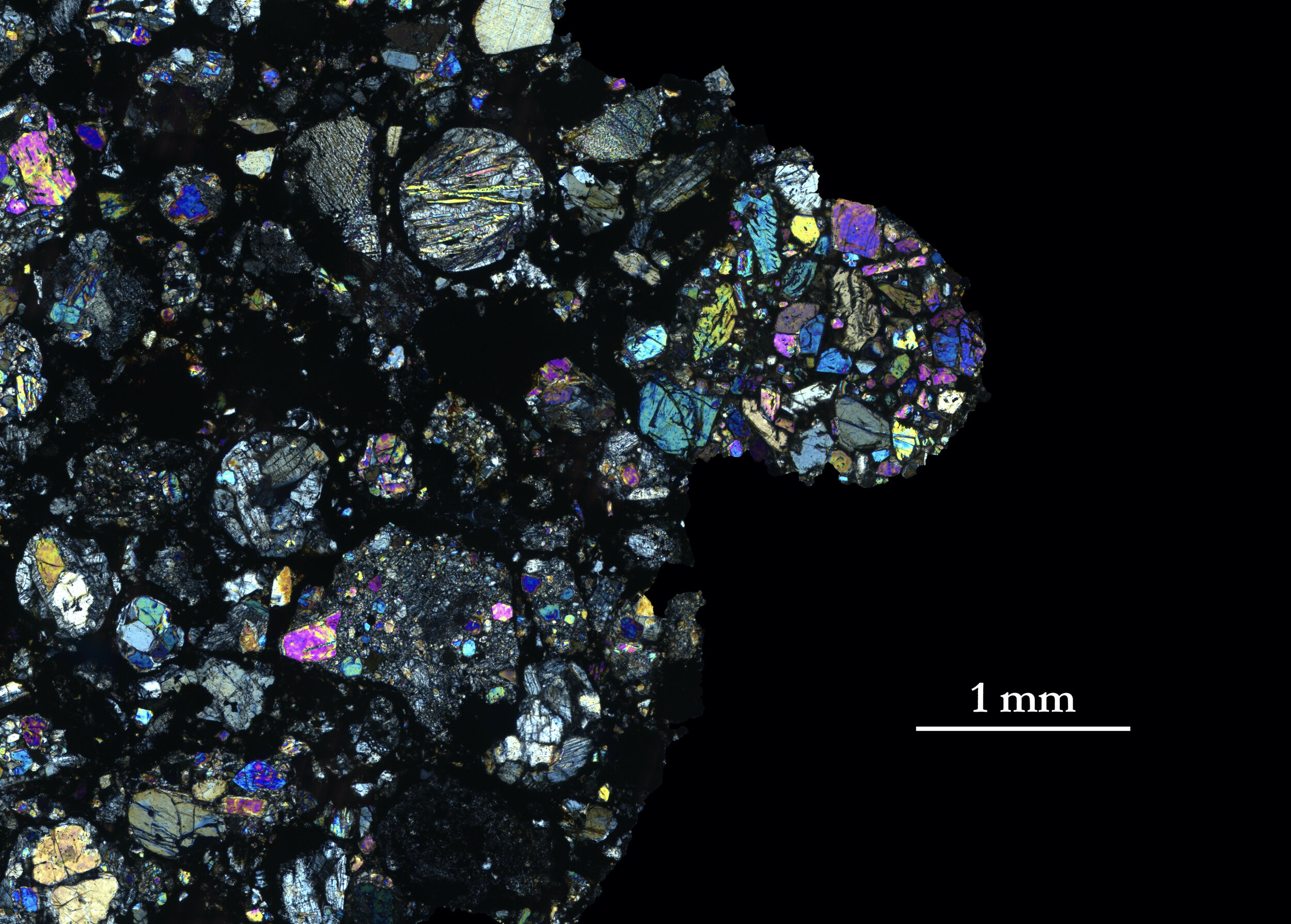
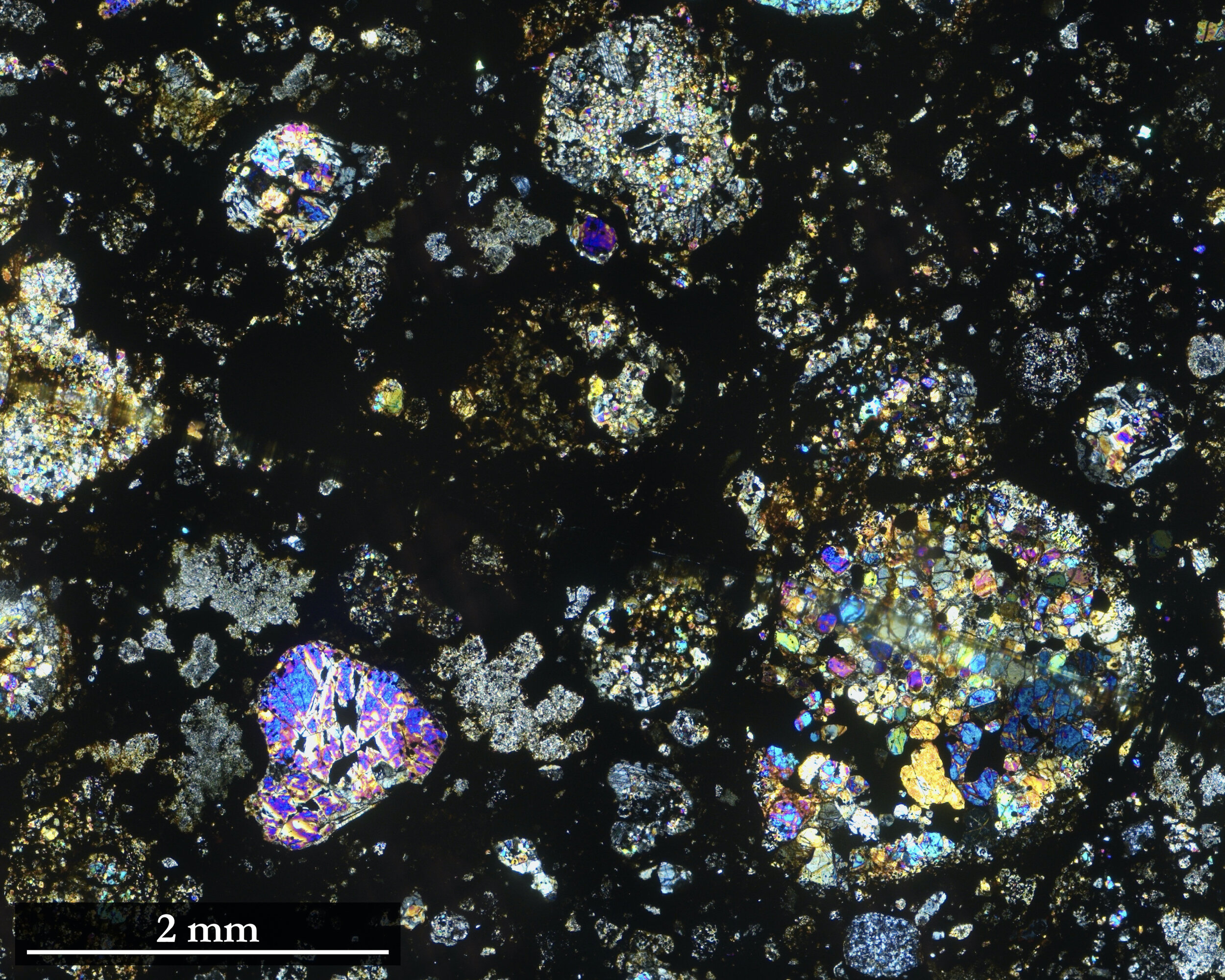
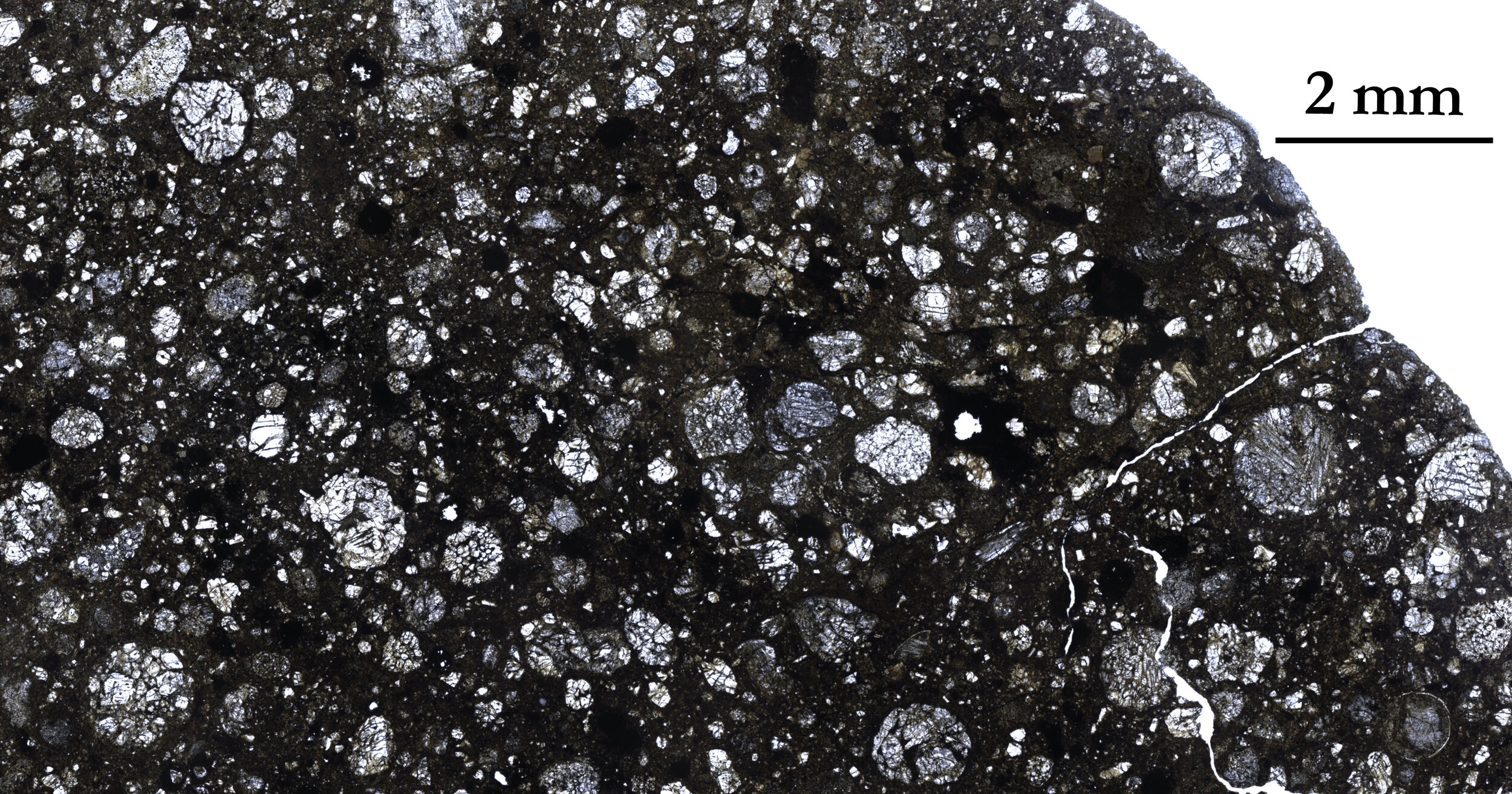
A thin section of the Chainpur ordinary chondrite. It is made almost entirely of rounded spherical chondrules. Chondrules are a major constituent of asteroids, and by extension are a major building block of planets.
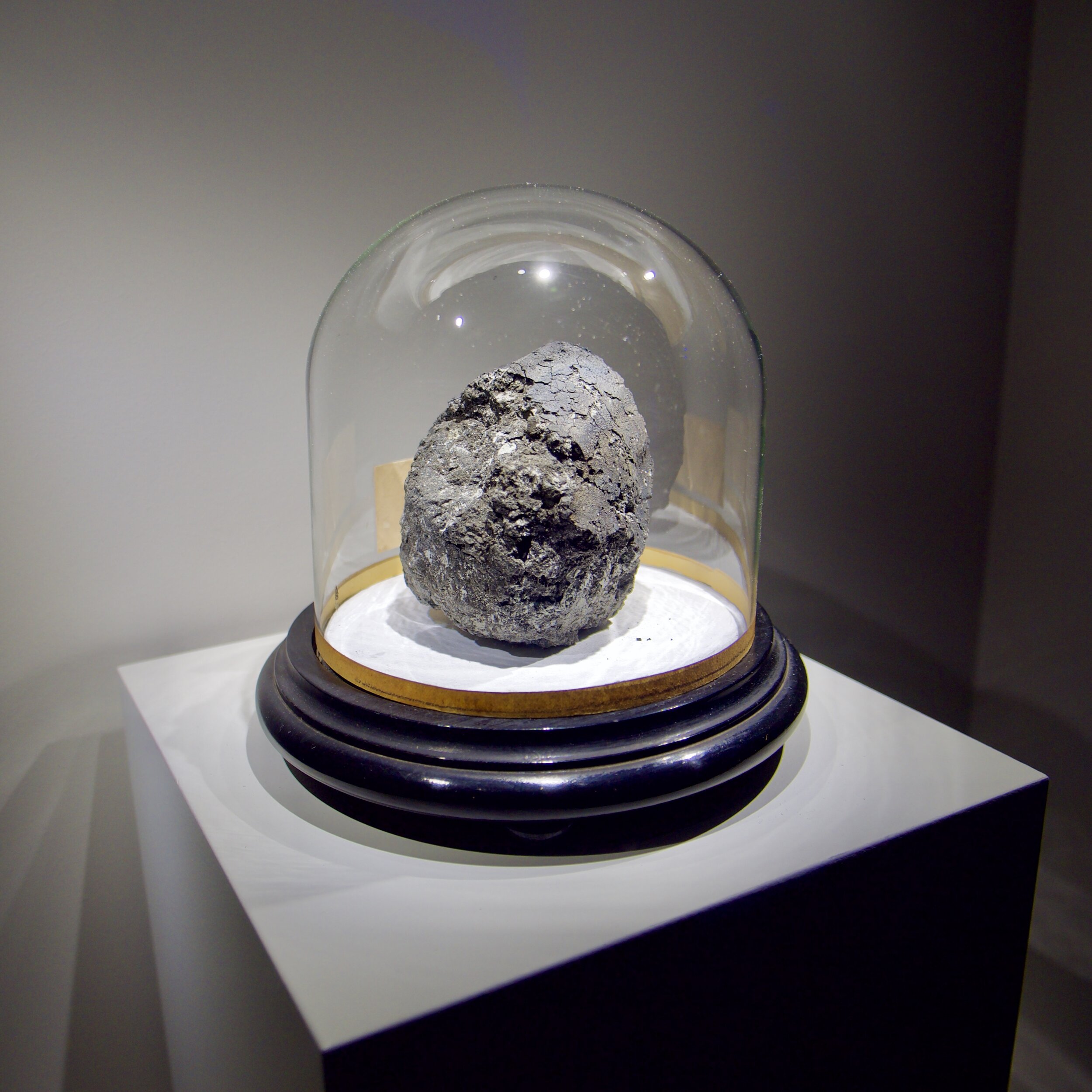
A large lump of the Allende meteorite in the Chicago Field Museum (2014).
A thin section of the Chainpur ordinary chondrite. It is made almost entirely of rounded spherical chondrules. Chondrules are a major constituent of asteroids, and by extension are a major building block of planets.
Nakhlites, along with the shergottites and chassignites, come from Mars. They are pieces of the Martian surface that arrive here on Earth as meteorites.
Nakhlites formed deep within a magma chamber beneath the Martian surface, and cooled and crystallised to form solid igneous rock.
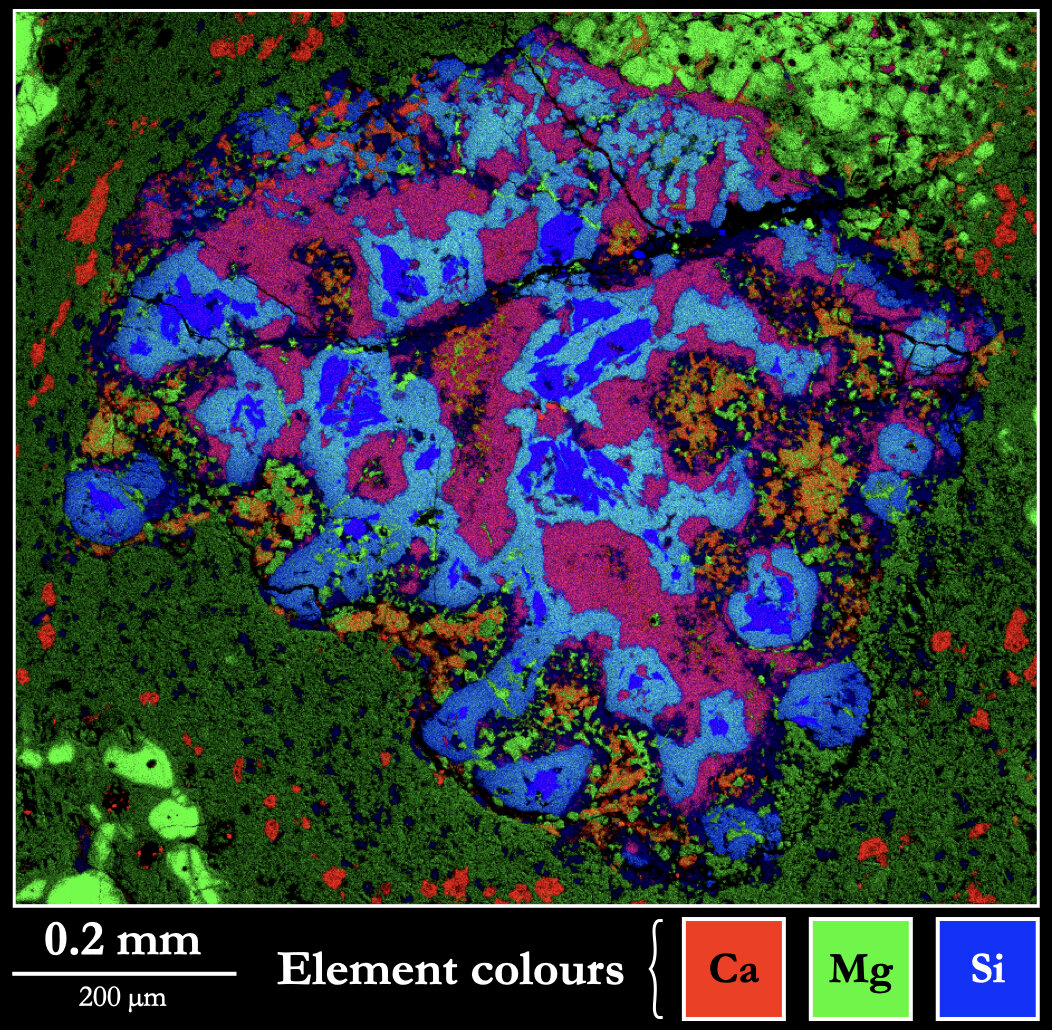
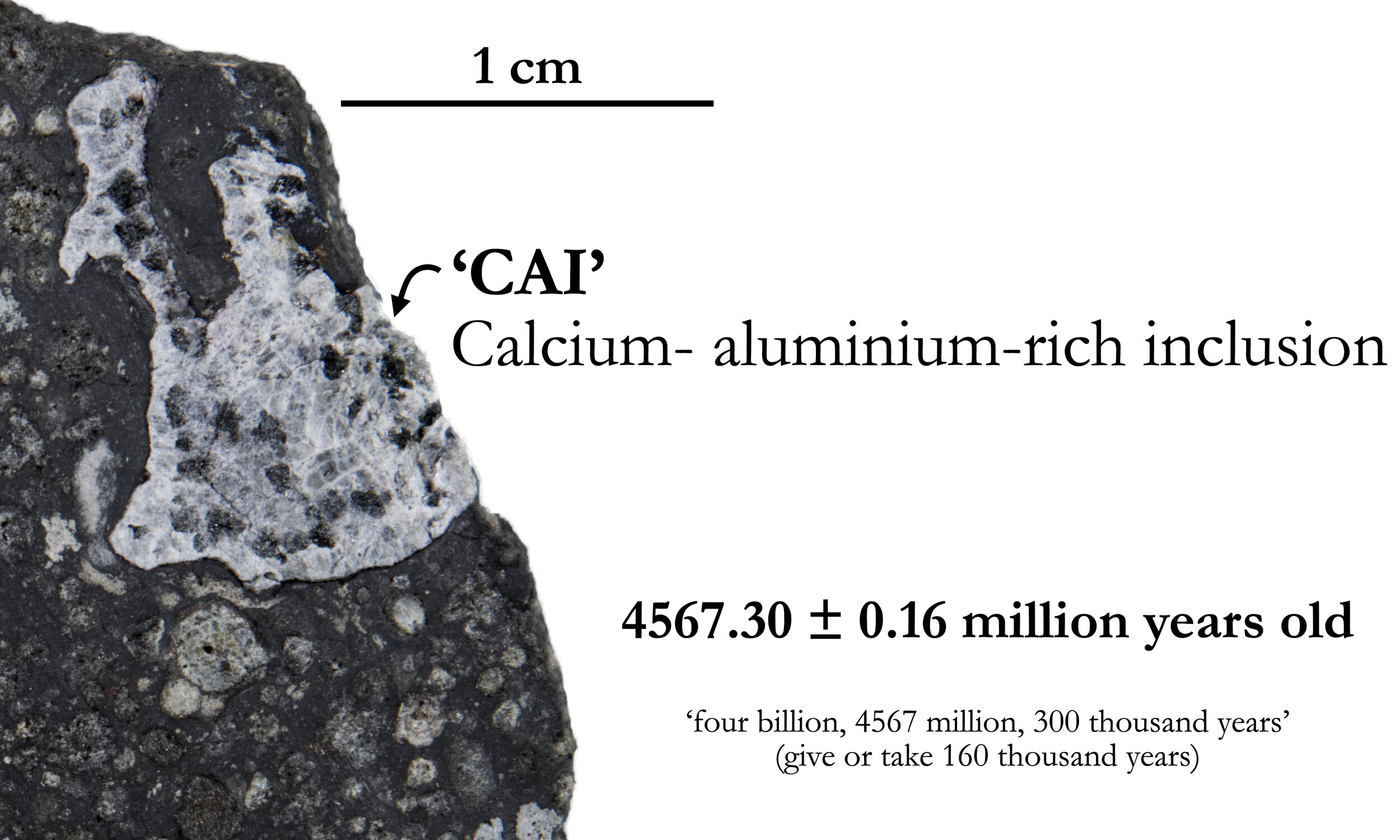
This is a CAI (calcium- aluminium-rich inclusion) from the Allende meteorite. CAIs formed next to the Sun and were the first motes of dust to form as our Solar System was assembling itself 4,567-million years ago.
False-colour X-ray maps like this are acquired using a scanning electron microscope. When you hit a rock with a focused beam of electrons, it begins to ‘shine’ in X-rays. The wavelengths (‘colours’) of those X-rays allow you to identify the elements present. By doing this across the surface of a rock, the elemental composition can be unpicked.
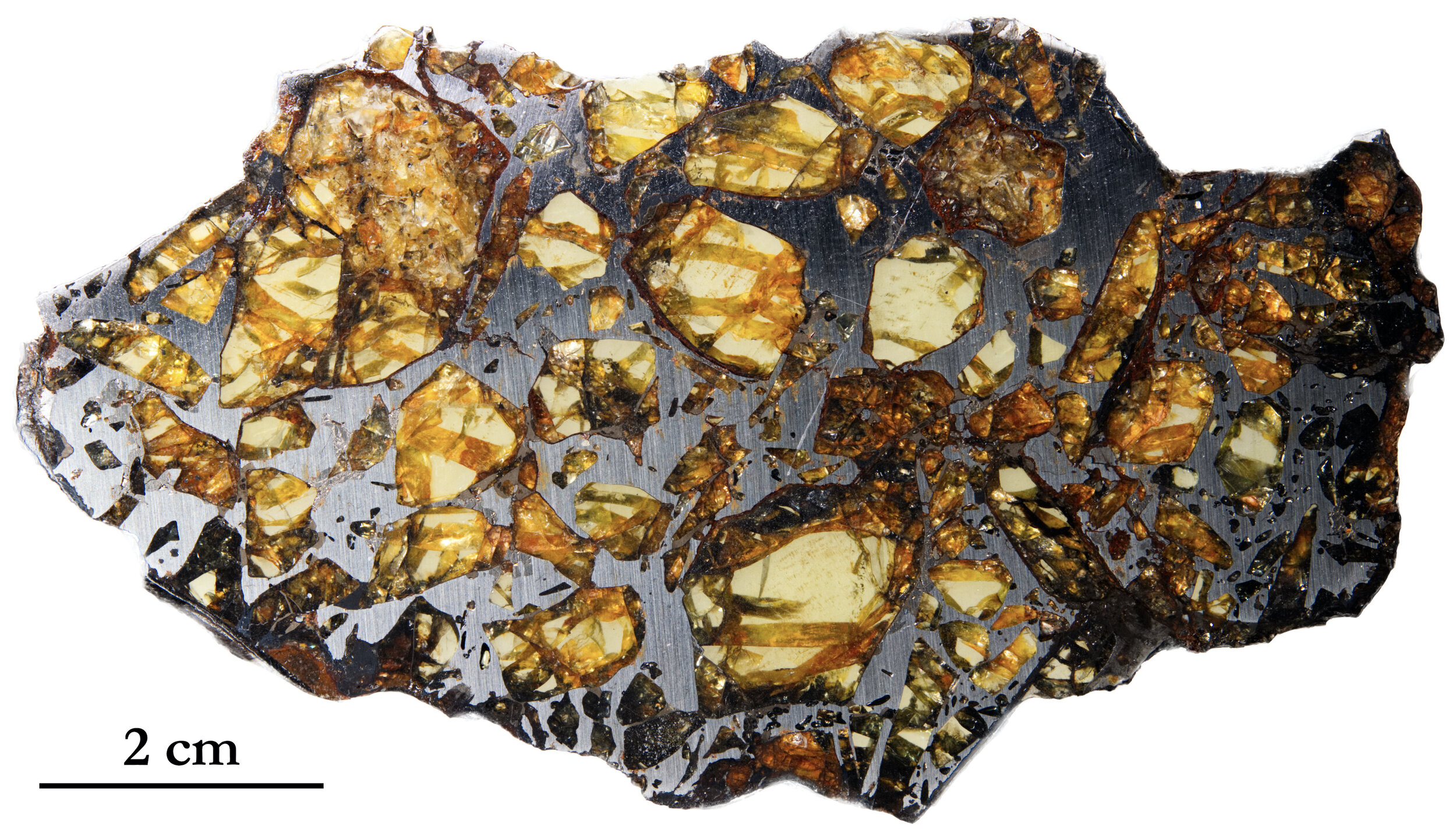
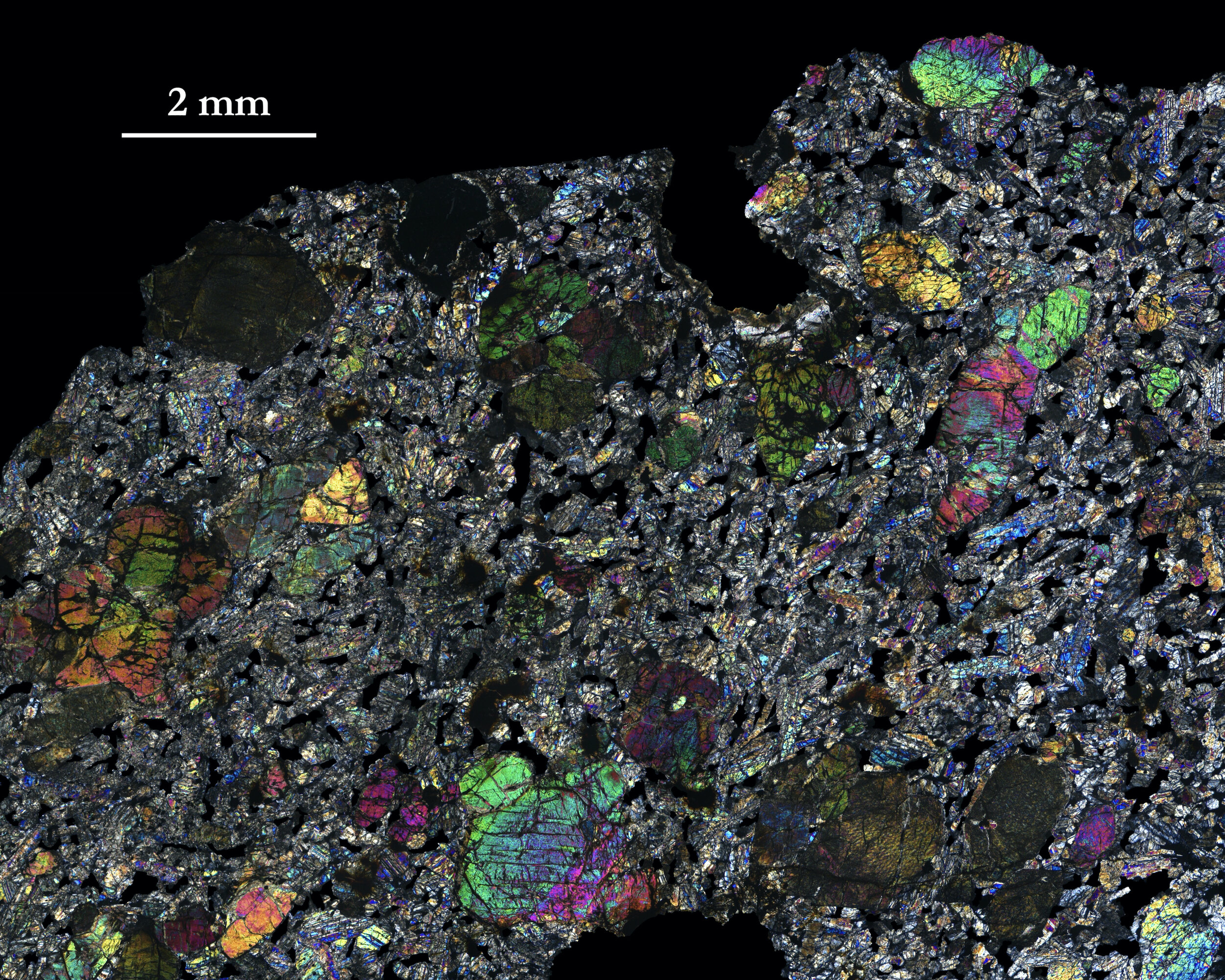
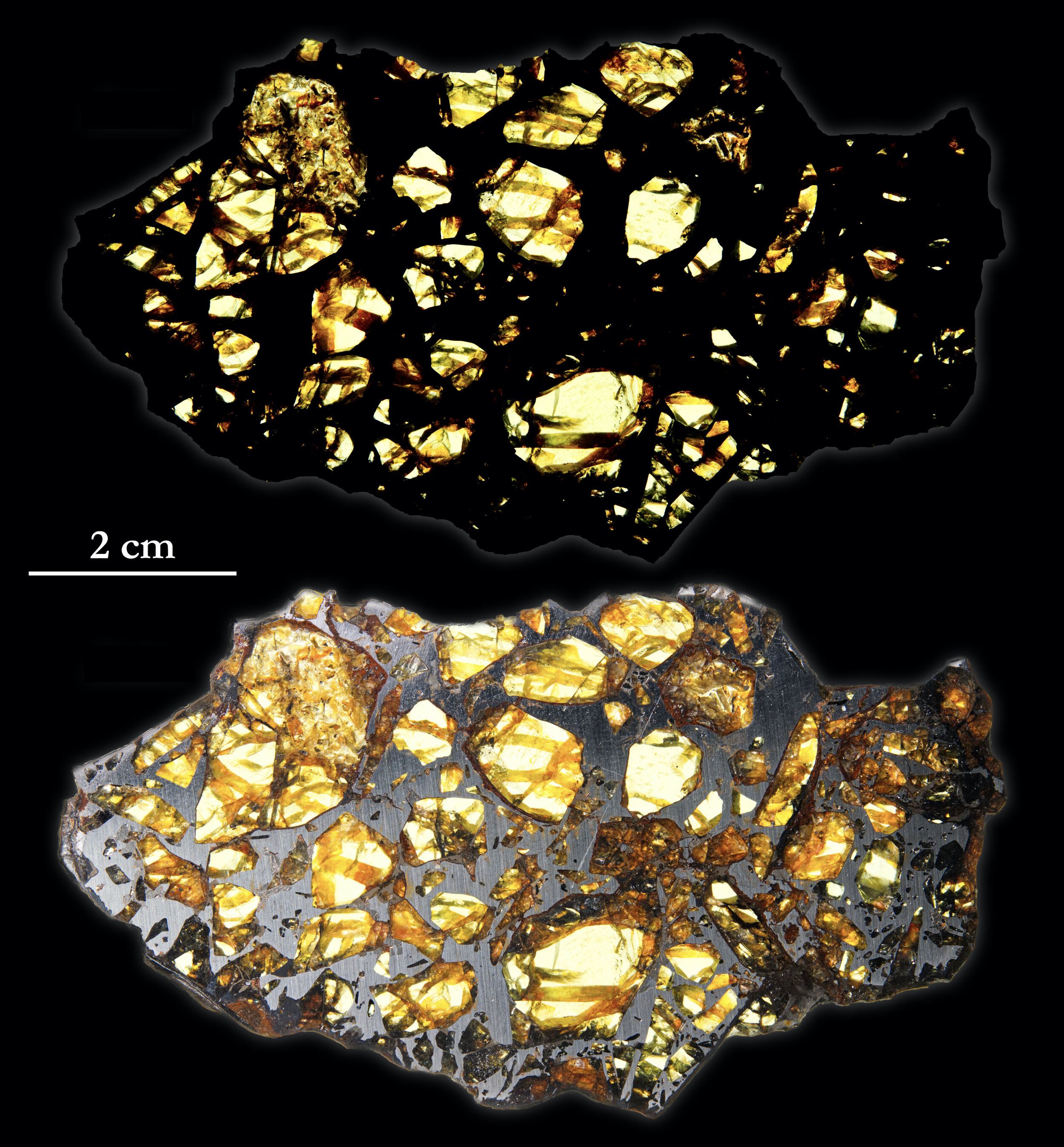
Pallasites are perhaps the most beautiful of all meteorites. They are made from a mixture of metallic iron and olivine (aka. peridot). Pallasites formed as two asteroids collided, and the metallic portion of one mixed with the rocky portion of the other. When sliced thinly, they resemble stained glass windows.
A thin section of the Chainpur ordinary chondrite. It is made almost entirely of rounded spherical chondrules. Chondrules are a major constituent of asteroids, and by extension are a major building block of planets.
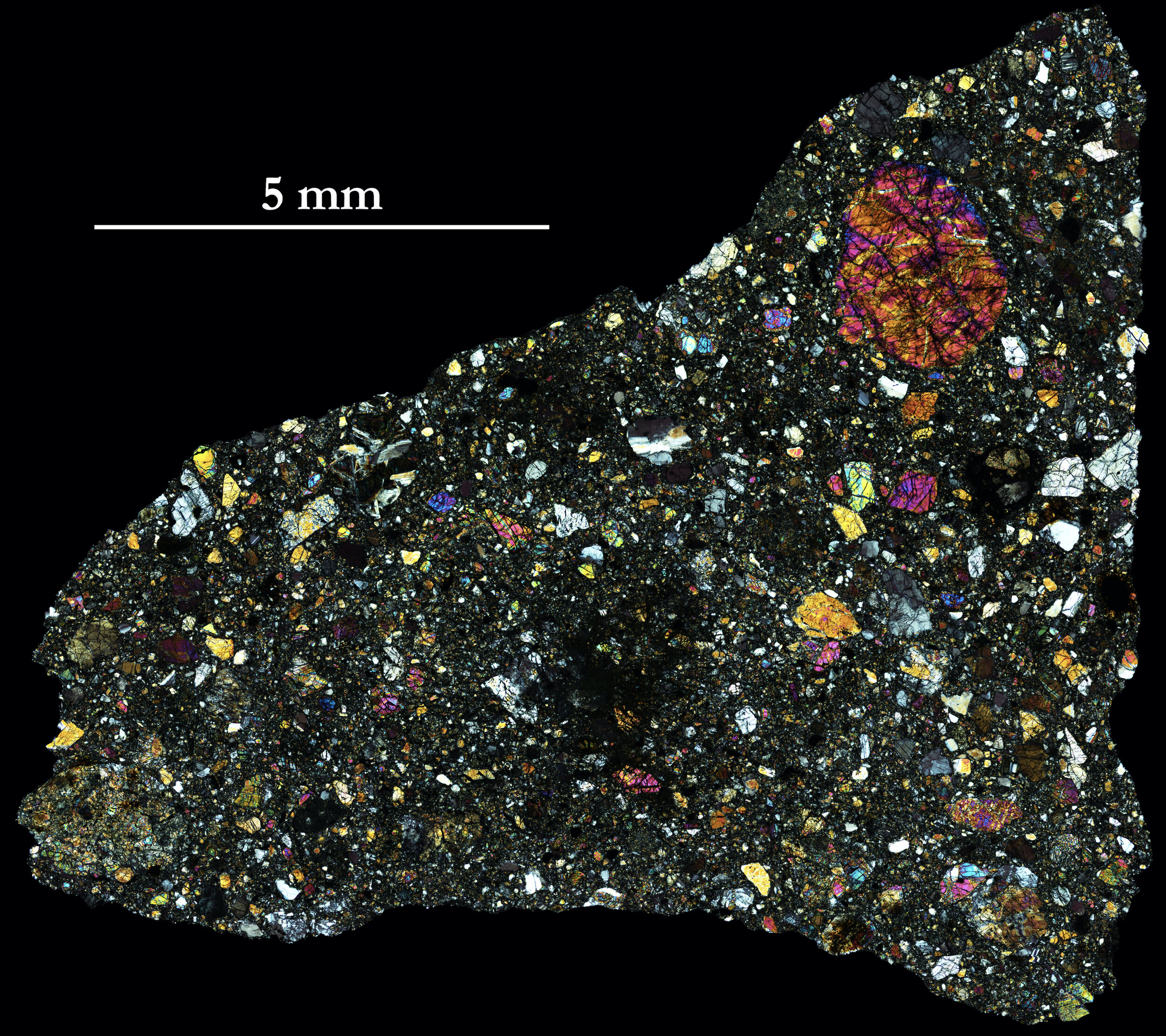
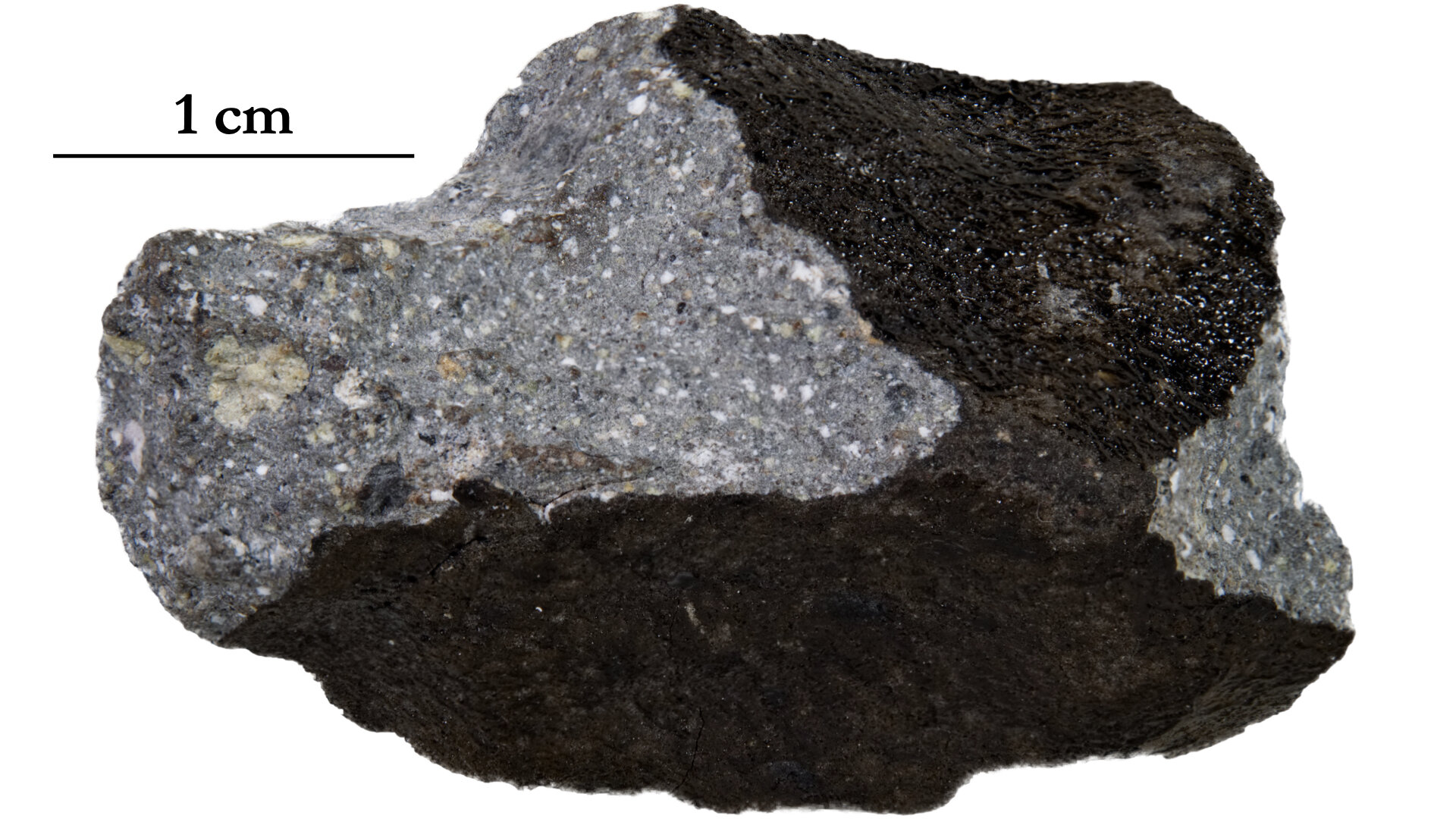
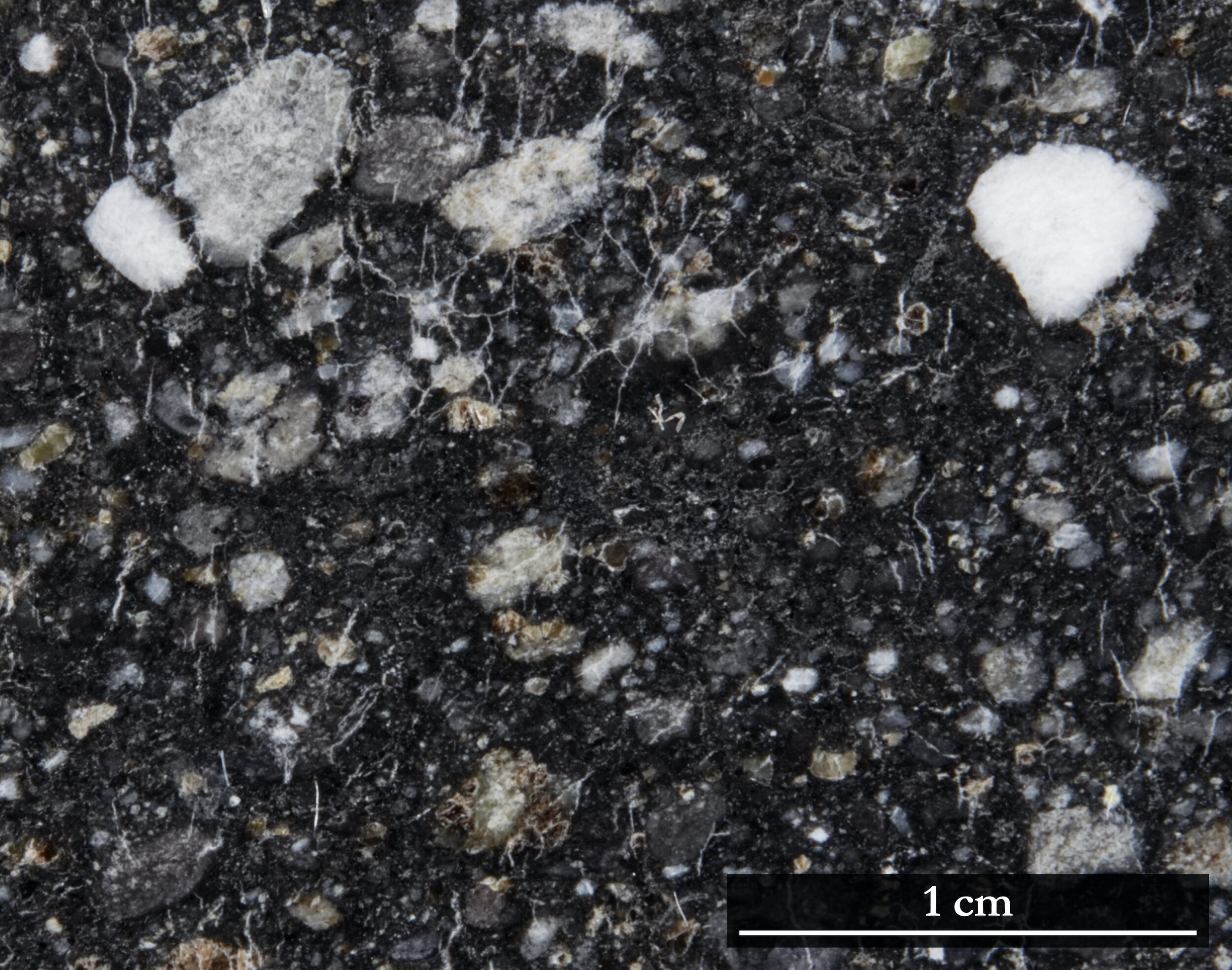
Howardites come from an asteroid that melted shortly after it formed. As their parent asteroid cooled, a crust of igneous rock formed, and over time, this rocky crust was smashed into countless pieces by impacts from space. These shattered pieces were welded together to form the howardites, which is why they have a ‘broken’ texture.
Howardites, along with the diogenites and eucrites, belong to the HED clan of meteorites, which are thought to originate from asteroid Vesta.
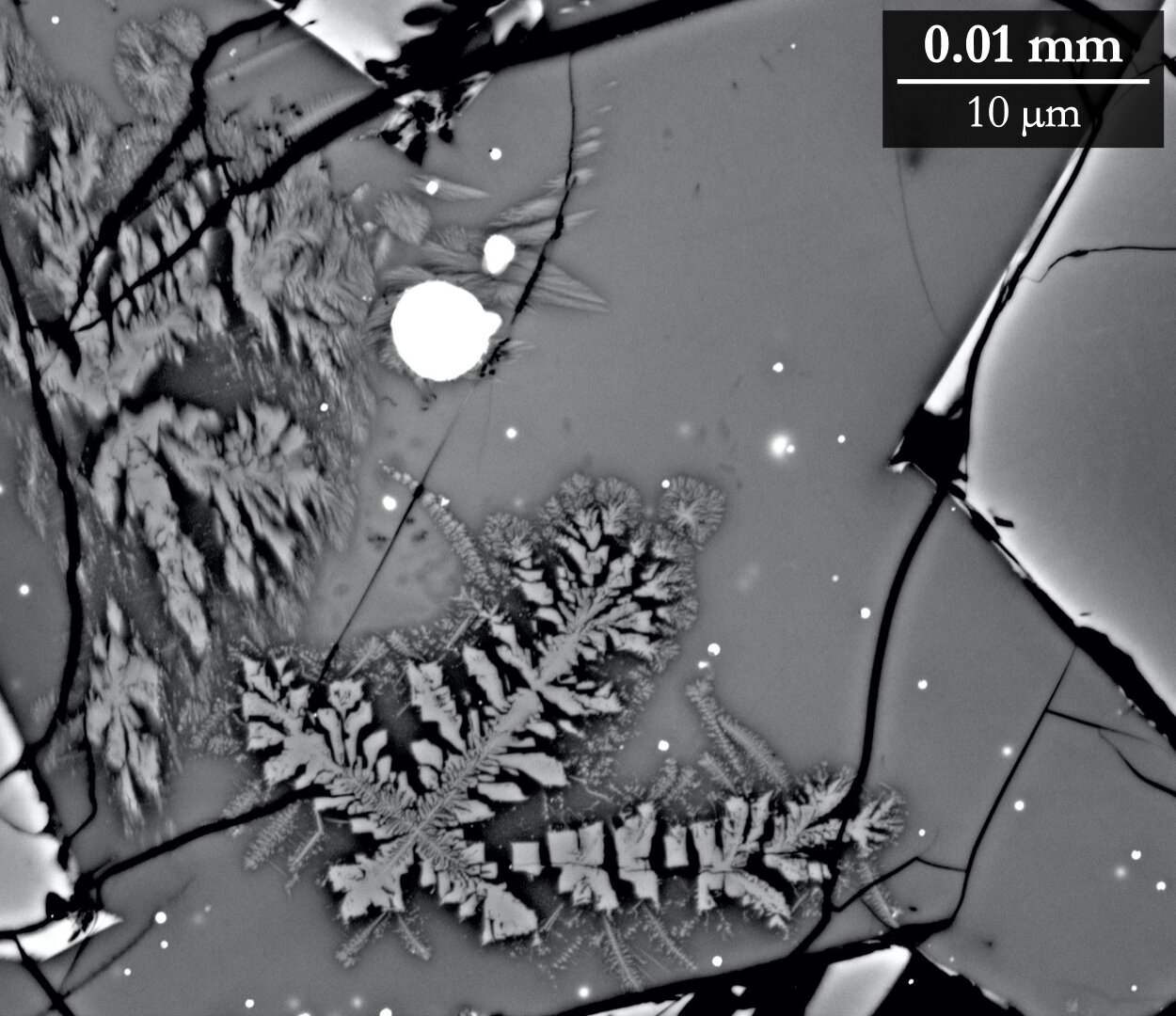
The glass in this chondrule has started to re-crystallise as snowflake-like crystals of a mineral named pyroxene.
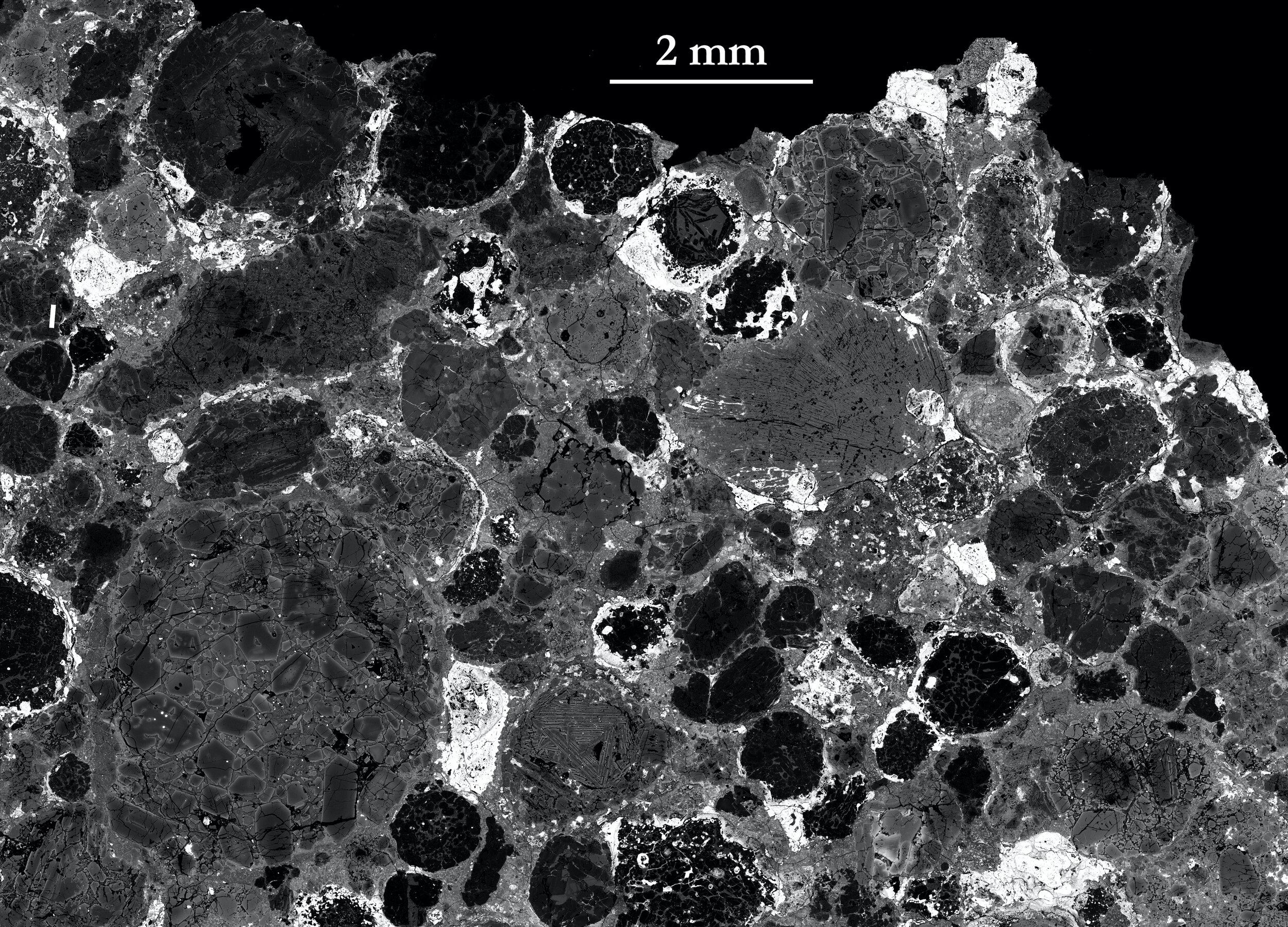
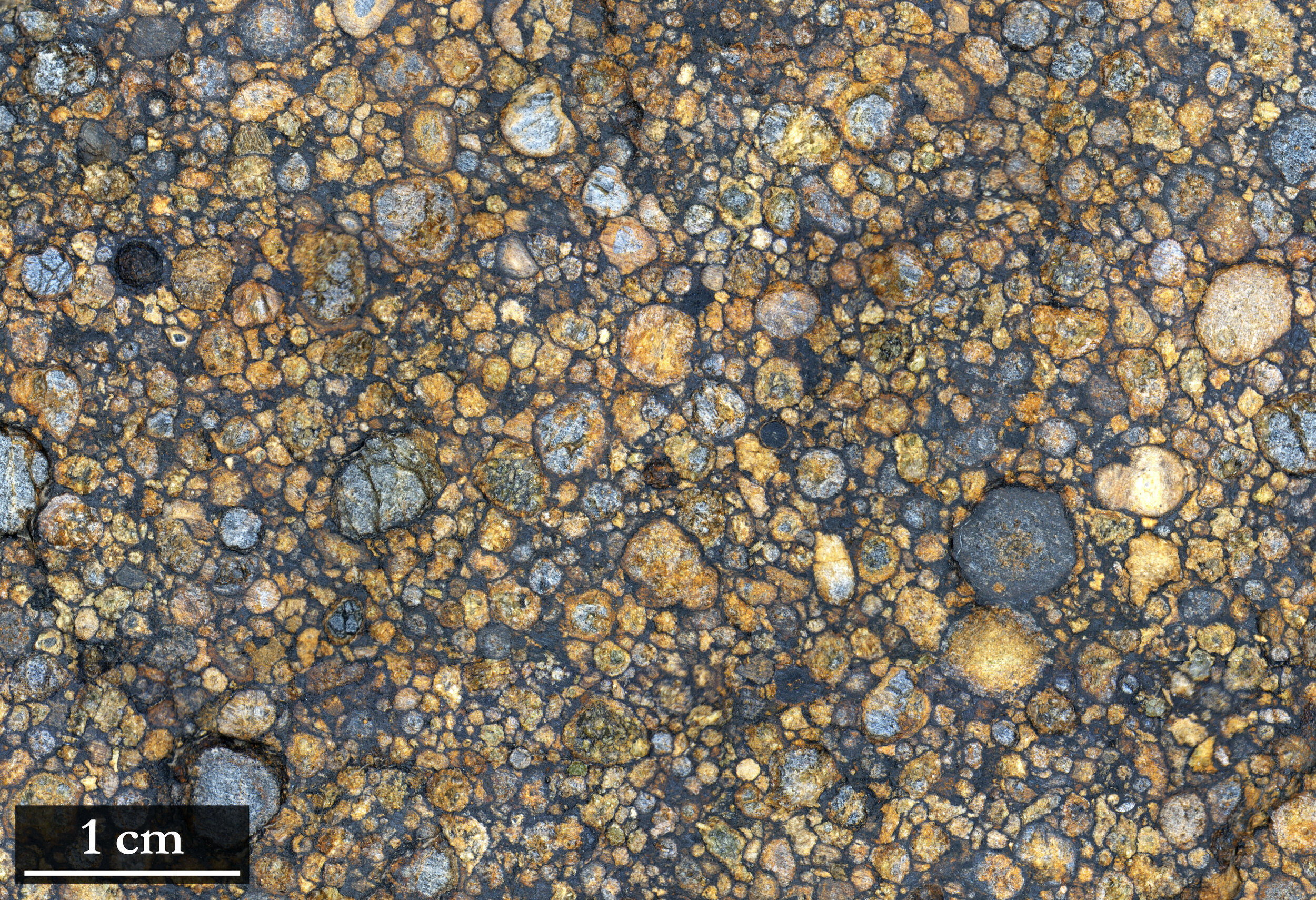
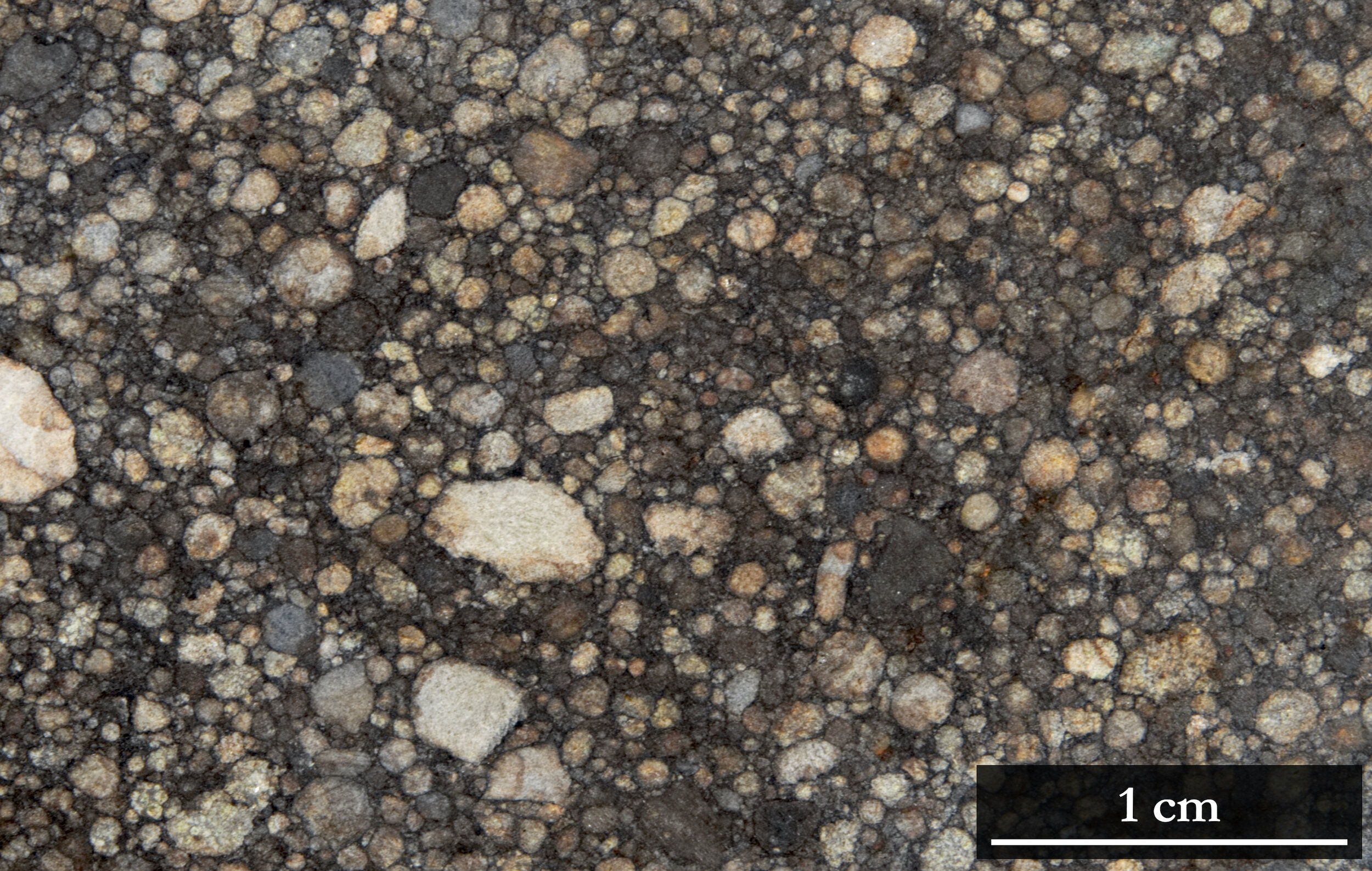
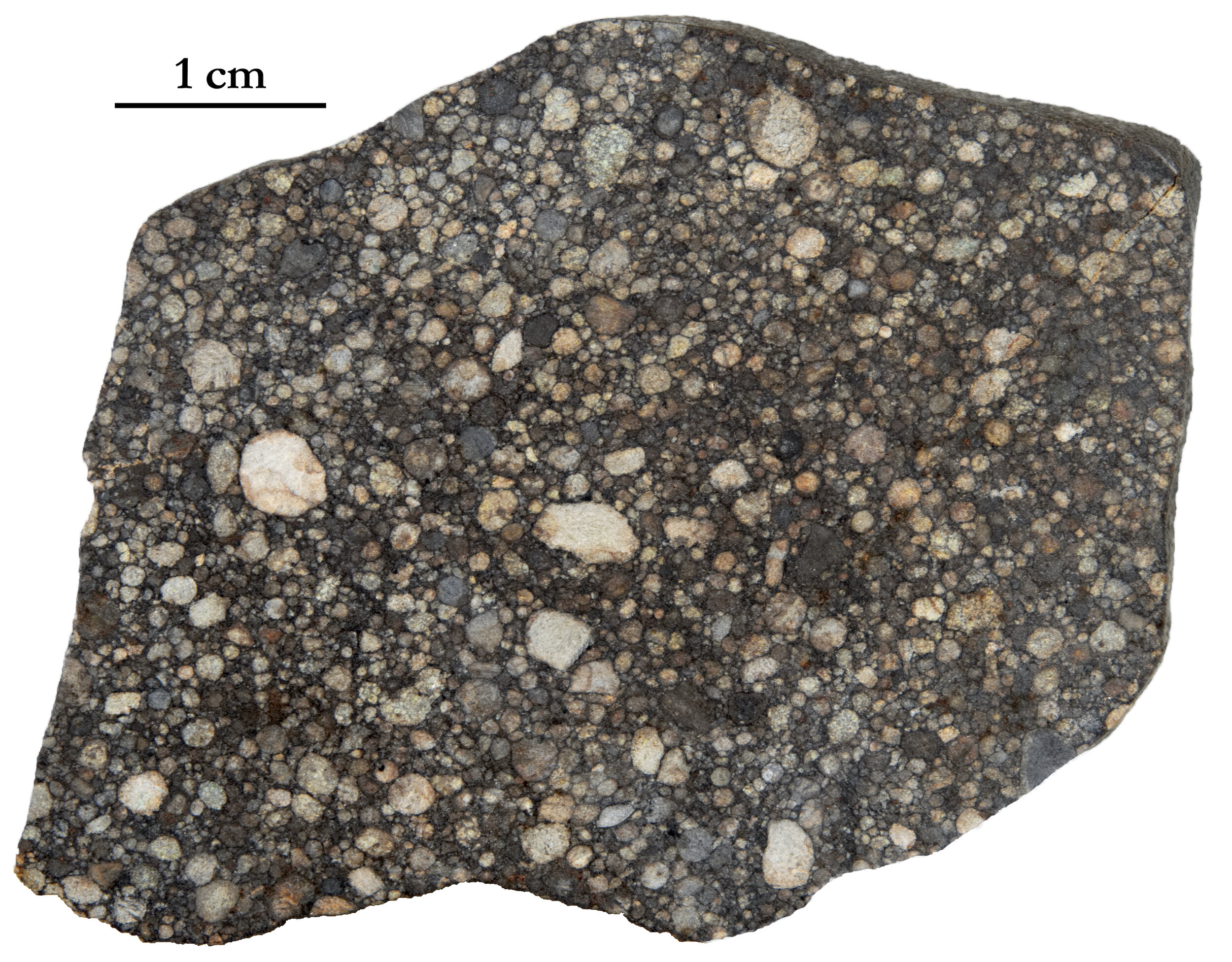
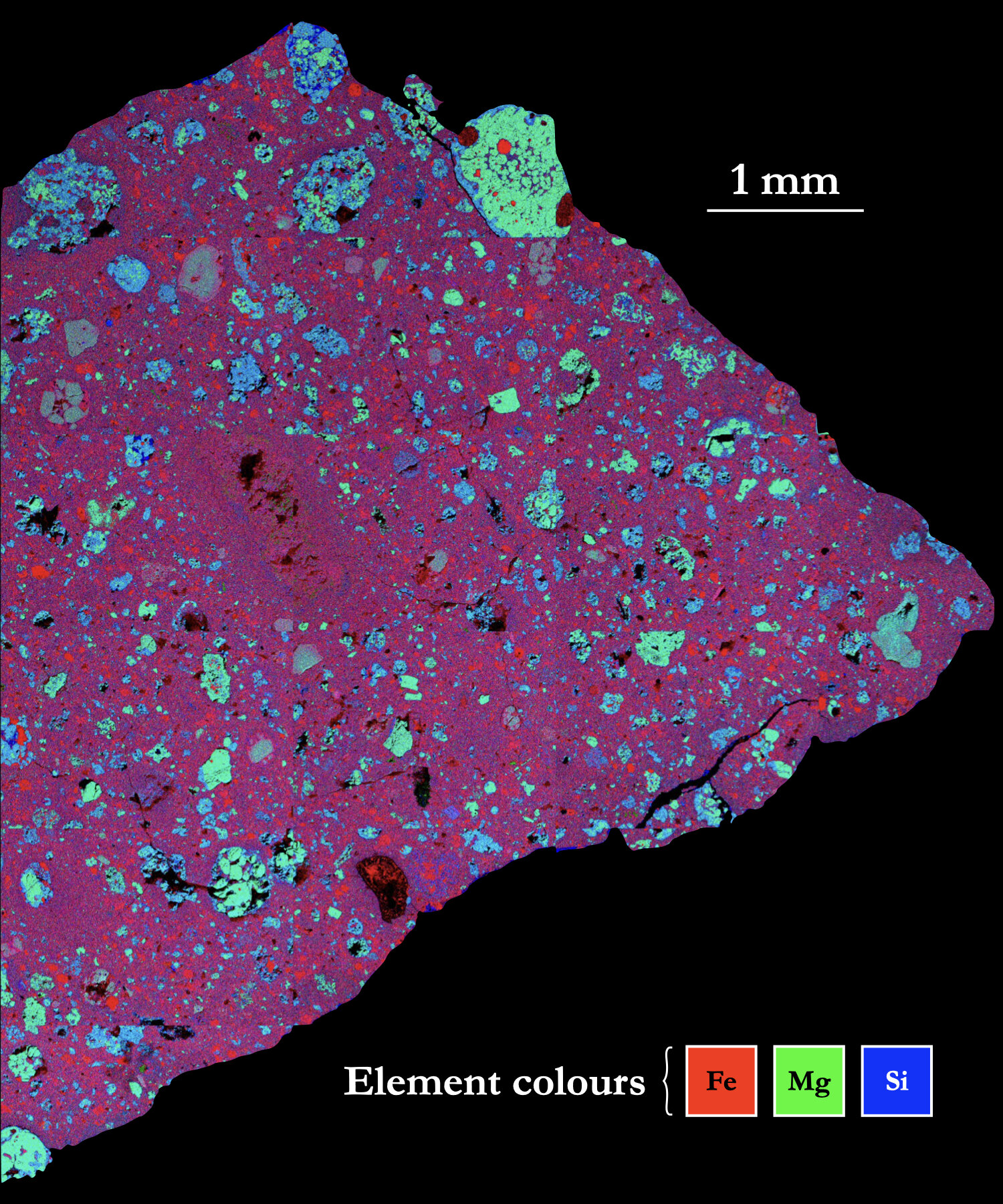
This is a polished surface of the Northwest Africa 5477 meteorite. It is assembled mostly from rounded chondrules. Chondrules are frozen droplets of once-molten rock that formed in a zero-gravity environment as our Solar System was forming.
False-colour X-ray maps like this are acquired using a scanning electron microscope. When you hit a rock with a focused beam of electrons, it begins to ‘shine’ in X-rays. The wavelengths (‘colours’) of those X-rays allow you to identify the elements present. By doing this across the surface of a rock, the elemental composition can be unpicked.
Chondrules are poppy seed-sized spheres that cooled and crystallised from once-molten droplets of molten rock. They are a major dusty building block of asteroids, comets, and planets. They are some of the oldest rocks in the Solar System, and exactly how they formed is a mystery.
Urelites are composed of interlocking grains of olivine, surrounded by a dark network of graphite. They have been severely shocked by high-energy impacts, which has turned some of the graphite into diamond.
Collections
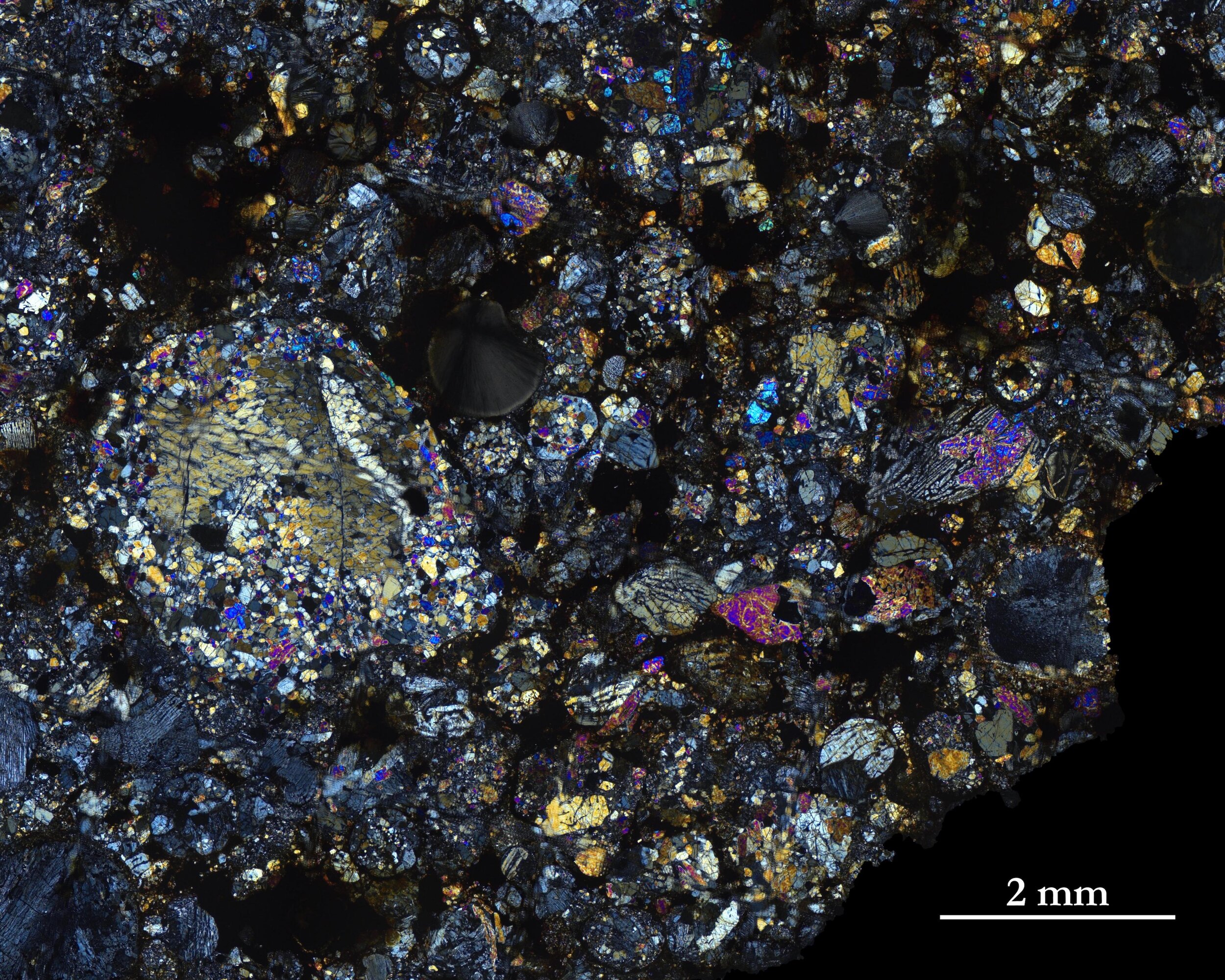
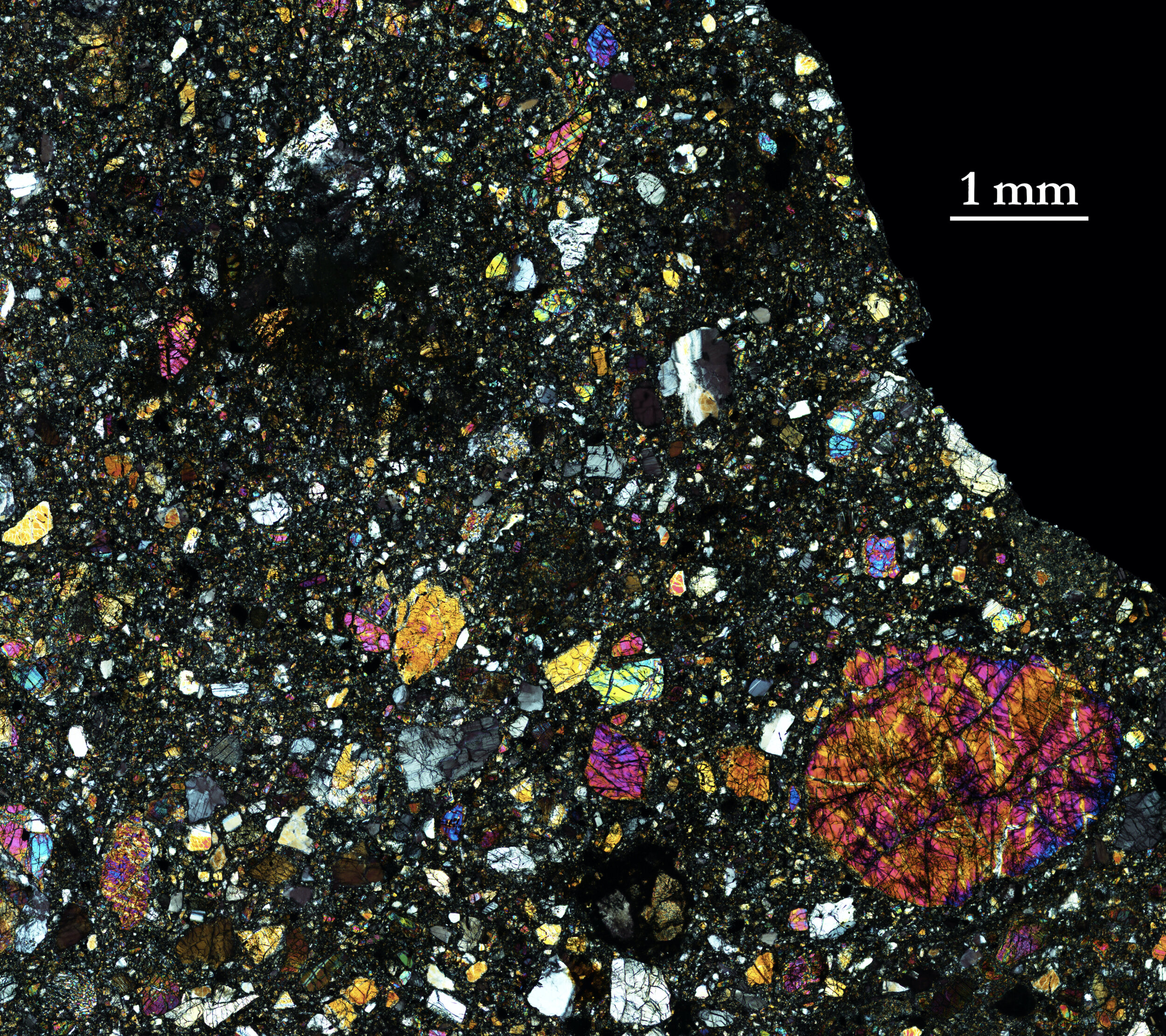
A thin section of the Krymka ordinary chondrite. It is made almost entirely of chondrules. Chondrules are a major constituent of asteroids, and by extension are a major building block of planets.
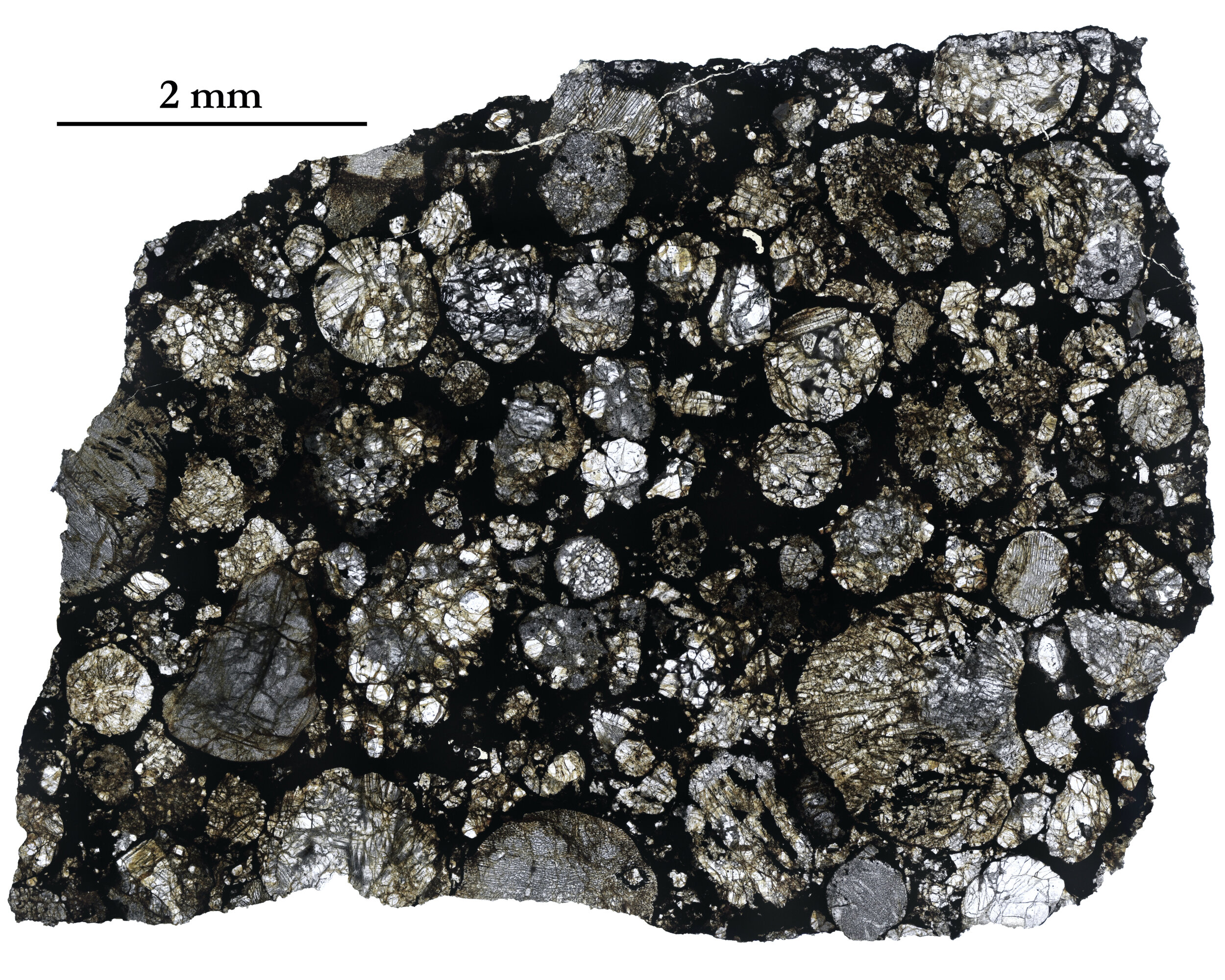
A thin section of the Allende carbonaceous chondrite. It is made from motes of dust that coalesced to form asteroids, comets, and planets some 4.6-billion-years ago.
A thin section of the Ornans carbonaceous chondrite. It is made from motes of dust that coalesced to form asteroids, comets, and planets some 4.6-billion-years ago.
Diogenites are made almost entirely of a volcanic crystal called orthopyroxene. They originate from an asteroid that once melted entirely. As their parent asteroid cooled, large grains of orthopyroxene crystallised from the magma and sank to the base of the crust where they accumulated to form vast piles. They were later excavated by catastrophic impacts into the surface of the asteroid which is how they attained their ‘broken’ texture.
Diogenites, along with the howardites and eucrites, belong to the HED clan of meteorites, which are thought to originate from asteroid Vesta.
Diogenites are made almost entirely of a volcanic crystal called orthopyroxene. They originate from an asteroid that once melted entirely. As their parent asteroid cooled, large grains of orthopyroxene crystallised from the magma and sank to the base of the crust where they accumulated to form vast piles. They were later excavated by catastrophic impacts into the surface of the asteroid which is how they attained their ‘broken’ texture.
Diogenites, along with the howardites and eucrites, belong to the HED clan of meteorites, which are thought to originate from asteroid Vesta.
Shergottites, along with the nakhlites and chassignites, come from Mars. They are pieces of the Martian surface that arrive here on Earth as meteorites.
Shergottites formed as magma oozed across the Martian surface as a thick carpet of molten rock, and cooled and crystallised to form solid igneous rock.
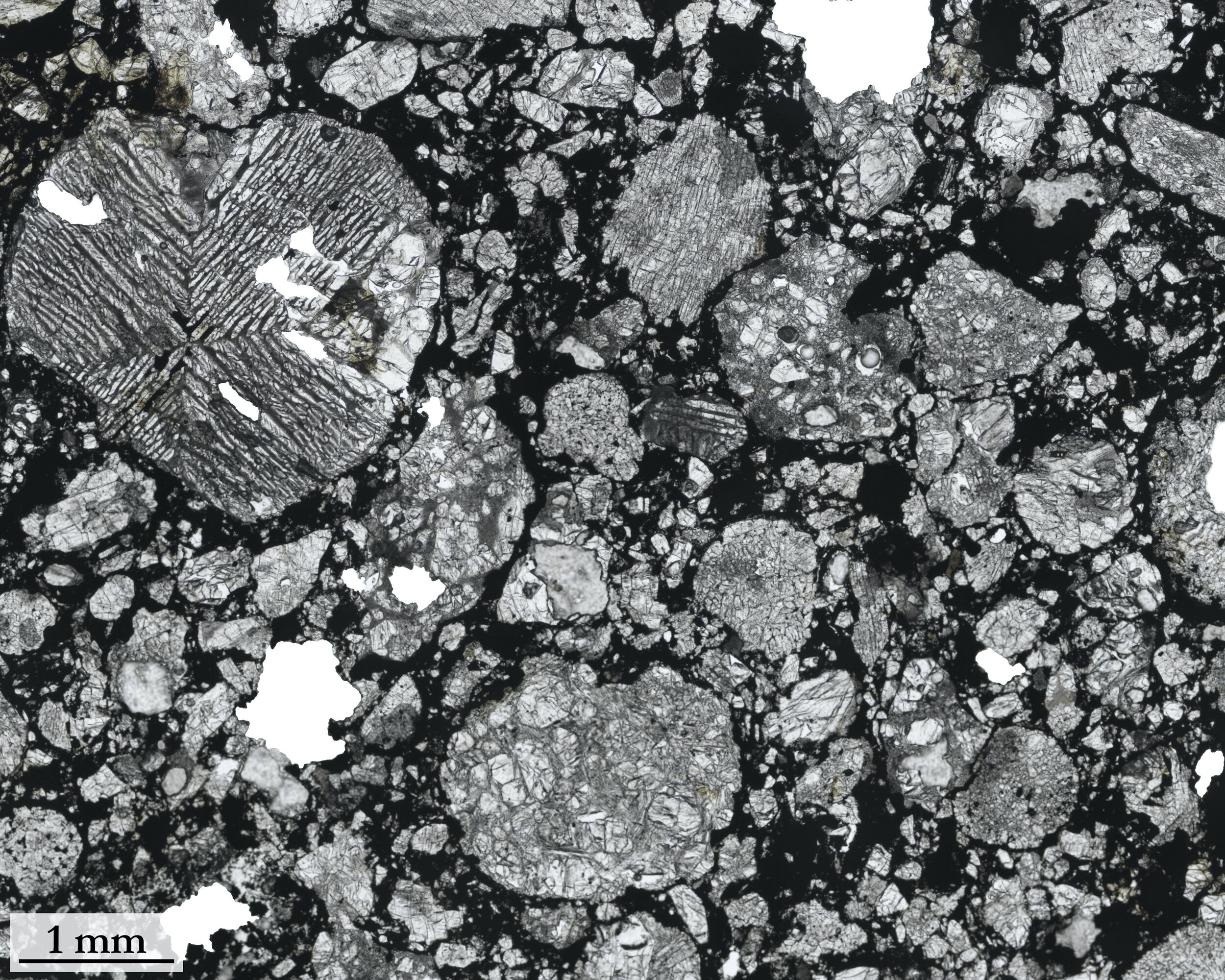
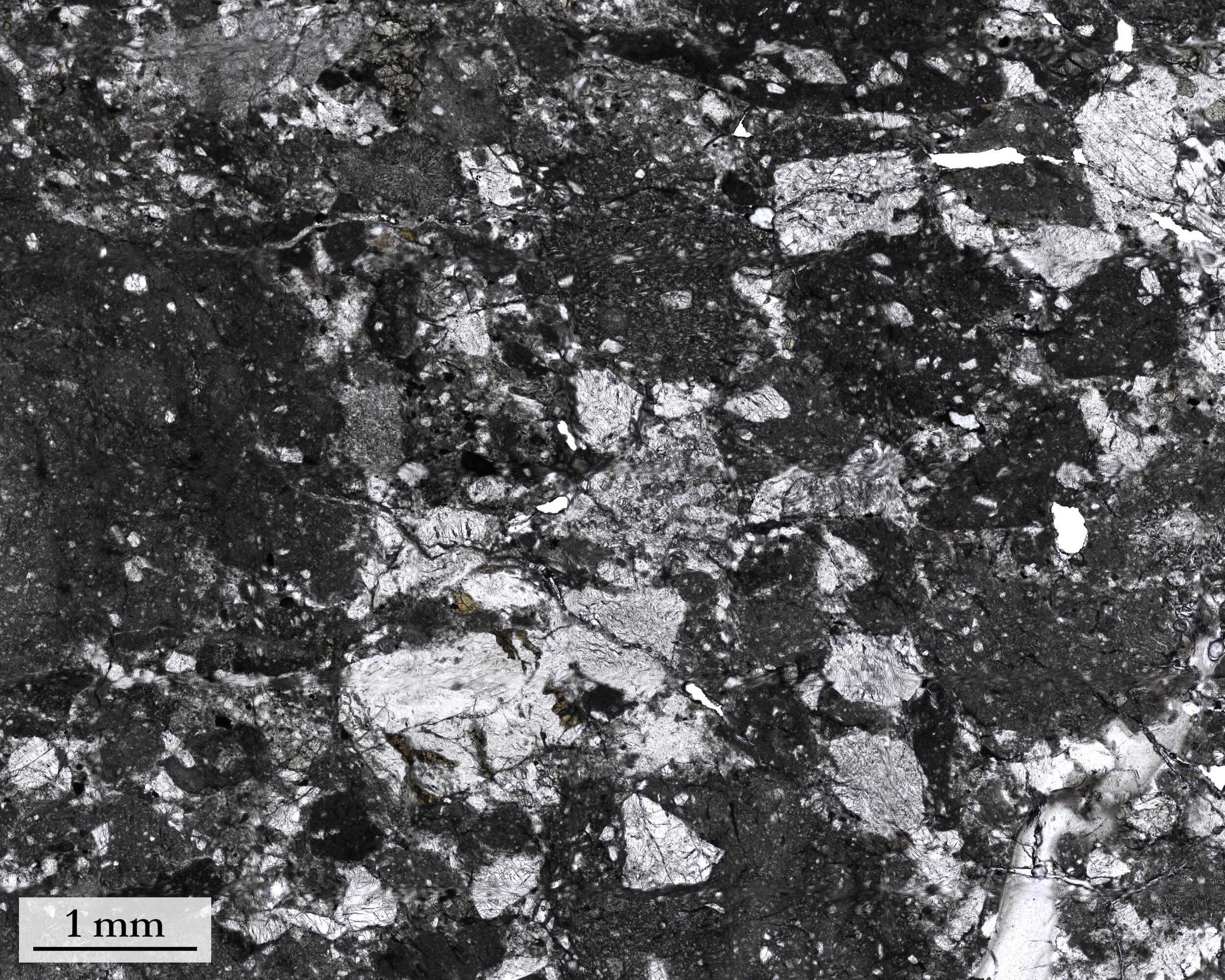
This is the sample I studied for a year as part of my undergraduate MEarthSci project. It is a howardite.
Howardites come from an asteroid that melted shortly after it formed. As their parent asteroid cooled, a crust of igneous rock formed, and over time, this rocky crust was smashed into countless pieces by impacts from space. These shattered pieces were welded together to form the howardites, which is why they have a ‘broken’ texture.
Howardites, along with the diogenites and eucrites, belong to the HED clan of meteorites, which are thought to originate from asteroid Vesta.
Pontlyfni is a rare type of meteorite called a winonaite. They are an unusual type of meteorite called a primitive achondrite: they share similarities with chondrules (from unmolten asteroids) and achondrites (from molten asteroids).
Pontlyfni crashed through the roof of a hotel in Wales in 1931.
A thin section of the Krymka ordinary chondrite. It is made almost entirely of rounded spherical chondrules. Chondrules are a major constituent of asteroids, and by extension are a major building block of planets.
A thin section of the Chainpur ordinary chondrite. It is made almost entirely of rounded spherical chondrules. Chondrules are a major constituent of asteroids, and by extension are a major building block of planets.
Nakhlites, along with the shergottites and chassignites, come from Mars. They are pieces of the Martian surface that arrive here on Earth as meteorites.
Nakhlites formed deep within a magma chamber beneath the Martian surface, and cooled and crystallised to form solid igneous rock.
A thin section of the Chainpur ordinary chondrite. It is made almost entirely of rounded spherical chondrules. Chondrules are a major constituent of asteroids, and by extension are a major building block of planets.
Nakhlites, along with the shergottites and chassignites, come from Mars. They are pieces of the Martian surface that arrive here on Earth as meteorites.
Nakhlites formed deep within a magma chamber beneath the Martian surface, and cooled and crystallised to form solid igneous rock.
Shergottites, along with the nakhlites and chassignites, come from Mars. They are pieces of the Martian surface that arrive here on Earth as meteorites.
Shergottites formed as magma oozed across the Martian surface as a thick carpet of molten rock, and cooled and crystallised to form solid igneous rock.
A thin section of the Carlisle Lakes 001 R chondrite. It is made from motes of dust that coalesced to form asteroids, comets, and planets some 4.6-billion-years ago. R chondrites are a rare type of meteorite.
Howardites come from an asteroid that melted shortly after it formed. As their parent asteroid cooled, a crust of igneous rock formed, and over time, this rocky crust was smashed into countless pieces by impacts from space. These shattered pieces were welded together to form the howardites, which is why they have a ‘broken’ texture.
Howardites, along with the diogenites and eucrites, belong to the HED clan of meteorites, which are thought to originate from asteroid Vesta.
Chassignites, along with the nakhlites and shergottites, come from Mars. They are pieces of the Martian surface that arrive here on Earth as meteorites.
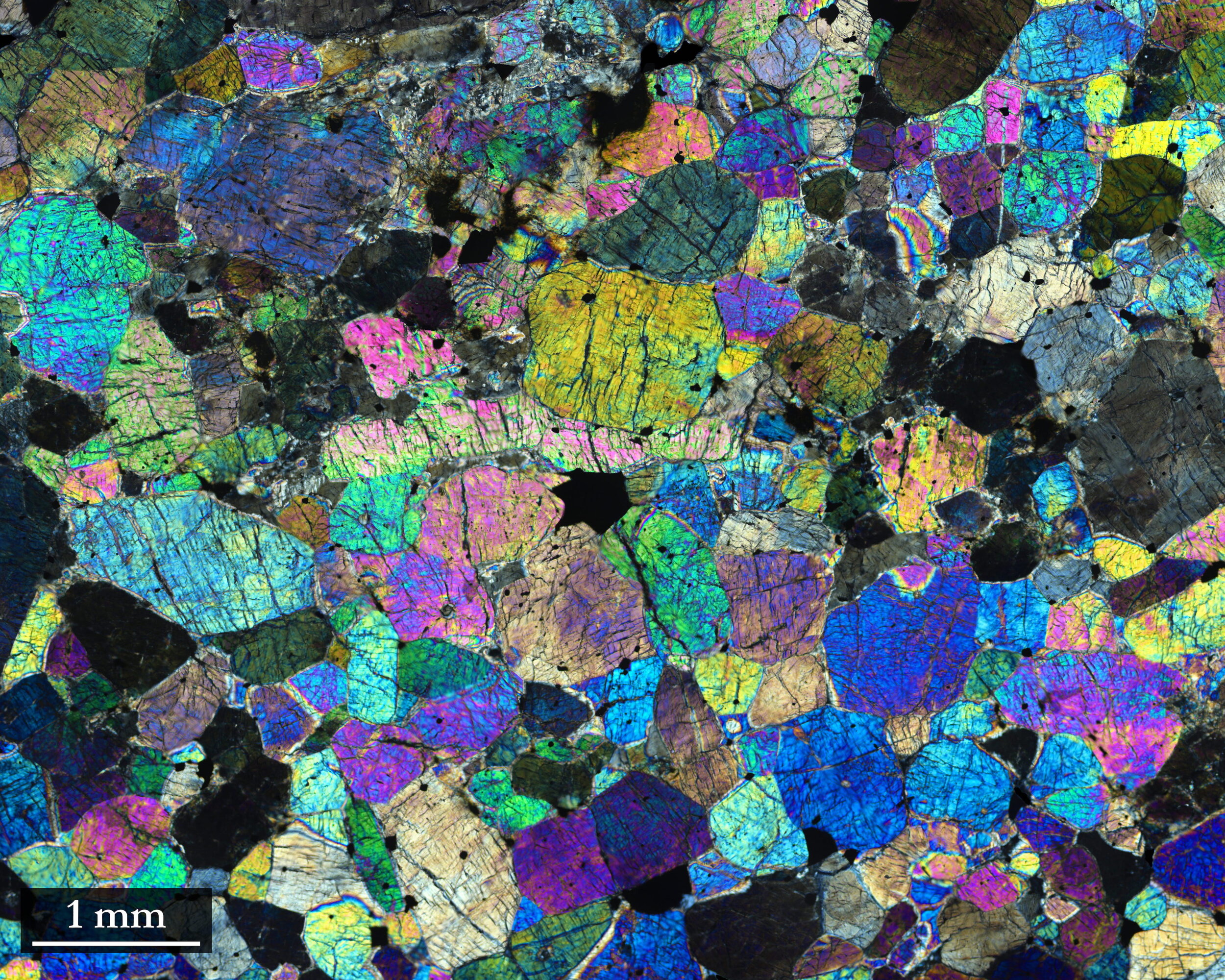
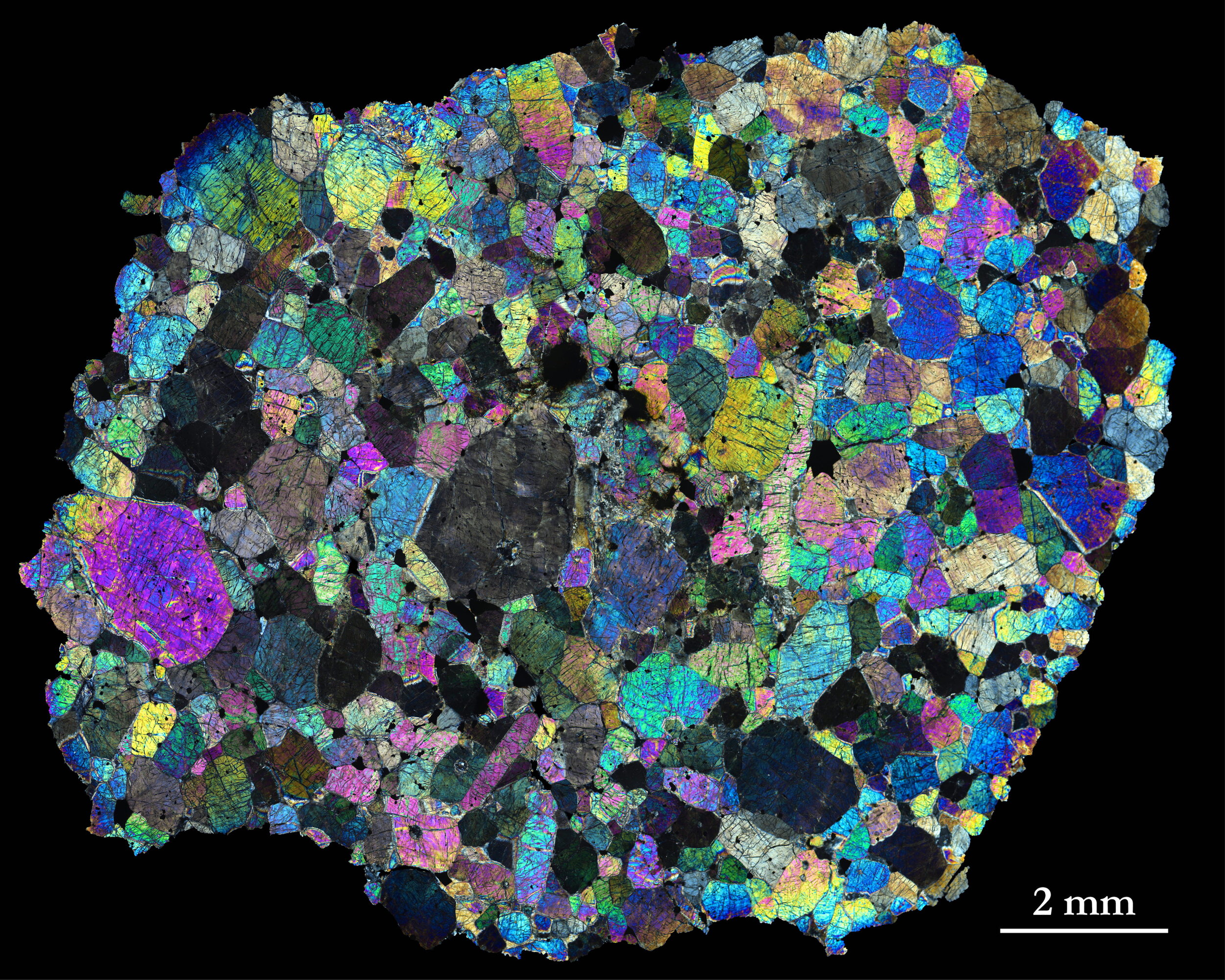
Chassignites formed as magma cooled deep underground to form a mosaic of interlocking, large crystals of olivine.
Howardites come from an asteroid that melted shortly after it formed. As their parent asteroid cooled, a crust of igneous rock formed, and over time, this rocky crust was smashed into countless pieces by impacts from space. These shattered pieces were welded together to form the howardites, which is why they have a ‘broken’ texture.
Howardites, along with the diogenites and eucrites, belong to the HED clan of meteorites, which are thought to originate from asteroid Vesta.
A thin section of the Ceniceros ordinary chondrite. It is made almost entirely of chondrules. Chondrules are a major constituent of asteroids, and by extension are a major building block of planets.
Urelites are composed of interlocking grains of olivine, surrounded by a dark network of graphite. They have been severely shocked by high-energy impacts, which has turned some of the graphite into diamond.
Diogenites are made almost entirely of a volcanic crystal called orthopyroxene. They originate from an asteroid that once melted entirely. As their parent asteroid cooled, large grains of orthopyroxene crystallised from the magma and sank to the base of the crust where they accumulated to form vast piles. They were later excavated by catastrophic impacts into the surface of the asteroid which is how they attained their ‘broken’ texture.
Diogenites, along with the howardites and eucrites, belong to the HED clan of meteorites, which are thought to originate from asteroid Vesta.
Chassignites, along with the nakhlites and shergottites, come from Mars. They are pieces of the Martian surface that arrive here on Earth as meteorites.
Chassignites formed as magma cooled deep underground to form a mosaic of interlocking, large crystals of olivine.
Urelites are composed of interlocking grains of olivine, surrounded by a dark network of graphite. They have been severely shocked by high-energy impacts, which has turned some of the graphite into diamond.
A thin section of the Bishunpur ordinary chondrite. It is made almost entirely of chondrules. Chondrules are a major constituent of asteroids, and by extension are a major building block of planets.
A thin section of the Kyrmka ordinary chondrite. It is made almost entirely of chondrules. Chondrules are a major constituent of asteroids, and by extension are a major building block of planets.
A thin section of the Bishunpur ordinary chondrite. It is made almost entirely of rounded spherical chondrules. Chondrules are a major constituent of asteroids, and by extension are a major building block of planets.
A thin section of the Farley ordinary chondrite. It is made almost entirely of rounded spherical chondrules, but they have been metamorphosed (heated) almost beyond recognition by intense heat on its parental asteroid.
A barred olivine chondrule from the Allende meteorite. Chondrules are poppy seed-sized spheres that cooled and crystallised from once-molten droplets of molten rock. They are a major dusty building block of asteroids, comets, and planets. They are some of the oldest rocks in the Solar System, and exactly how they formed is a mystery.
A thin section of the Wold Cottage ordinary chondrite. This meteorite has been metamorphosed (heated) almost beyond recognition by intense heat on its parental asteroid. It fell in the East Riding of Yorkshire in 1795 and played a pivotal role in the inception of meteorite science.
Nakhlites, along with the shergottites and chassignites, come from Mars. They are pieces of the Martian surface that arrive here on Earth as meteorites.
Nakhlites formed deep within a magma chamber beneath the Martian surface, and cooled and crystallised to form solid igneous rock.
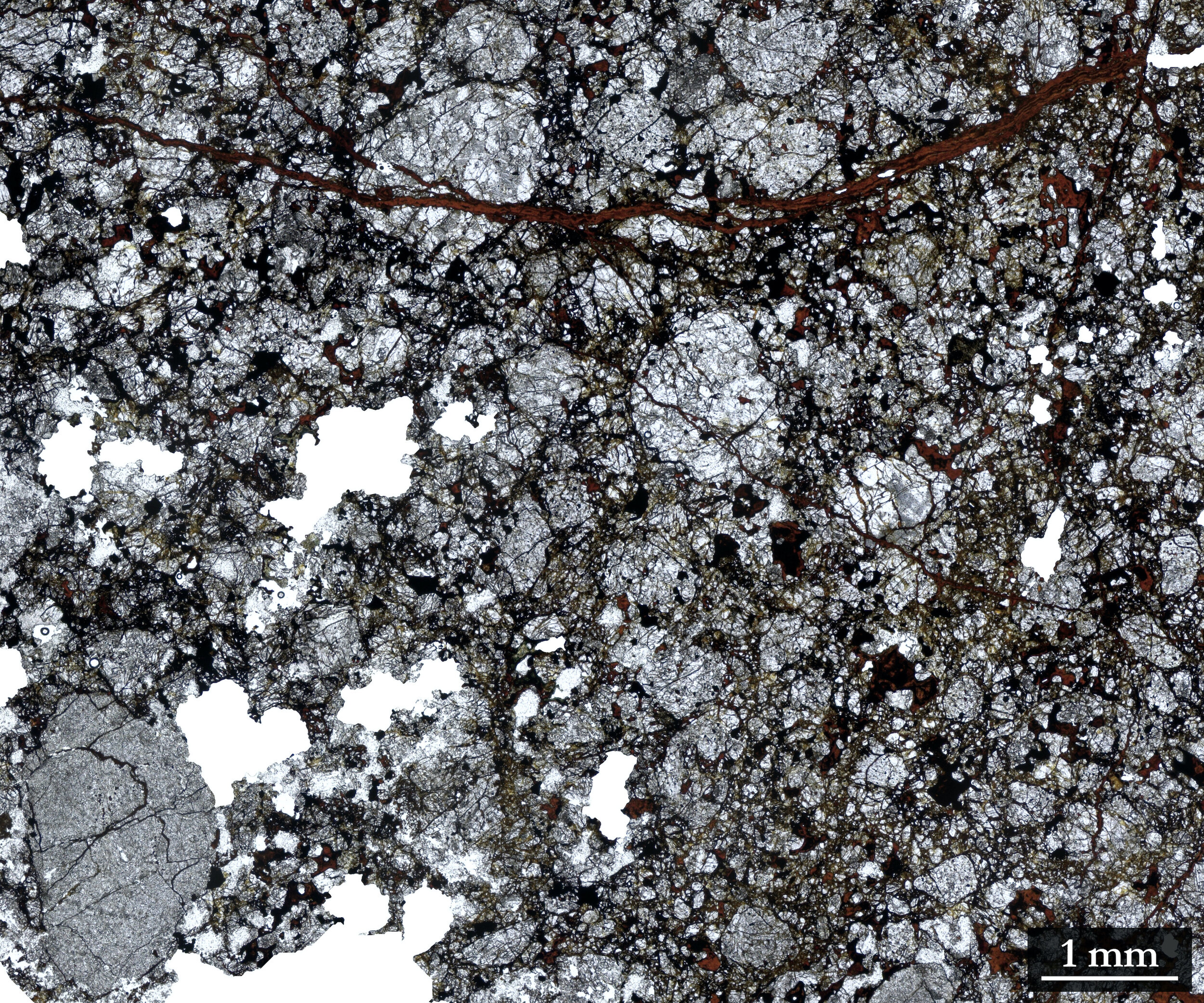
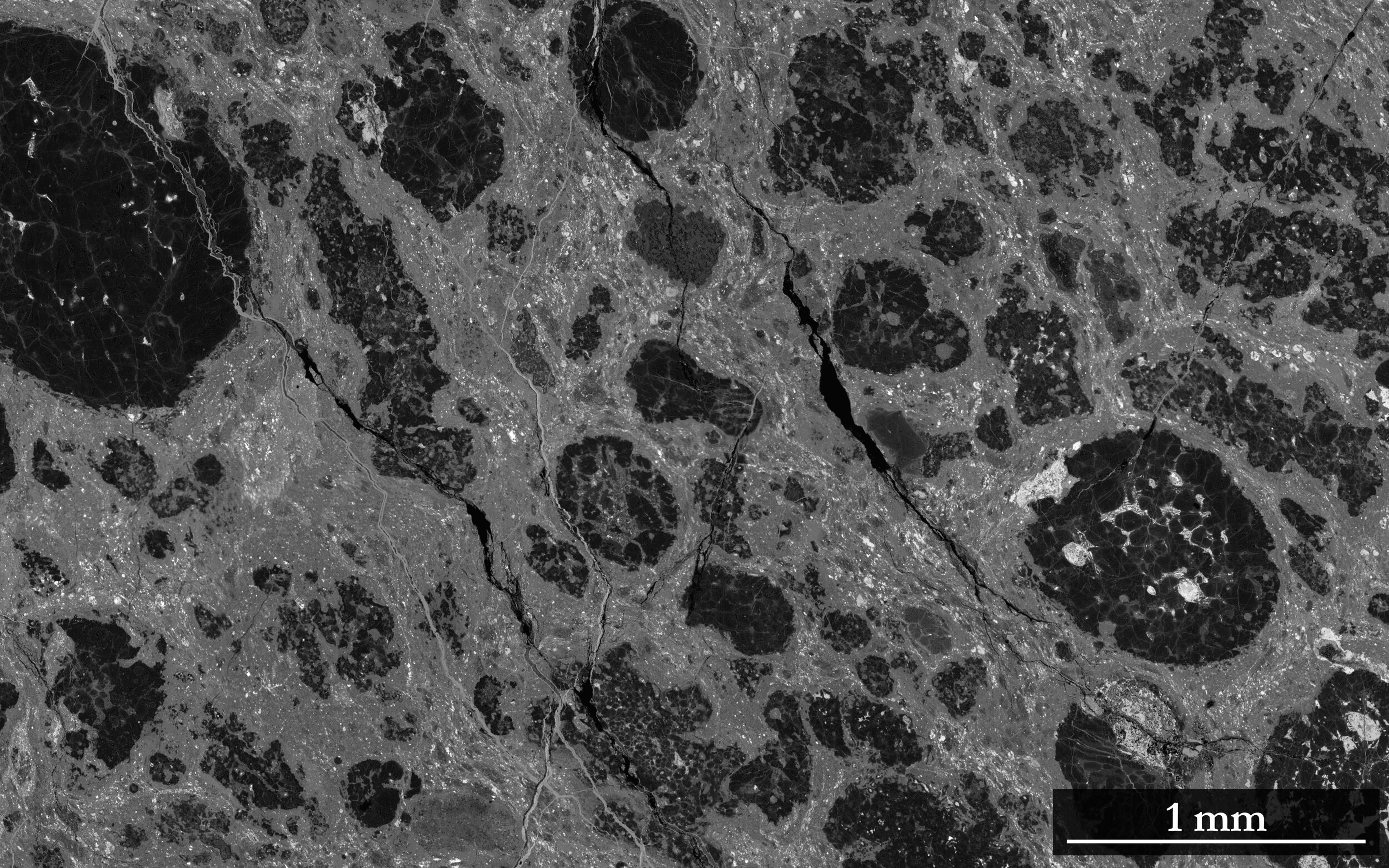
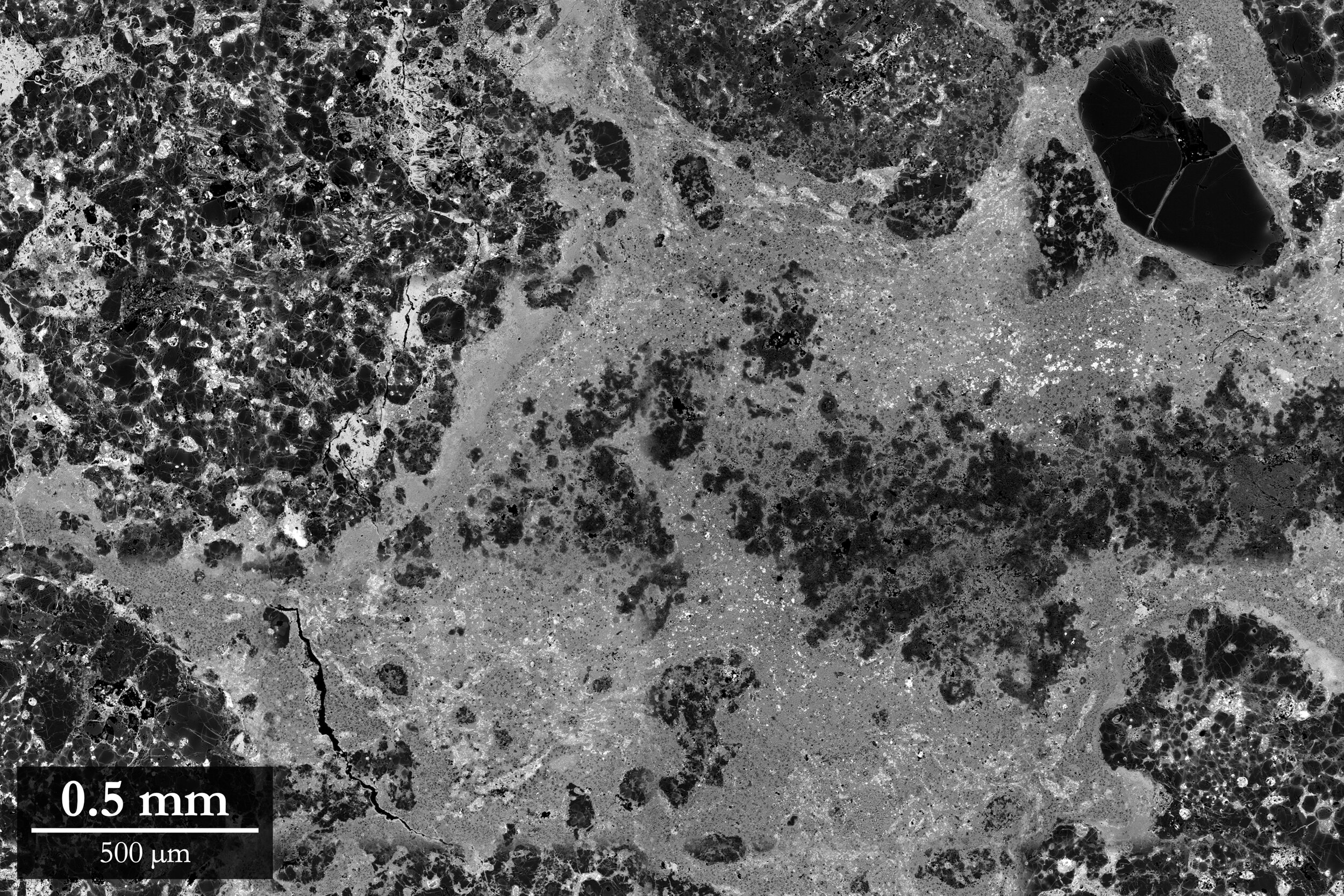
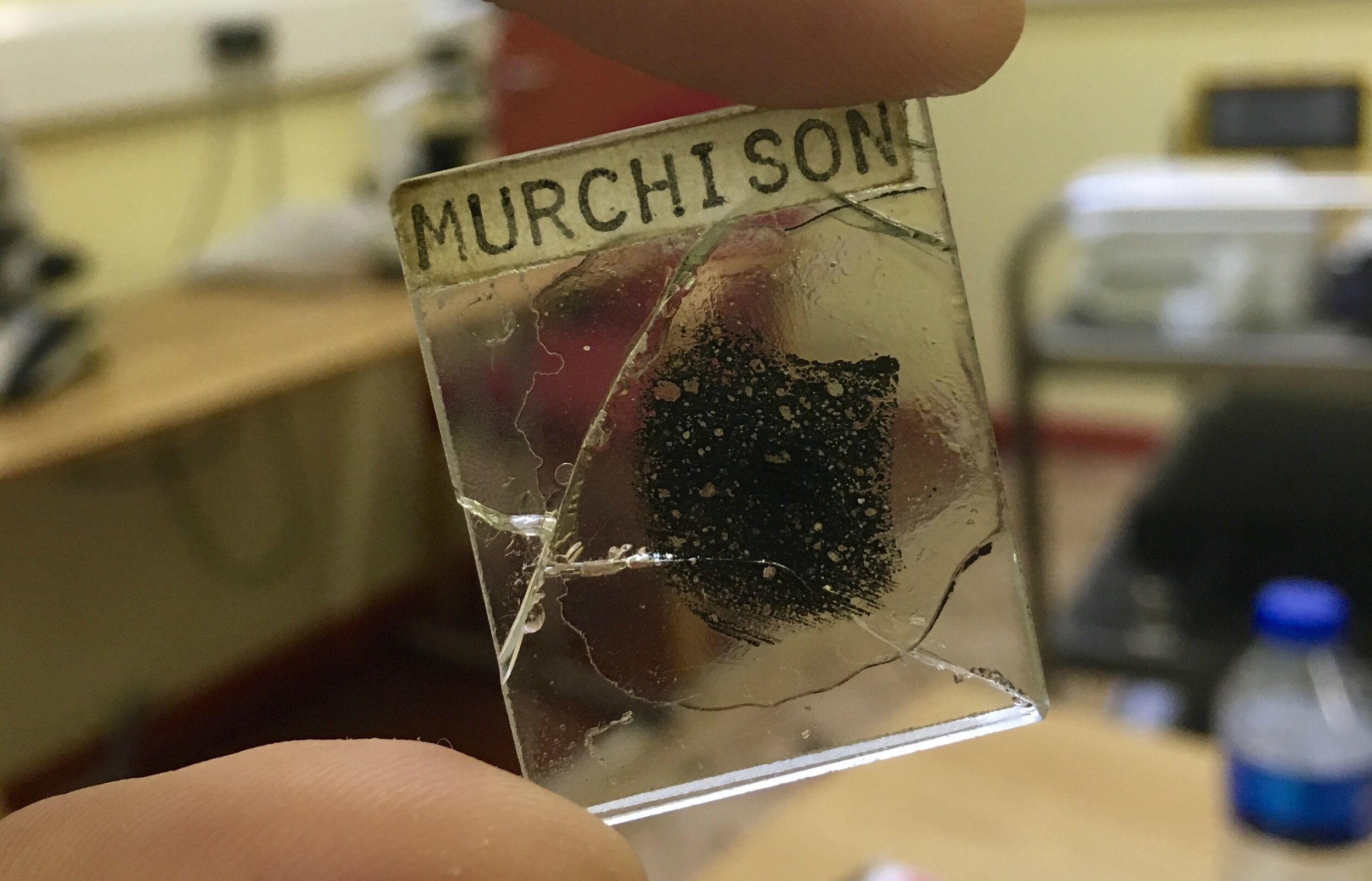
A thin section of the Murchison carbonaceous chondrite. It is made from motes of dust that coalesced to form asteroids, comets, and planets some 4.6-billion-years ago, but most of it has been destroyed by the action of water.
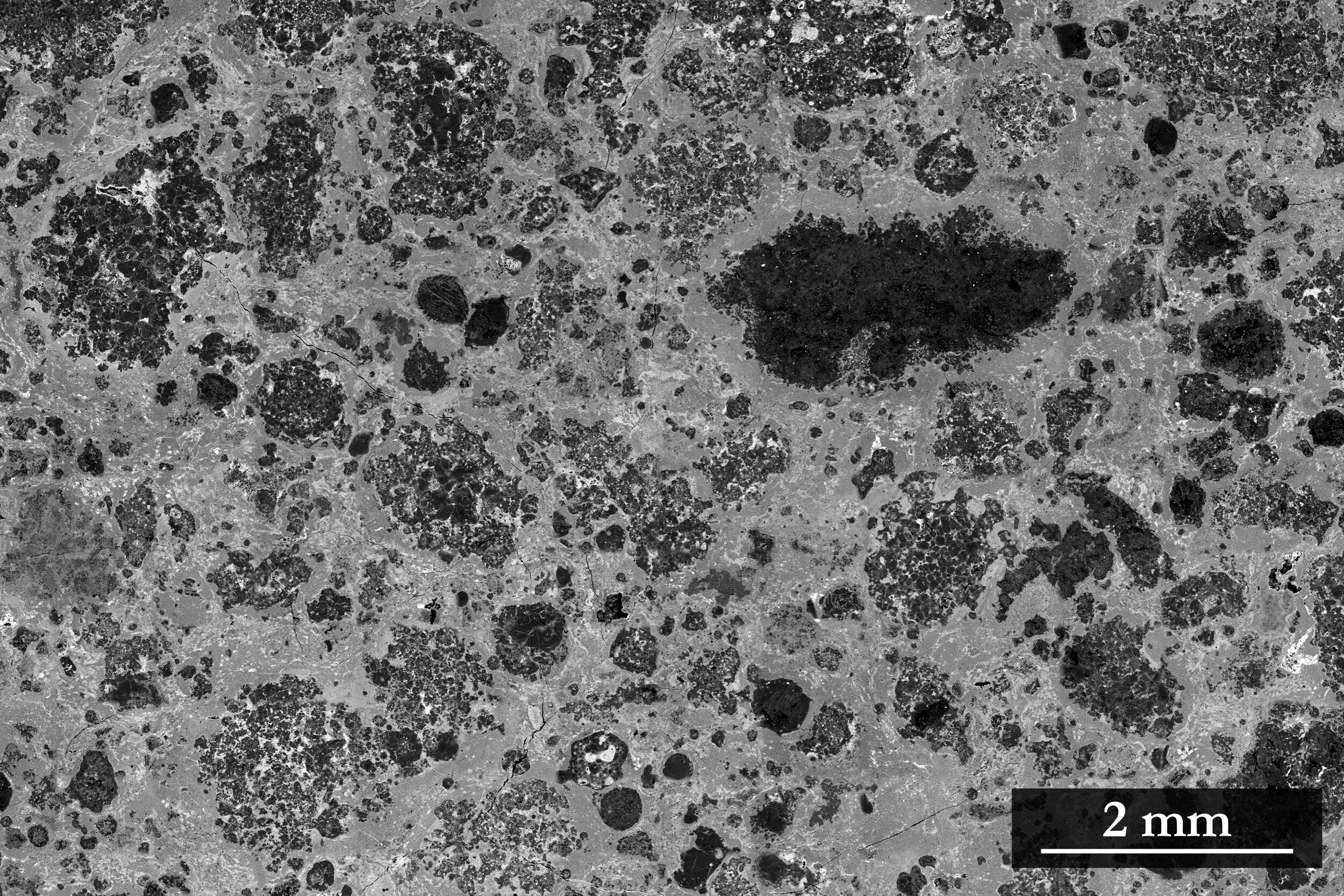
A thin section of the Northwest Africa 801 carbonaceous chondrite. It is made from motes of dust that coalesced to form asteroids, comets, and planets some 4.6-billion-years ago.
A thin section of the Chainpur ordinary chondrite. It is made almost entirely of rounded spherical chondrules. Chondrules are a major constituent of asteroids, and by extension are a major building block of planets.
A thin section of the Ceniseros ordinary chondrite. It is made almost entirely of rounded spherical chondrules. Chondrules are a major constituent of asteroids, and by extension are a major building block of planets.
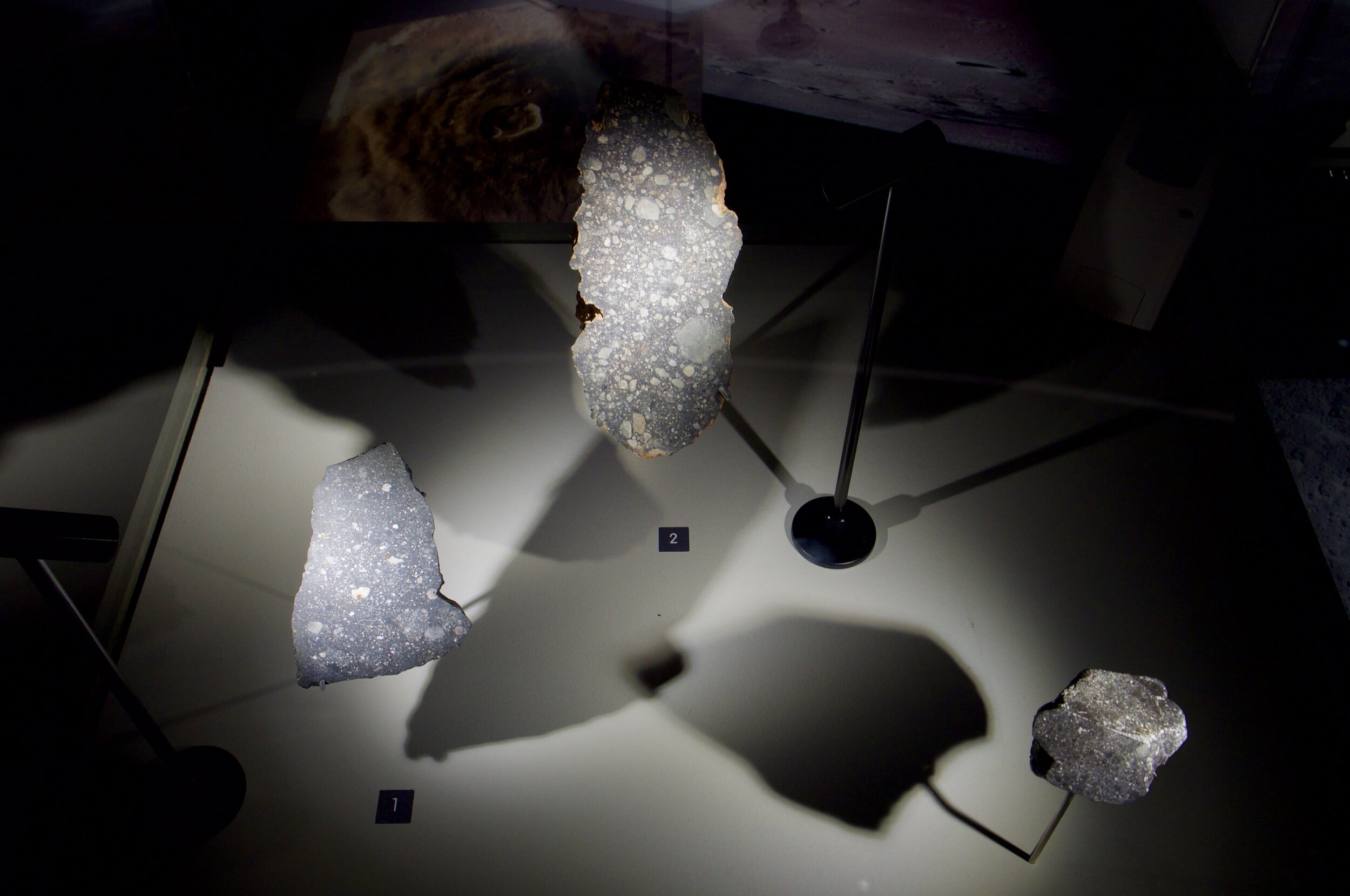
Sometimes, pieces of the Moon are blasted from its surface by high-energy impacts, and some of those pieces end up falling to Earth as meteorites.
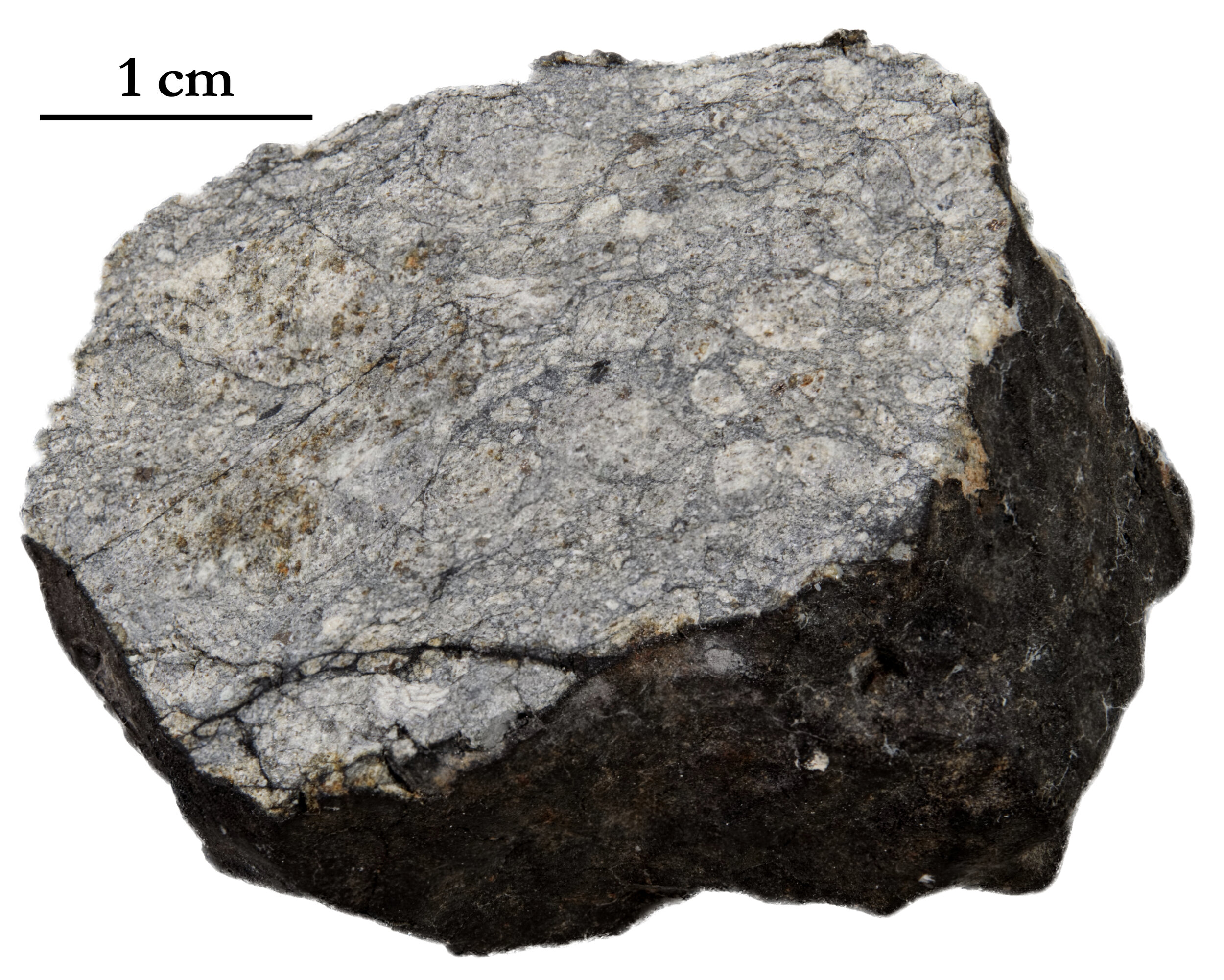
A photograph of the Northwest Africa 8276 ordinary chondrite. It is made almost entirely of rounded spherical chondrules. Chondrules are a major constituent of asteroids, and by extension are a major building block of planets. I worked on this meteorite extensively during my PhD and subsequent academic research.
Calcium- aluminium- rich inclusions — or CAIs — were the first motes of dust to form in our infant Solar System. They are a startling 4,567-billion-years old. They formed next to the young Sun before being blown outwards to the regions of the Solar System where asteroids, planets, and comets were forming.
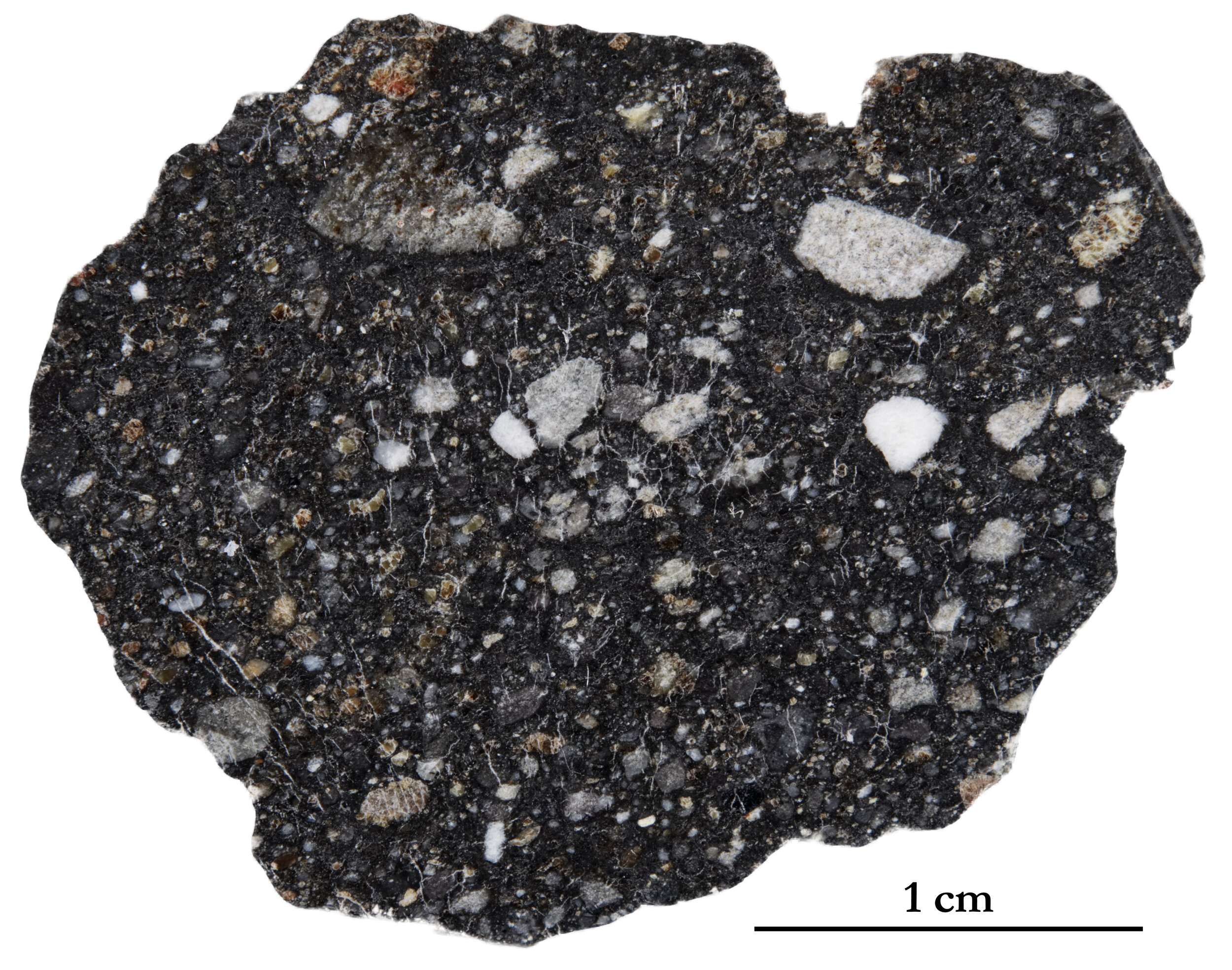
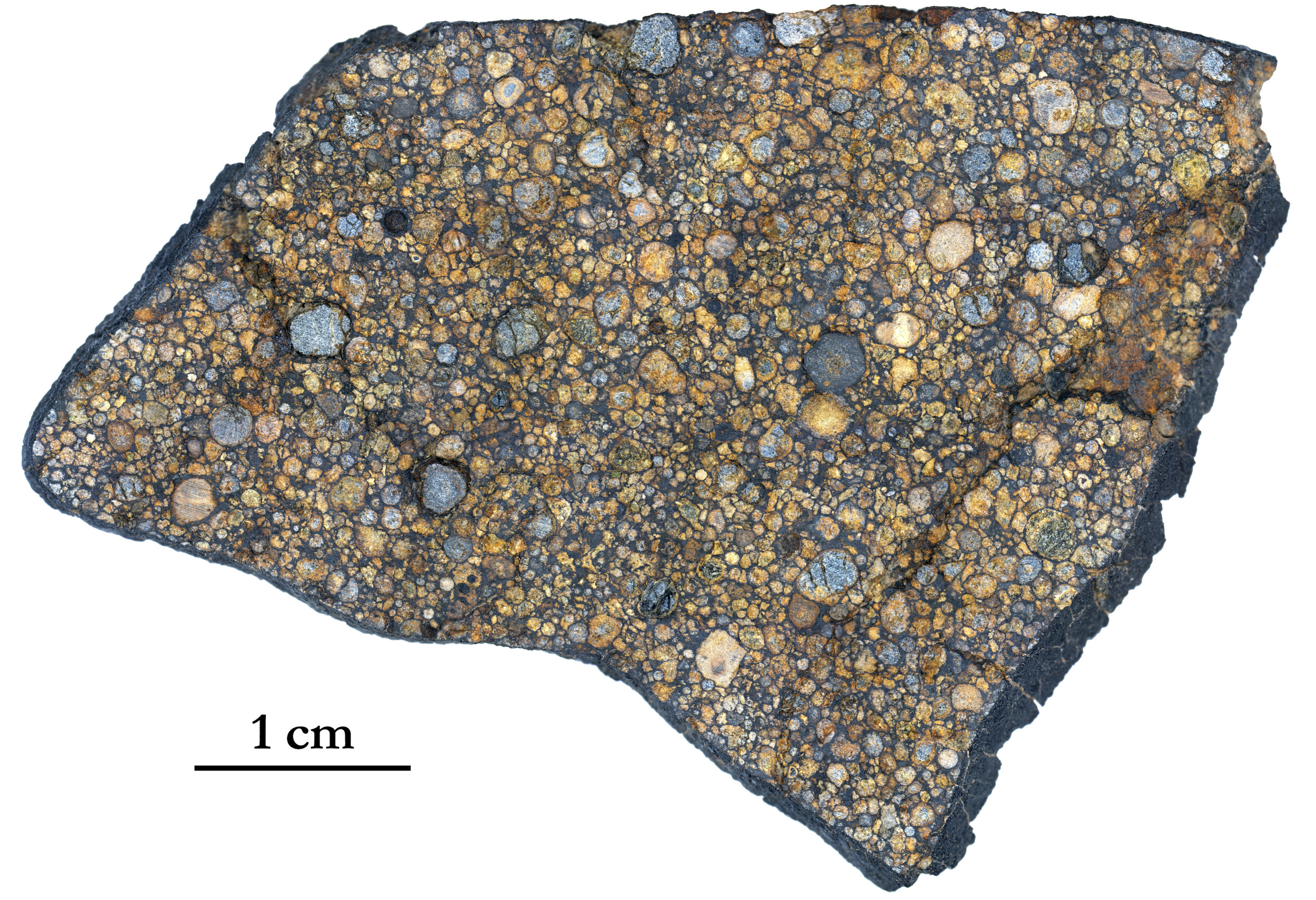
This meteorite fell from the skies over a town called Chelyabinsk in Russia in 2013. It was caught on dashcams and security cameras, and made headlines around the world. It exploded before it landed, and is one of the biggest meteorite falls in modern times.
A lump of the Orgueil meteorite in the Muséum National d'Histoire Naturelle in Paris (France). Orgueil belongs to one of the rarest group of meteorites called the CI chondrite. CI chondrites are chemically the most primitive meteorites known: if you cooled down the Sun and turned it into a rock, it would have the same chemical composition as a CI chondrite. These meteorites also contain copious amounts of extraterrestrial water and organic molecules.
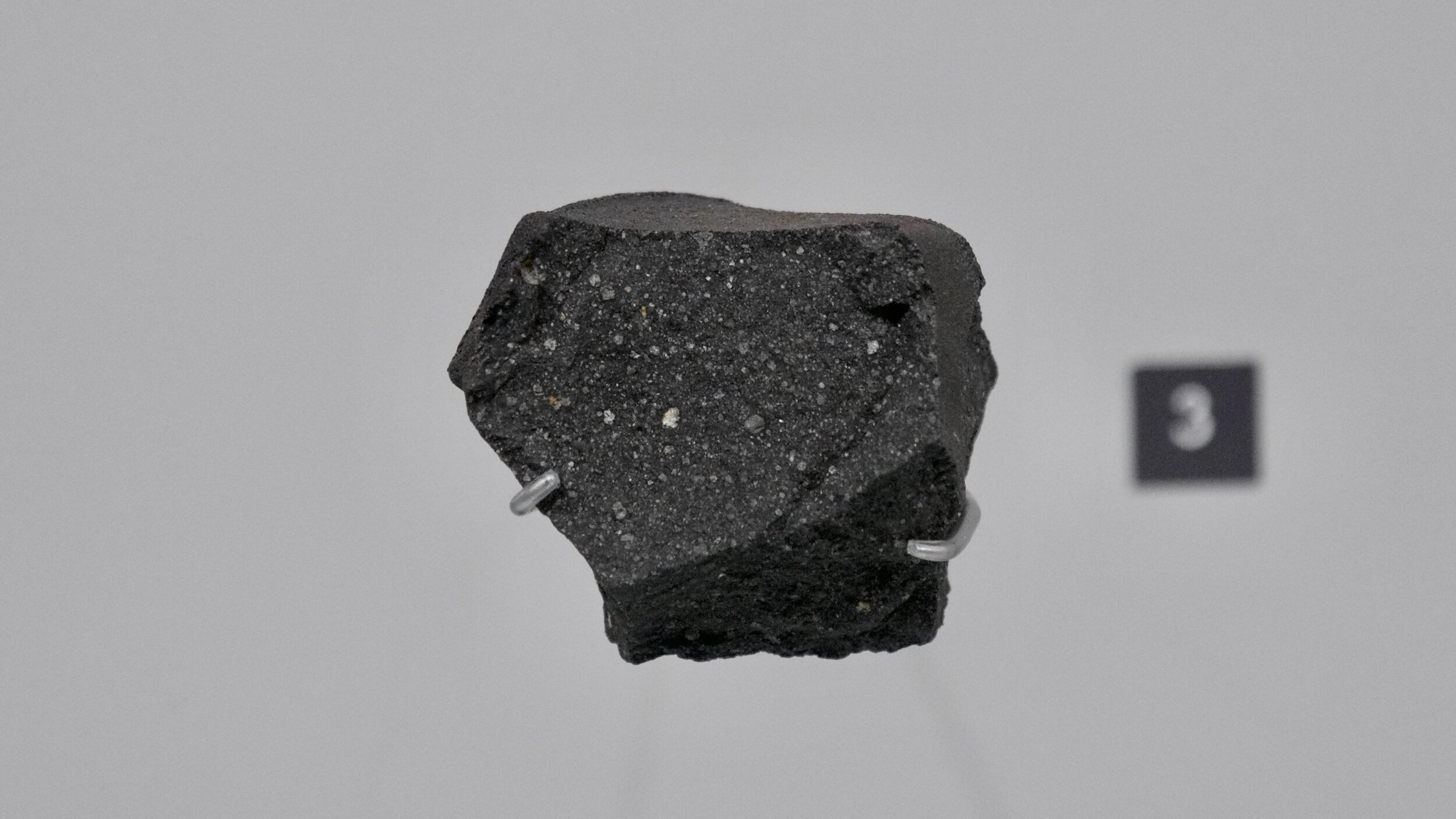
A large lump of the Allende meteorite in the Chicago Field Museum (2014).
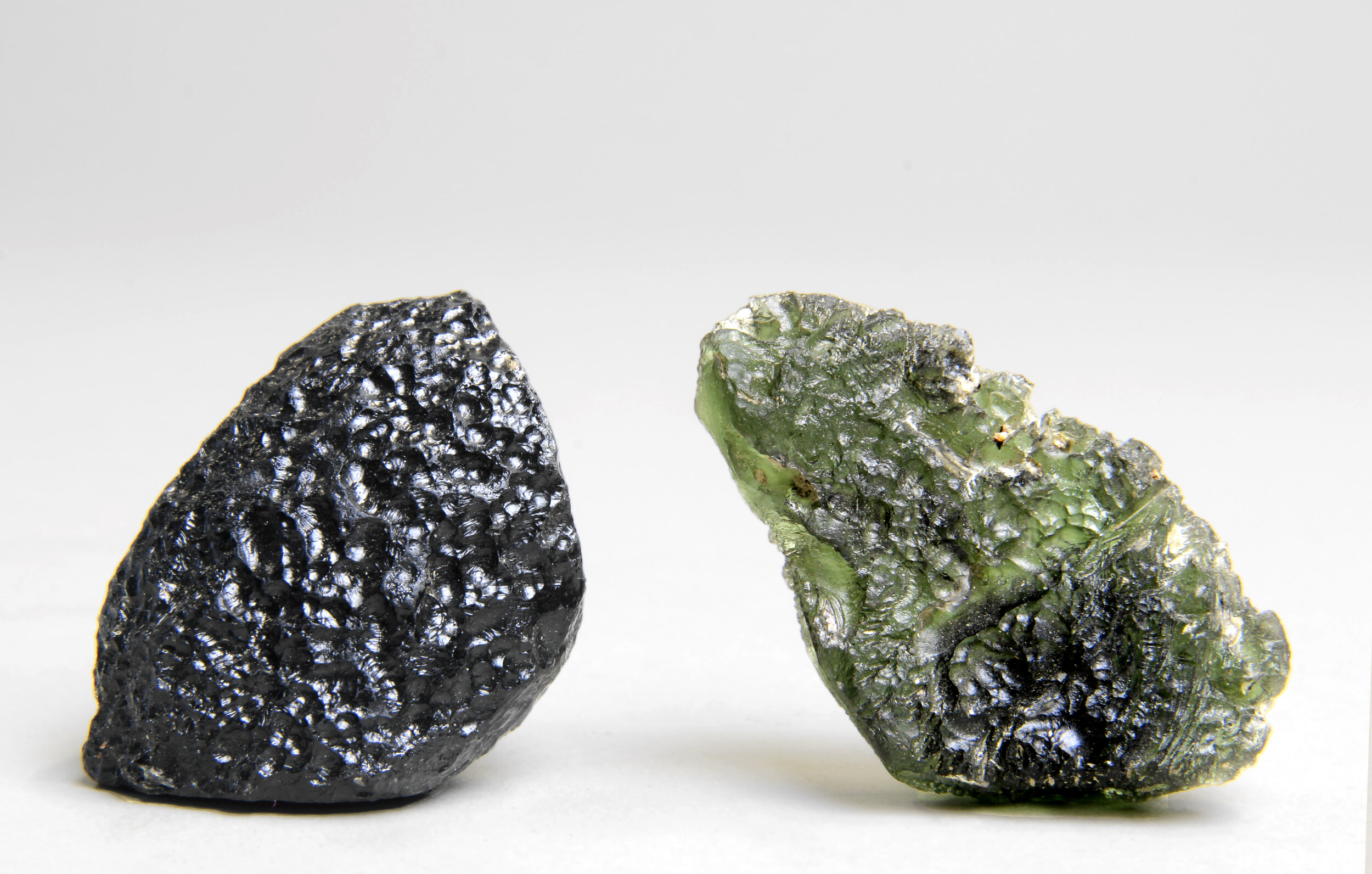
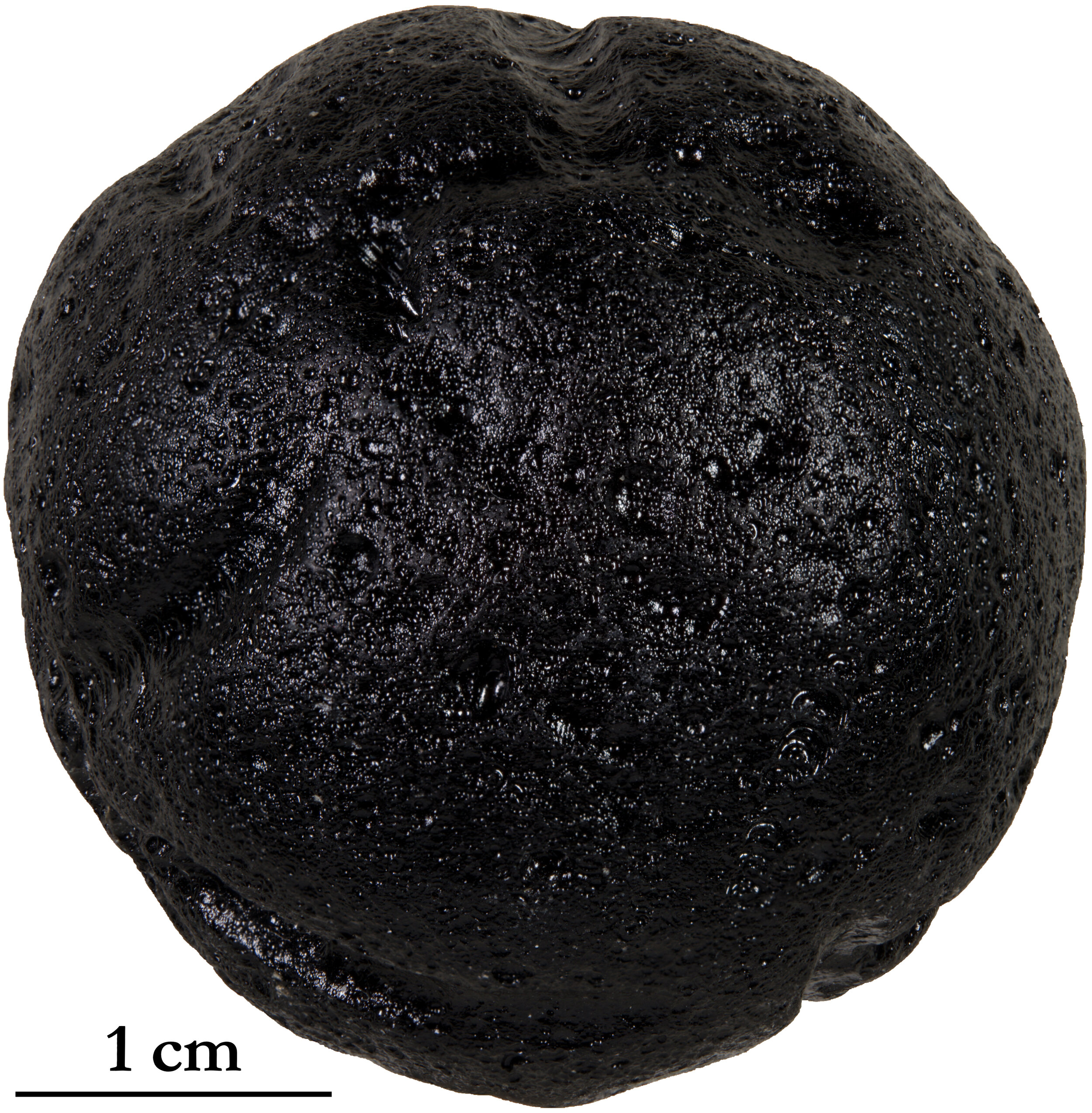
Tektites and moldavites formed as droplets of liquid rock splashed away from the site of a calamitous asteroid impact. As they soared through the upper atmosphere they cooled rapidly to form quenched glass.
Pallasites are perhaps the most beautiful of all meteorites. They are made from a mixture of metallic iron and olivine (aka. peridot). Pallasites formed as two asteroids collided, and the metallic portion of one mixed with the rocky portion of the other. When sliced thinly, they resemble stained glass windows.
A photograph of the Northwest Africa 5477 ordinary chondrite. It is made almost entirely of rounded spherical chondrules. Chondrules are a major constituent of asteroids, and by extension are a major building block of planets. I worked on this meteorite extensively during my postdoctoral academic research.
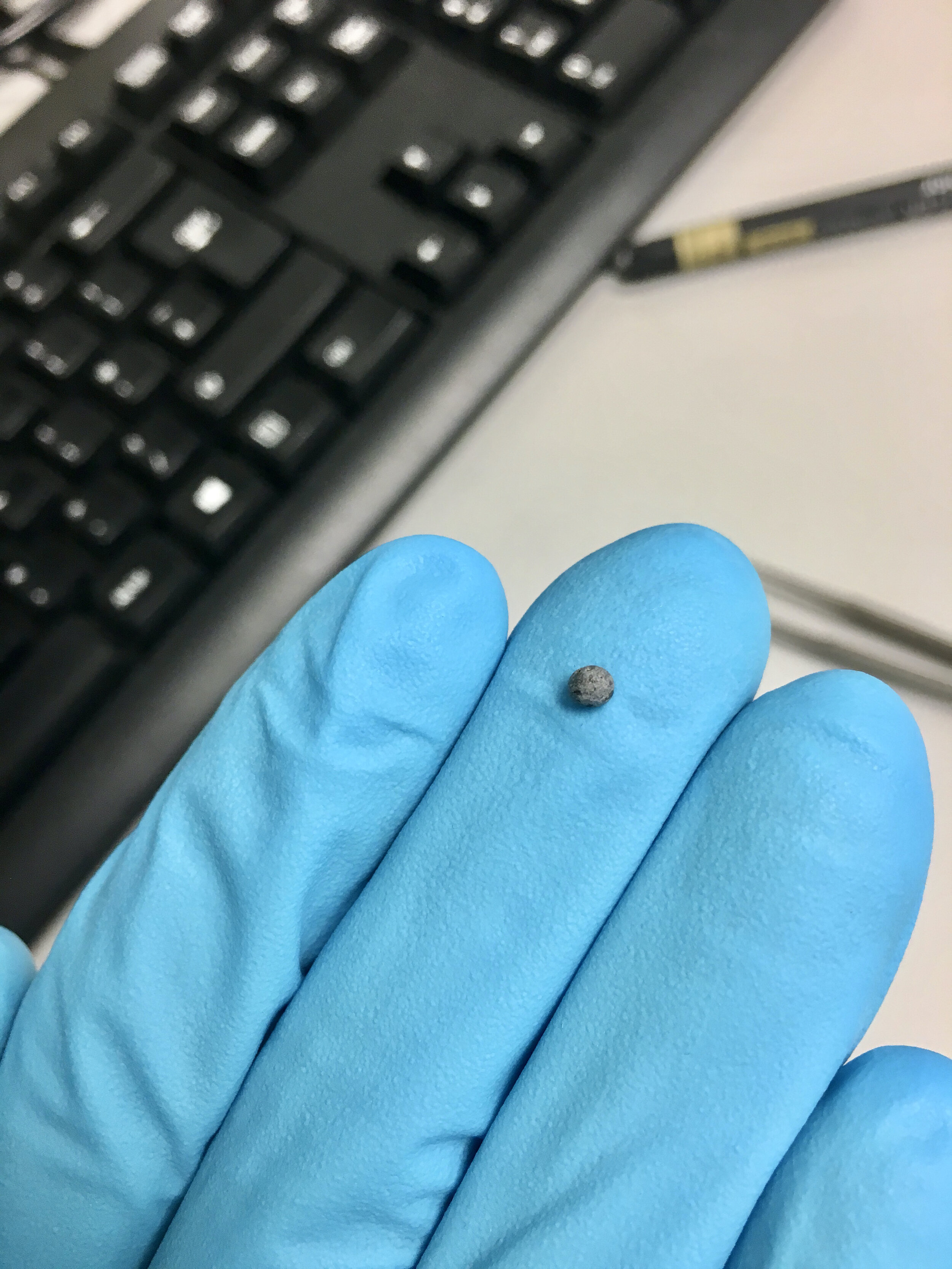
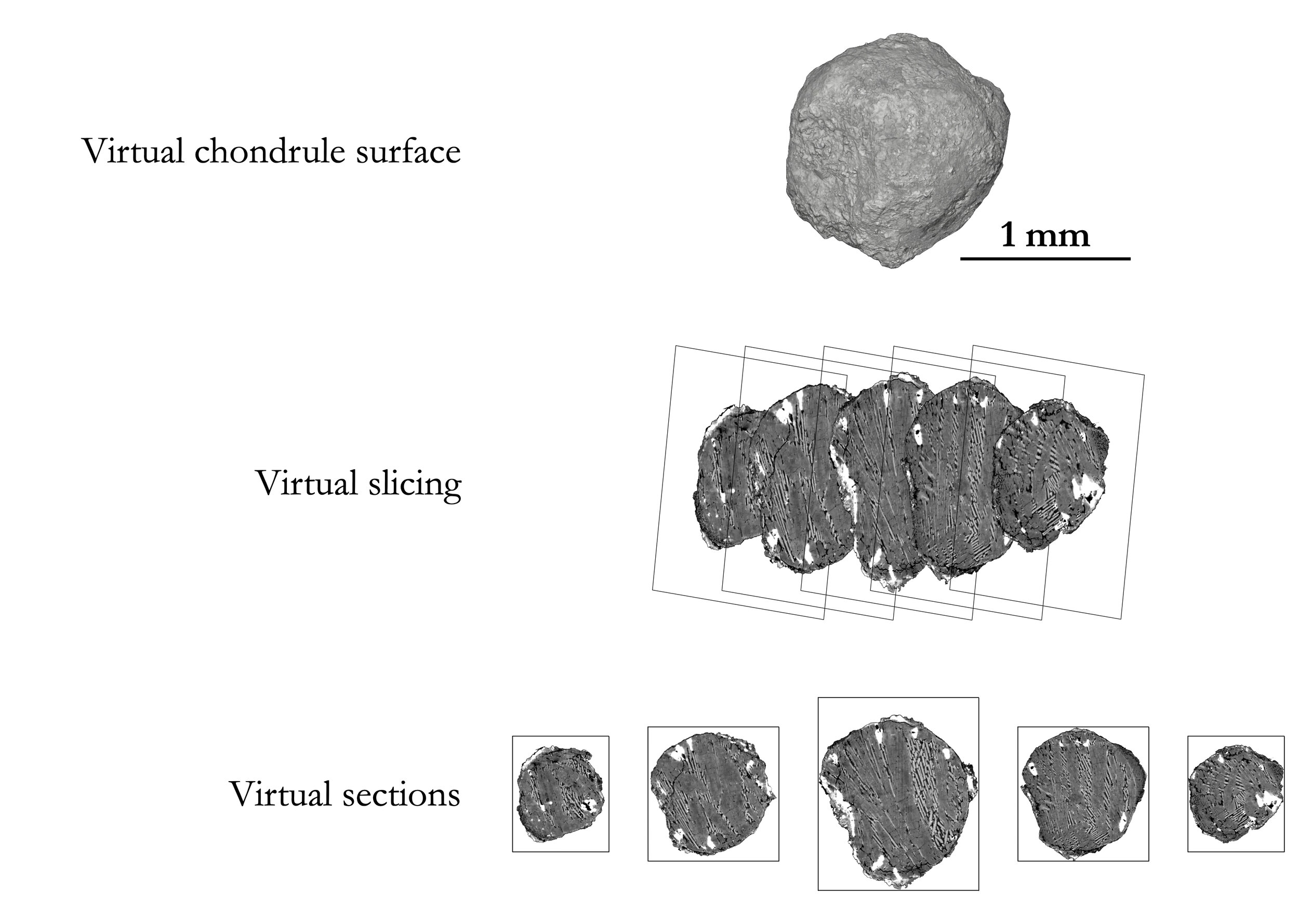
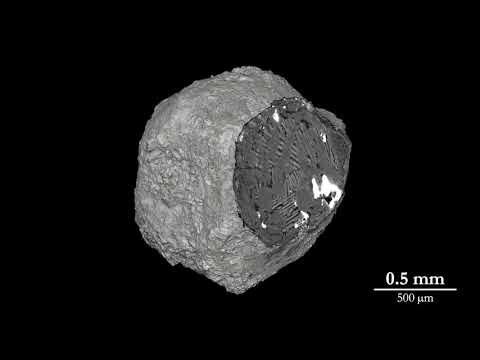
A typical chondrule plucked from the Allende meteorite. Chondrules are spherical beads of once-molten rock that coalesced in the infant Solar System to form asteroids, comets, and planets. They are amongst the oldest rocks in the Solar System.
Pallasites are perhaps the most beautiful of all meteorites. They are made from a mixture of metallic iron and olivine (aka. peridot). Pallasites formed as two asteroids collided, and the metallic portion of one mixed with the rocky portion of the other. When sliced thinly, they resemble stained glass windows.
Sometimes, pieces of the Moon are blasted from its surface by high-energy impacts, and some of those pieces end up falling to Earth as meteorites.
A photograph of the Northwest Africa 8276 ordinary chondrite. It is, like most ordinary chondrites, made almost entirely from spherical chondrules.
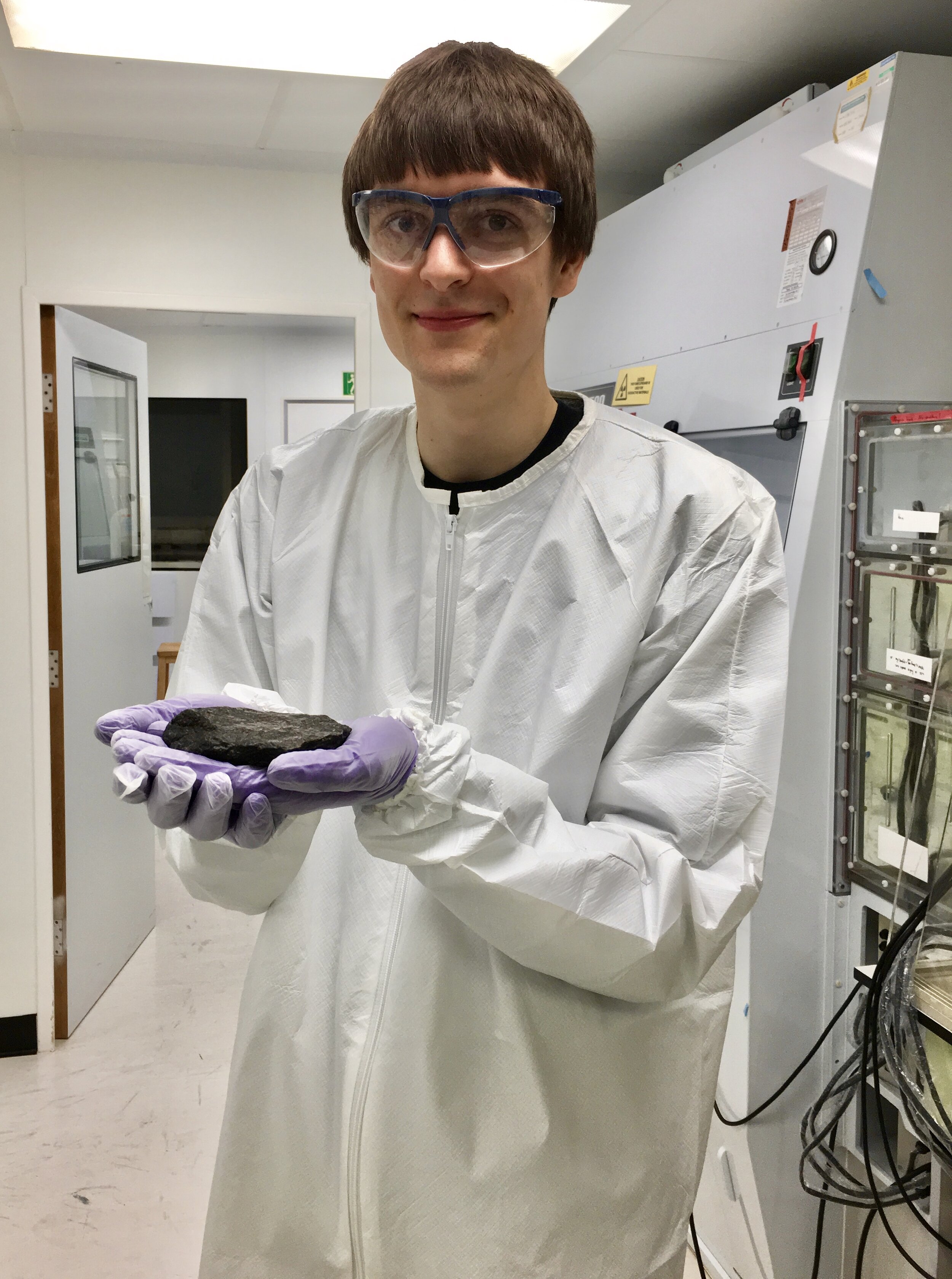
The first week of my internship at NASA’s Johnson Space Center, holding the meteorite that would be the subject of my summer of research: Lonewolf Nunataks 94101.
The Allende meteorite fell in Mexico in 1969. As one of the largest ever witnessed meteorite falls, and a super-rare type of carbonaceous meteorite, Allende is one of the most studied rocks in the whole history of science.
Tektites formed as droplets of liquid rock splashed away from the site of a calamitous asteroid impact. As they soared through the upper atmosphere they cooled rapidly to form quenched glass.
A photograph of the Northwest Africa 5477 ordinary chondrite. It is, like most ordinary chondrites, made almost entirely from spherical chondrules.
Kilabo is classific as an ordinary chondrite. It was heated to moderate temperatures on its parent asteroid, and so it’s original texture has largely been destroyed by recrystallisation.
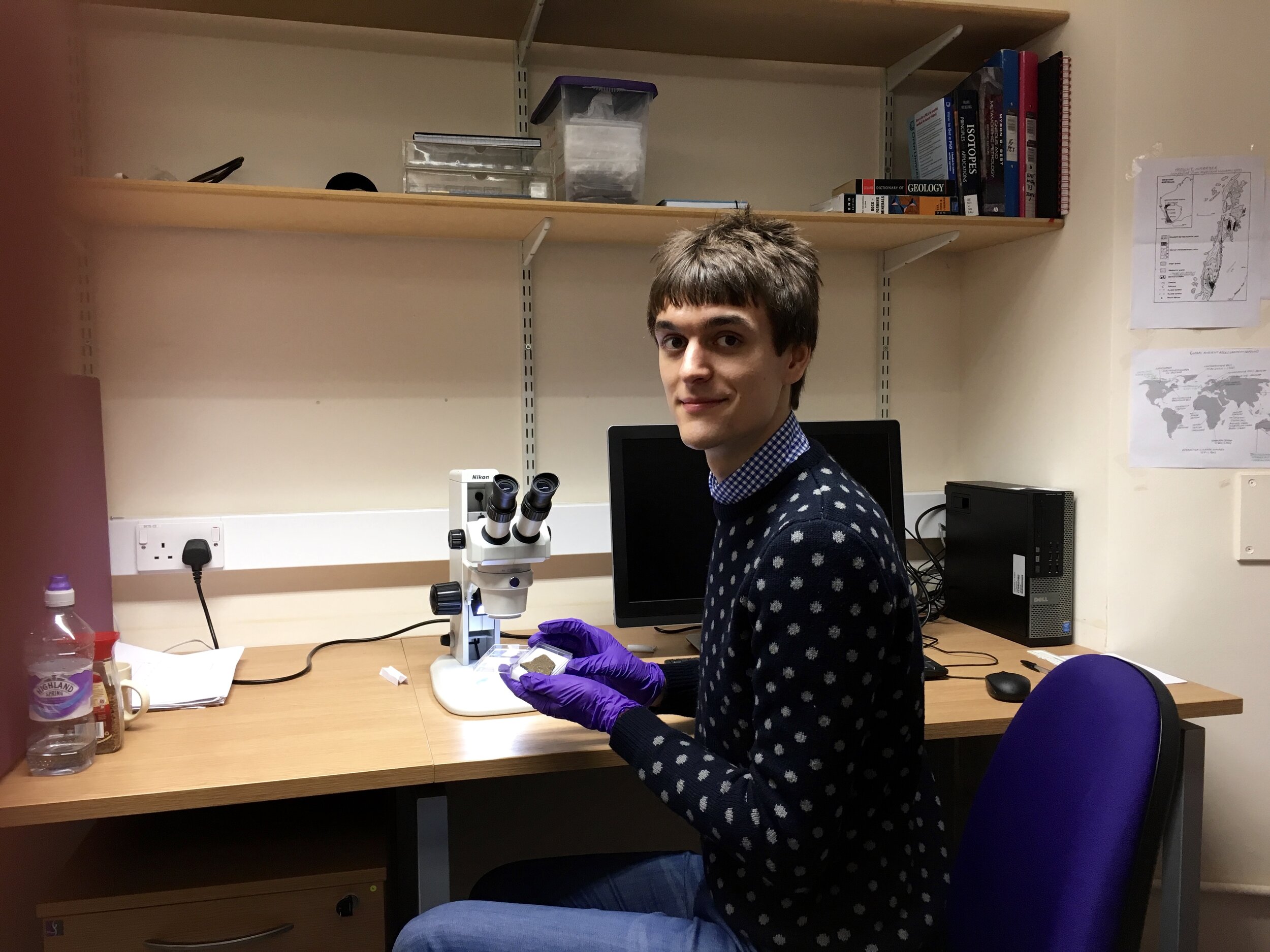
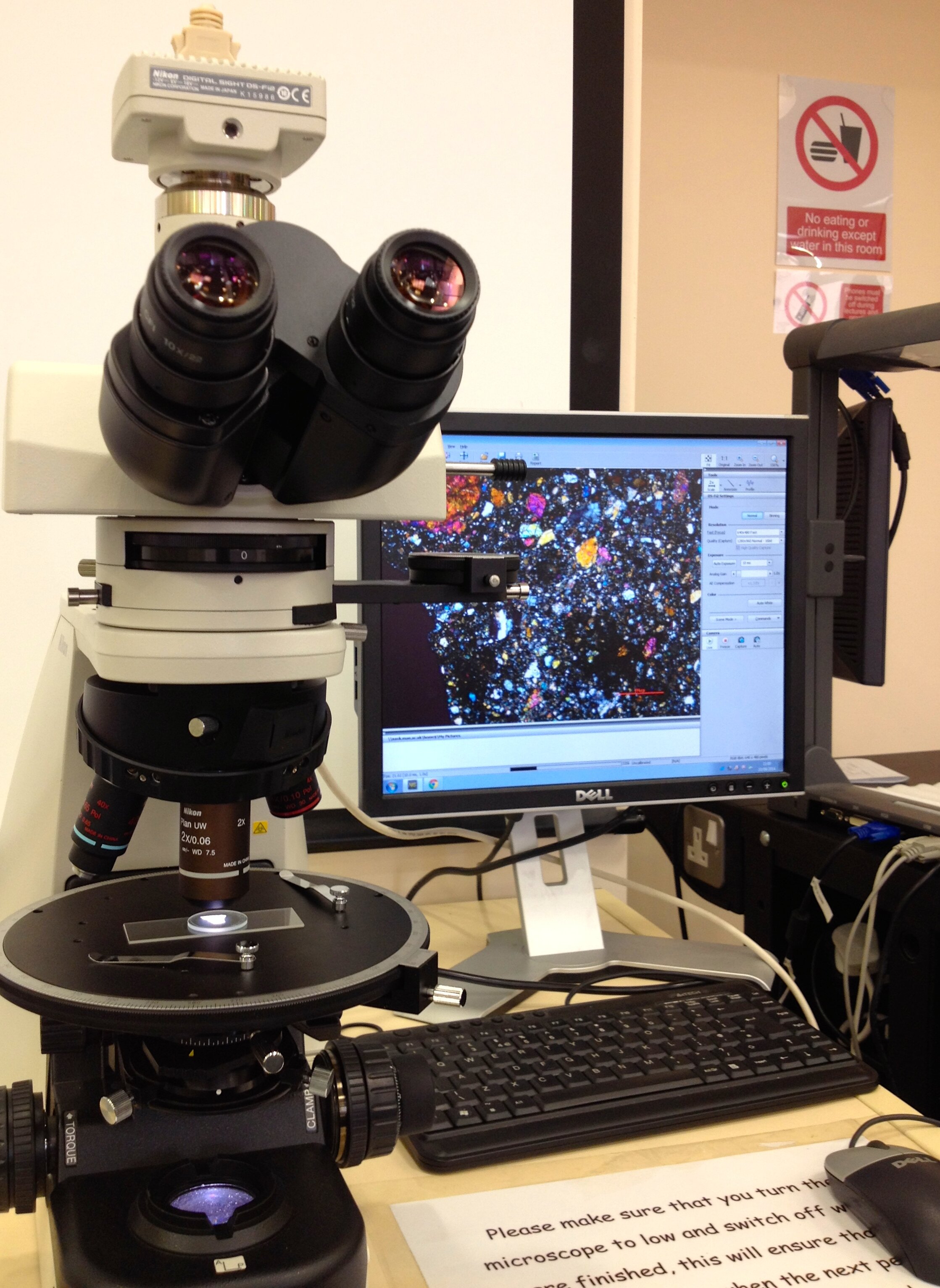
We had a small microscope in one of my PhD offices. Here is am getting acquainted with the meteorite Northwest Africa 8276, which would be a focus of my PhD project.
Sometimes, pieces of the Moon are blasted from its surface by high-energy impacts, and some of those pieces end up falling to Earth as meteorites.
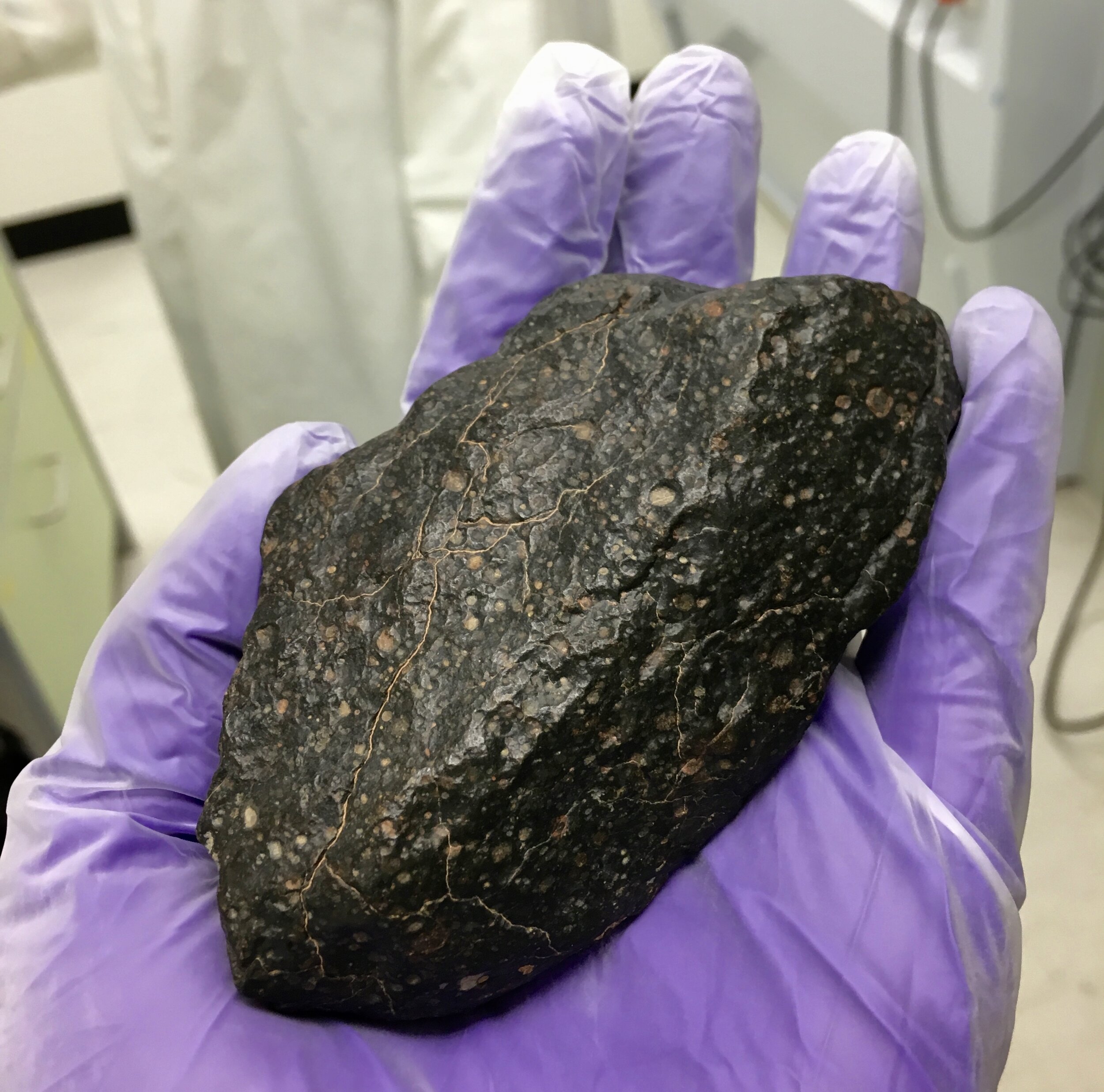
The meteorite that I spent most of my PhD studying. It was found in the Sahara desert.
The Allende meteorite fell in Mexico in 1969. As one of the largest ever witnessed meteorite falls, and a super-rare type of carbonaceous meteorite, Allende is one of the most studied rocks in the whole history of science.
Shergottites, along with the nakhlites and chassignites, come from Mars. They are pieces of the Martian surface that arrive here on Earth as meteorites.
Shergottites formed as magma oozed across the Martian surface as a thick carpet of molten rock, and cooled and crystallised to form solid igneous rock.
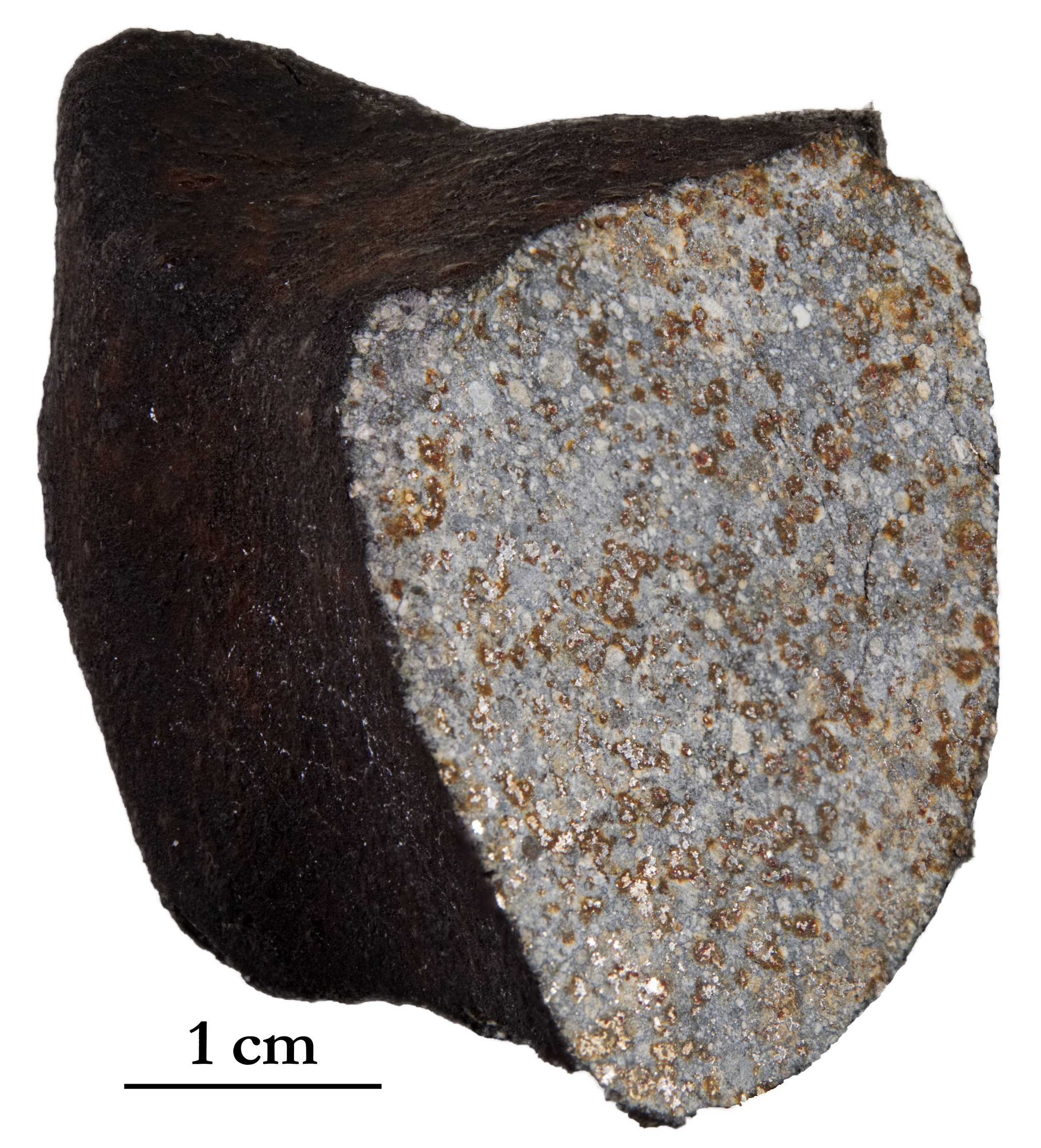
This meteorite fell in Turkey in 2015 during the night. People awoke the next morning to find stones in the street. This piece still has parts of the fusion crust preserved: the varnished black surface formed as this stone streaked indecent through the atmosphere.
Howardites, along with the diogenites and eucrites, belong to the HED clan of meteorites, which are thought to originate from asteroid Vesta.
Sometimes, pieces of the Moon are blasted from its surface by high-energy impacts, and some of those pieces end up falling to Earth as meteorites.
Literal pieces of stardust.
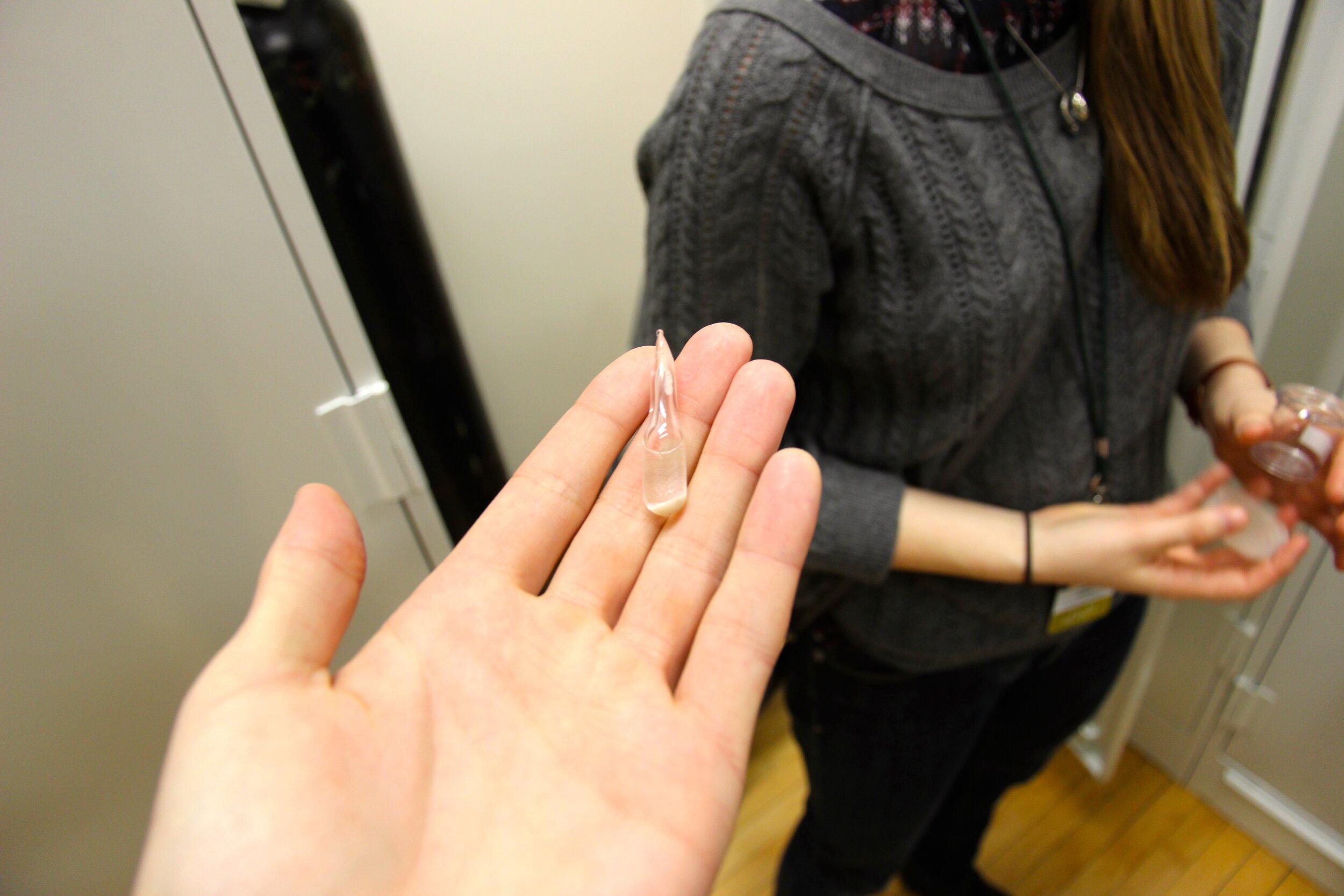
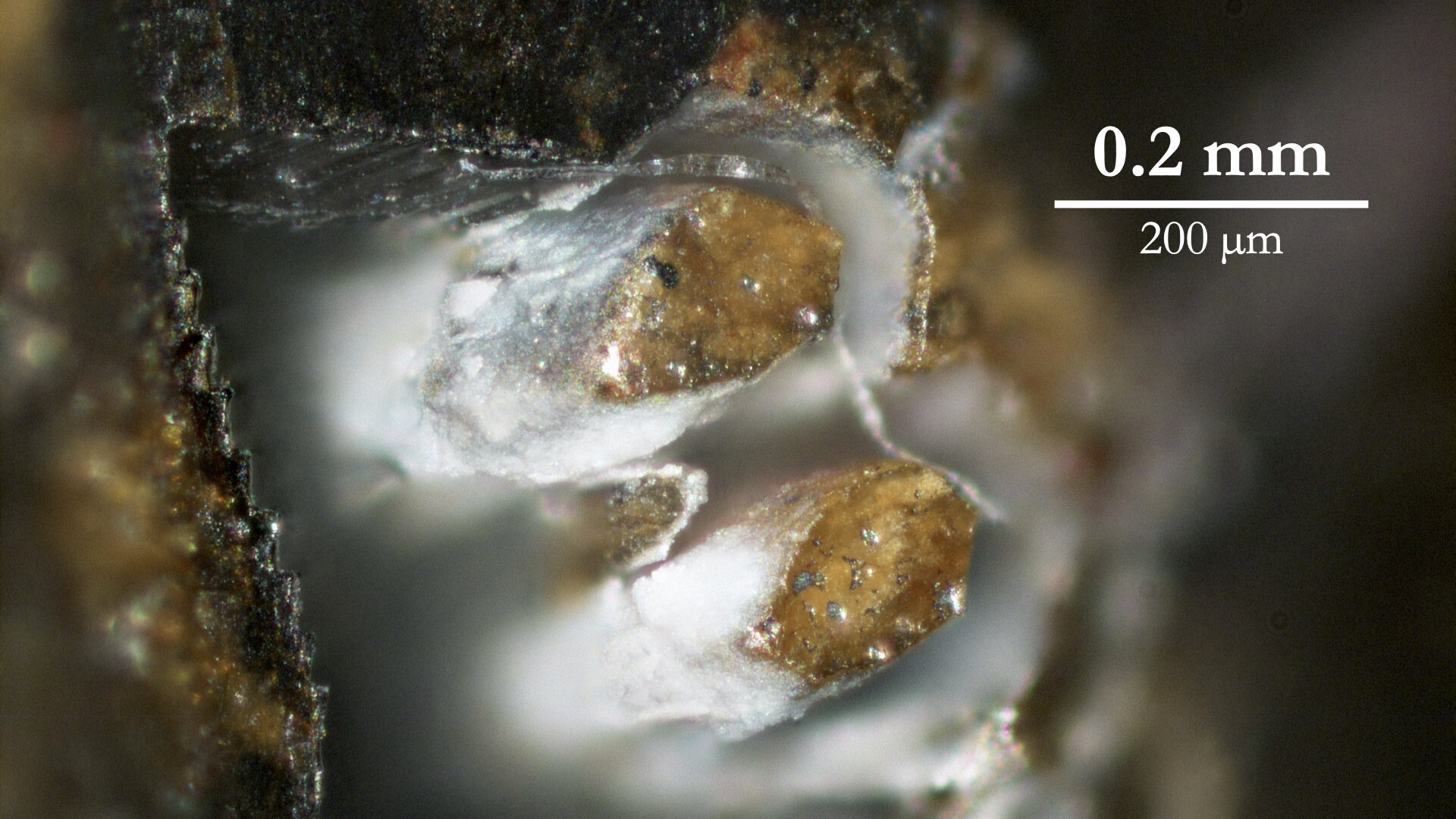
This vial contains millions of pieces of diamond that crystallised in the winds of a dying star. These diamonds – known as pre-solar grains – pre-date our Solar System, and were sprinkled into the protoplanetary disc from which our planetary system formed.’
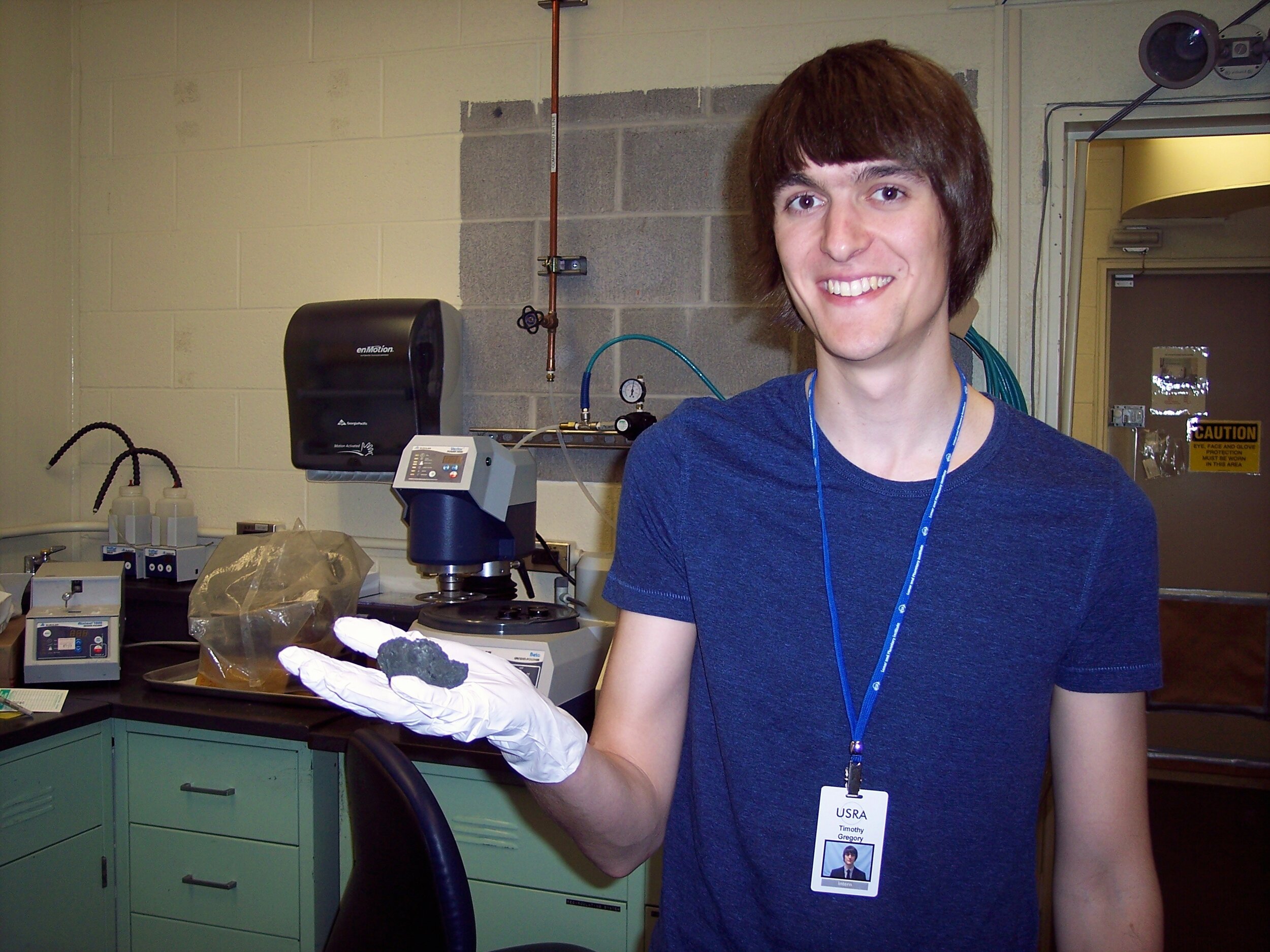
The meteorite that I would spend four years researching for my PhD. We would soon slice this meteorite open to see inside.
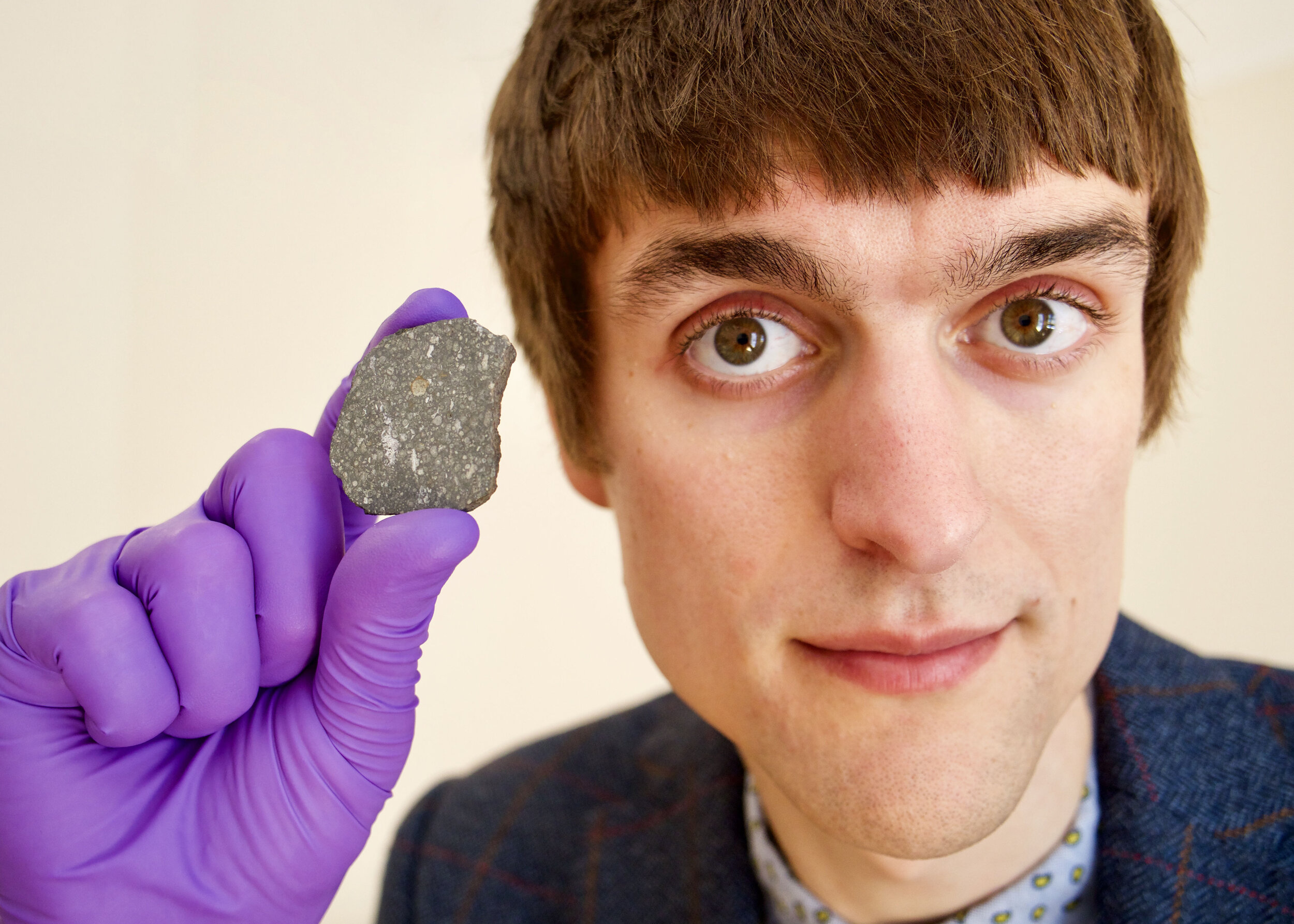
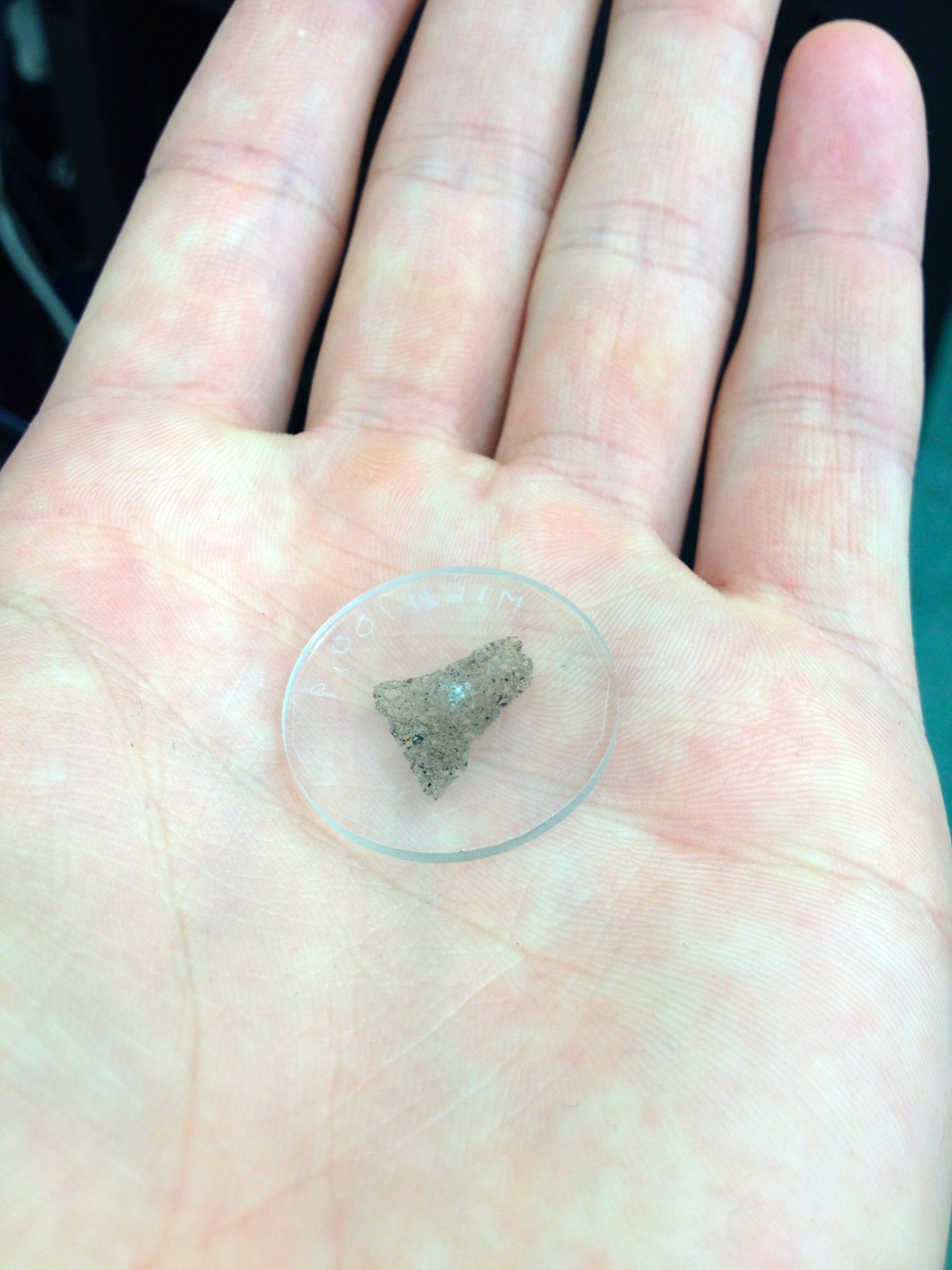
This is a thin section of the Miller Range 11100 howardite. It was the subject of my final year MEarthSci project in 2014–2015.
A fist-sized piece of the Murchison meteorite in the Muséum National d'Histoire Naturelle in Paris (France). Murchison is a rare type of meteorite called a CM chondrite and is jam-packed with (1) the building blocks of planets, (2) extraterrestrial water, (3) extraterrestrial amino acids, and (4) diamonds that crystallised in the winds of dying stars.
This is a barred olivine chondrule from the Northwest Africa 5477 meteorite.
False-colour X-ray maps like this are acquired using a scanning electron microscope. When you hit a rock with a focused beam of electrons, it begins to ‘shine’ in X-rays. The wavelengths (‘colours’) of those X-rays allow you to identify the elements present. By doing this across the surface of a rock, the elemental composition can be unpicked.
This is a gorgeous barred olivine chondrule from the Allende meteorite.
Chondrules are poppy seed-sized spheres that cooled and crystallised from once-molten droplets of molten rock. They are a major dusty building block of asteroids, comets, and planets. They are some of the oldest rocks in the Solar System, and exactly how they formed is a mystery.
False-colour X-ray maps like this are acquired using a scanning electron microscope. When you hit a rock with a focused beam of electrons, it begins to ‘shine’ in X-rays. The wavelengths (‘colours’) of those X-rays allow you to identify the elements present. By doing this across the surface of a rock, the elemental composition can be unpicked.
This is a CAI (calcium- aluminium-rich inclusion) from the Allende meteorite. CAIs formed next to the Sun and were the first motes of dust to form as our Solar System was assembling itself 4,567-million years ago.
False-colour X-ray maps like this are acquired using a scanning electron microscope. When you hit a rock with a focused beam of electrons, it begins to ‘shine’ in X-rays. The wavelengths (‘colours’) of those X-rays allow you to identify the elements present. By doing this across the surface of a rock, the elemental composition can be unpicked.
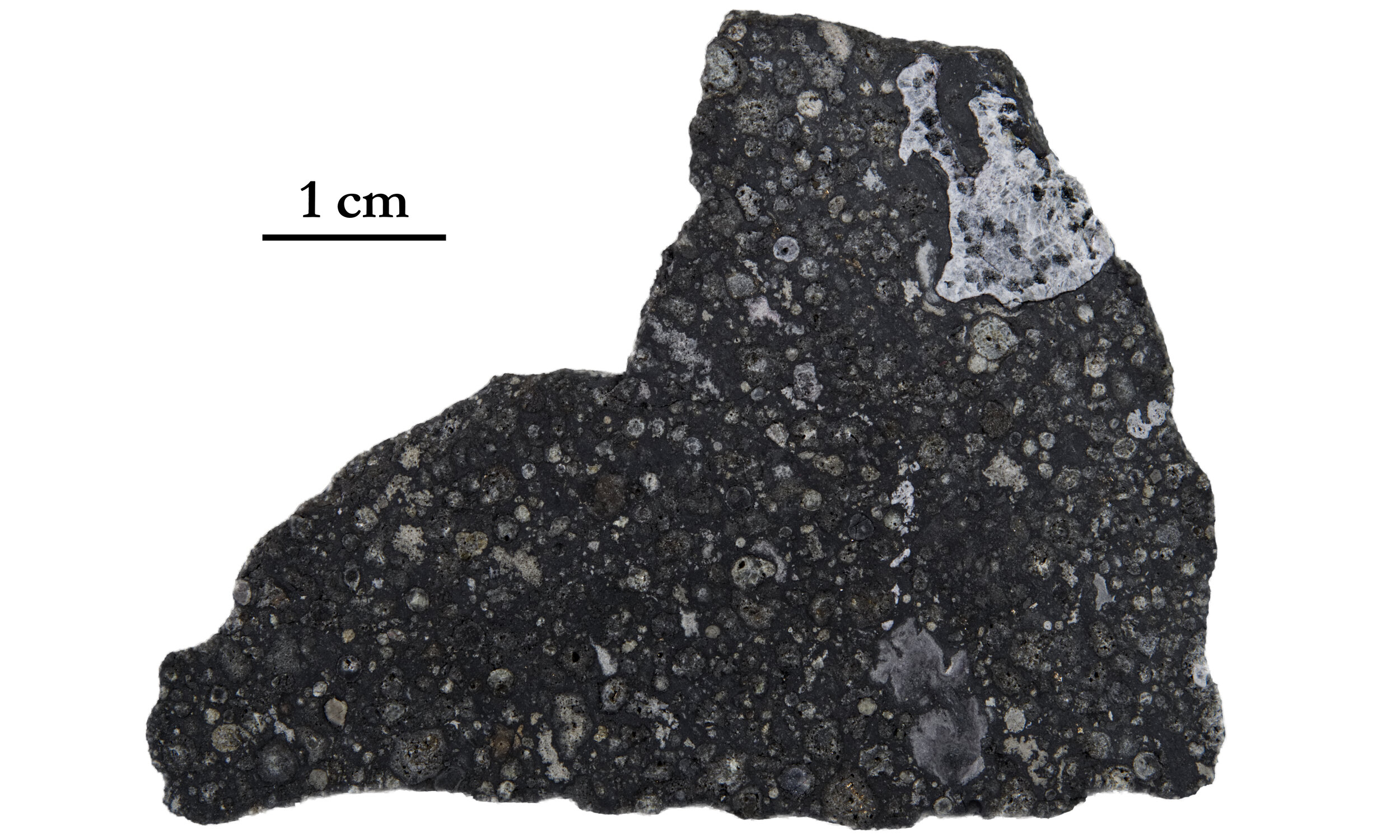
This is a polished surface of the Northwest Africa 8267 carbonaceous chondrite. It is assembled from primordial motes of dust that coalesced to form the asteroids, comets, and planets. Large parts of the meteorite have been altered by the action of warm extraterrestrial water on the parental asteroid.
False-colour X-ray maps like this are acquired using a scanning electron microscope. When you hit a rock with a focused beam of electrons, it begins to ‘shine’ in X-rays. The wavelengths (‘colours’) of those X-rays allow you to identify the elements present. By doing this across the surface of a rock, the elemental composition can be unpicked.
This is a polished surface of the Ceniseros meteorite. It is assembled mostly from rounded chondrules. Chondrules are frozen droplets of once-molten rock that formed in a zero-gravity environment as our Solar System was forming.
False-colour X-ray maps like this are acquired using a scanning electron microscope. When you hit a rock with a focused beam of electrons, it begins to ‘shine’ in X-rays. The wavelengths (‘colours’) of those X-rays allow you to identify the elements present. By doing this across the surface of a rock, the elemental composition can be unpicked.
This is a polished surface of the Northwest Africa 5477 meteorite. It is assembled mostly from rounded chondrules. Chondrules are frozen droplets of once-molten rock that formed in a zero-gravity environment as our Solar System was forming.
False-colour X-ray maps like this are acquired using a scanning electron microscope. When you hit a rock with a focused beam of electrons, it begins to ‘shine’ in X-rays. The wavelengths (‘colours’) of those X-rays allow you to identify the elements present. By doing this across the surface of a rock, the elemental composition can be unpicked.
Chondrules are poppy seed-sized spheres that cooled and crystallised from once-molten droplets of molten rock. They are a major dusty building block of asteroids, comets, and planets. They are some of the oldest rocks in the Solar System, and exactly how they formed is a mystery.
Complete collection